This article may contain affiliate links. If you buy through them we may earn a commission at no extra cost to you.
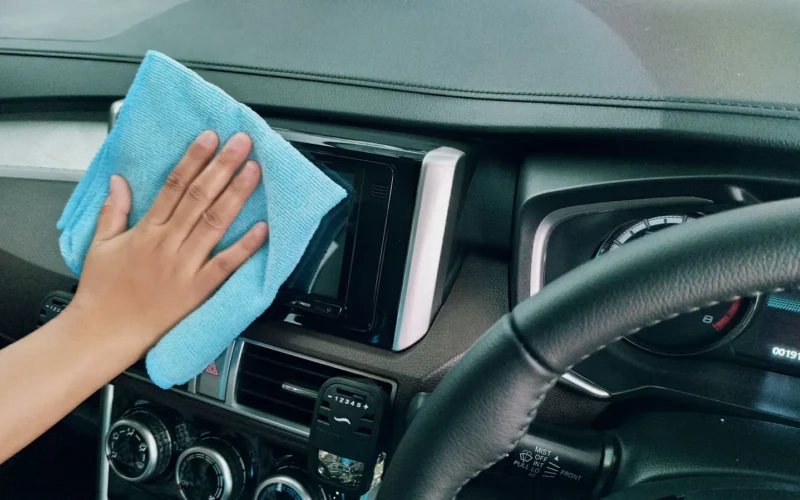
A kitchen deep clean takes 3–4 hours if you work top to bottom through the room—starting at cabinet tops and finishing with the floor. That order matters: grease and crumbs fall as you clean, so you only mop once. I do this every three months, and the first time I followed the sequence below, I cut an hour off my usual time.
Gather Your Tools and Materials
A basic deep-clean kit costs $20–$35 if you’re buying everything new, though most of it lasts months or years.
- Microfibre cloths (3–4)
- Sponges or scrub brushes
- Rubber gloves
- All-purpose degreaser or white vinegar
- Baking soda
- Dish soap
- Bleach or oxygen-based cleaner (for stubborn stains on compatible surfaces)
- Vacuum with hose attachment
- Mop and bucket
- Step stool for high cabinets
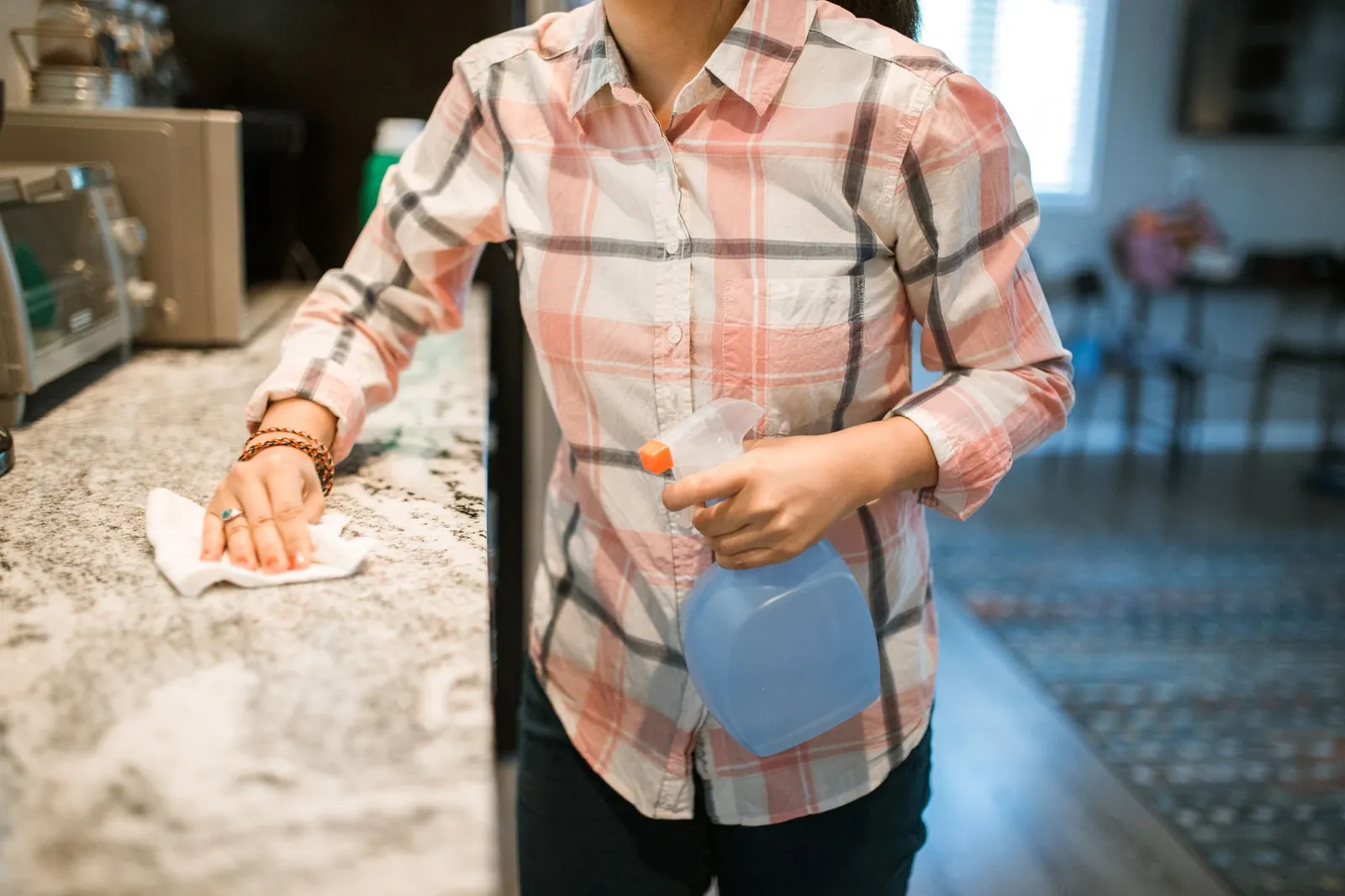
I keep a spray bottle of 1 part white vinegar to 1 part water for glass and stainless steel—costs under $2 to make and performs as well as most commercial sprays on light grease and fingerprints.
Start at the Top: Cabinets and Upper Shelves
Cabinet exteriors
Wipe the outside of wall cabinets with a damp microfibre cloth and all-purpose degreaser. On wood cabinets, follow immediately with a dry cloth to prevent water spots. For heavy grease buildup—common above the stove—spray degreaser, wait 5 minutes, then scrub gently with a soft brush.
Cabinet interiors
Empty one cabinet at a time rather than clearing everything at once. Wipe shelves with a damp cloth and mild soap solution, then dry. A plastic scraper handles sticky residue without scratching. Wipe down jars and containers before returning them, and check expiry dates while you’re at it.
Above cabinets
Grease and dust combine into a sticky film up here that surprises most people the first time they check. Vacuum with a hose attachment or use a dry cloth on a long handle, then follow with degreaser if the surface feels tacky.
Tackle the Appliances
Appliances take the longest but make the biggest visual difference. Do the oven first so any cleaner you apply has time to work while you move on to other things.
Stovetop and oven
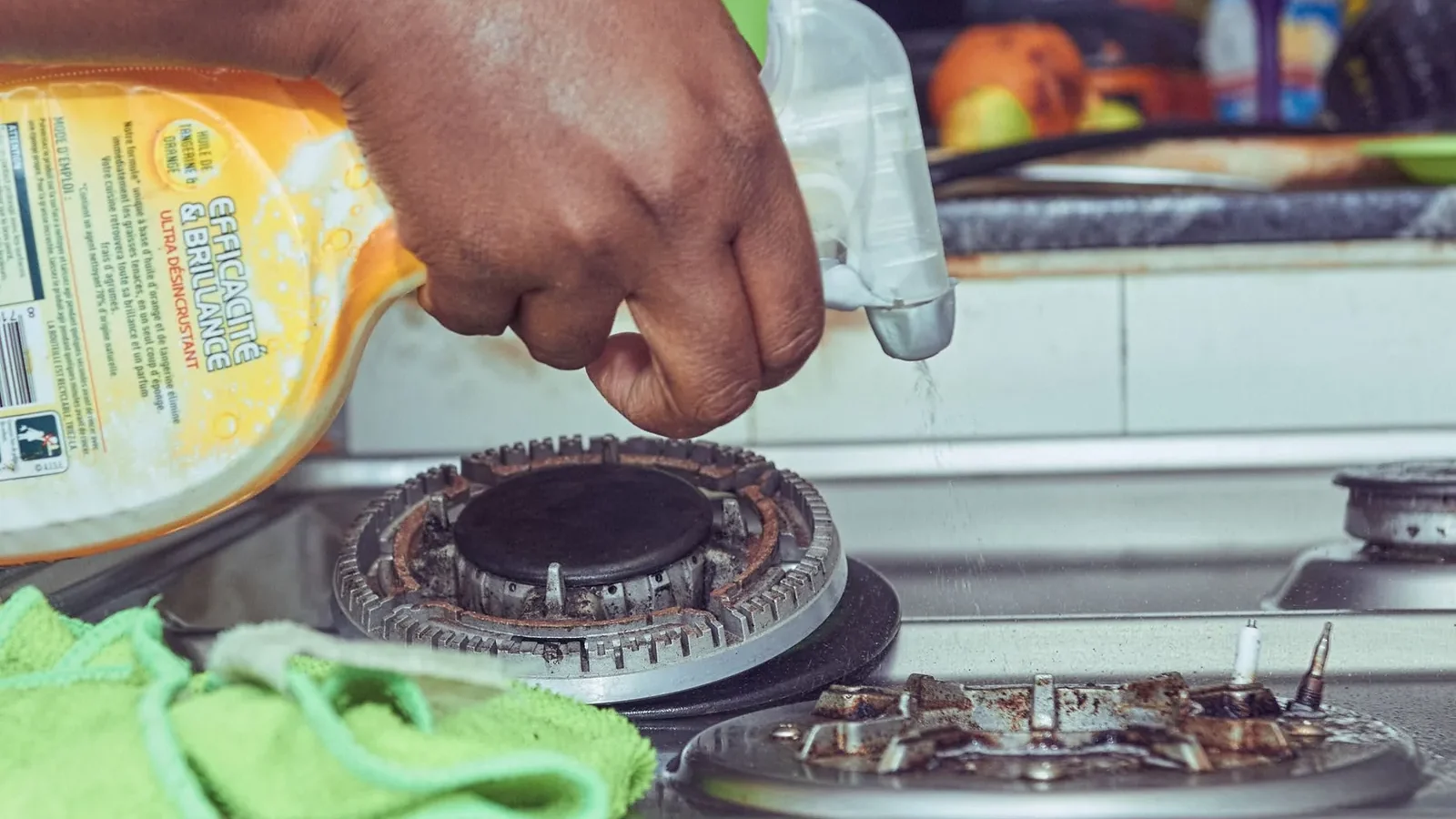
Remove burner grates and drip pans and soak them in hot soapy water for 15 minutes. While they soak, wipe the stovetop surface with degreaser. Scrub the grates with a stiff brush, dry them, and replace. For the oven interior, see our guide on how to clean an oven naturally; if you prefer a commercial cleaner, follow the product’s ventilation instructions closely.
Refrigerator
Work shelf by shelf rather than emptying the whole fridge at once—food stays cooler and the job feels less chaotic. Wipe each shelf with mild soap and warm water, then dry. Pay attention to the rubber door seal: it traps crumbs and moisture and can grow mould within weeks. An old toothbrush with a 1:10 bleach-to-water solution clears it out. Finish with the exterior—stainless steel spray for steel doors, all-purpose cleaner for painted surfaces.
Dishwasher
Place a cup of white vinegar in a bowl on the top rack and run a hot cycle. This dissolves mineral deposits and grease from the spray arms and interior walls. Once the cycle finishes, sprinkle half a cup of baking soda on the bottom and run a short hot cycle to neutralize odours.
Microwave
Fill a microwave-safe bowl with 1 cup of water and 2 tablespoons of white vinegar. Microwave on high for 5 minutes—the steam loosens splattered food. Let it sit for 2 minutes before opening (the bowl is very hot), then wipe the interior with a cloth. Wash the turntable in the sink if it has visible buildup.
Clean Counters, Backsplash, and Sink
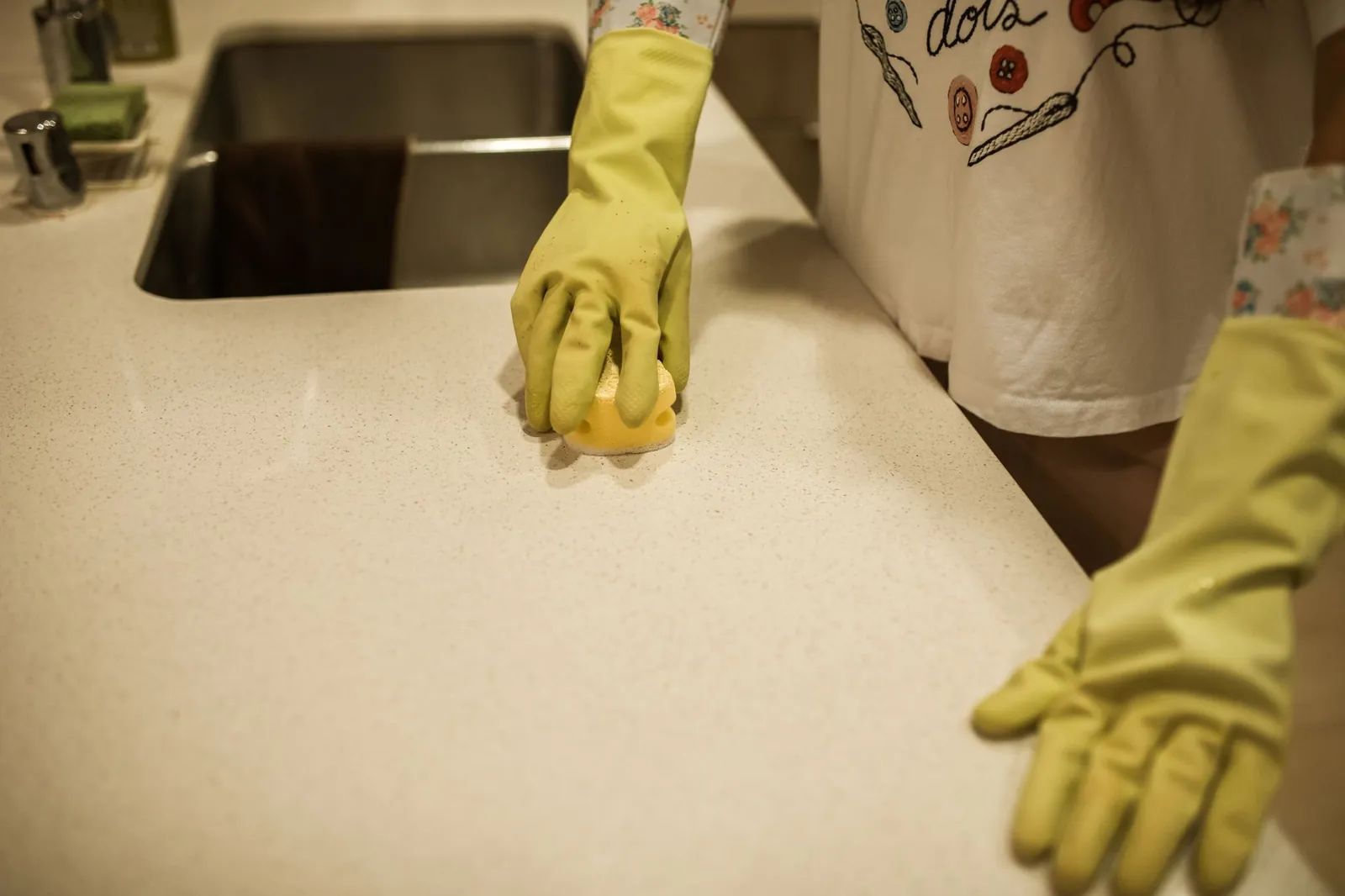
Clear the counters completely before wiping—cleaning around appliances leaves a ring of grime. Wipe with mild soap and warm water, then dry. For tile backsplashes, spray with all-purpose cleaner, wait 2–3 minutes, and scrub with a soft brush. Grout lines need a small brush and a paste of 3 parts baking soda to 1 part water; let it sit for a minute before scrubbing.
In the sink, sprinkle baking soda and scrub with a wet brush to lift stains and odours. Rinse thoroughly. Stainless steel sinks water-spot easily, so dry with a cloth when you’re done.
Work from top to bottom and left to right so gravity and your system do the work, not your memory.
Often-Missed Spots
These collect grime steadily but rarely make anyone’s weekly cleaning list.
- Light switches and door handles: Wipe with a cloth dampened in all-purpose cleaner. These are touched dozens of times a day.
- Baseboards: Vacuum first, then wipe with a damp cloth. A magic eraser removes scuffs in seconds.
- Microwave vent filter: Vacuum out dust, then wipe with a slightly damp cloth. A clogged filter makes the fan work harder.
- Under the fridge and stove: Pull them out if it’s safe to do so—crumbs and grease accumulate fast and can affect appliance performance. Vacuum as far under as you can reach if moving them isn’t practical.
- Drawer fronts and handles: Wipe with cleaner suited to the material—diluted vinegar for painted wood, stainless spray for metal.
- Windowsills and tracks: Dislodge debris with an old toothbrush, then wipe with a damp cloth.
Finish with the Floor
Vacuum thoroughly before mopping—mopping alone pushes crumbs around rather than removing them. Mop with warm water and a small amount of dish soap or floor cleaner. For stuck-on spots, let the solution sit for 60 seconds before scrubbing. Let the floor dry before walking on it, or you’ll track footprints into the clean surface.
Frequently Asked Questions
How often should I deep clean my kitchen?
Every 3 months suits most households that cook daily. If you cook only a few times a week, twice a year is usually enough. The tell is the cabinet tops: if they feel sticky when you run a finger across them, it’s time.
Can I use bleach on all kitchen surfaces?
No. Bleach damages stainless steel, wood, and most stone countertops. Use it only on white ceramic tile, grout, and non-porous surfaces, always diluted to 1 part bleach per 10 parts water, with good ventilation. For most kitchen surfaces, all-purpose degreaser or diluted vinegar is the safer choice.
How long does a full kitchen deep clean take?
Expect 3–4 hours for an average kitchen working alone at a comfortable pace. Kitchens with heavy grease buildup or more than 20 linear feet of cabinetry can run to 5 hours. Splitting it into two sessions—cabinets and appliances one day, counters and floors the next—makes the job easier to fit into a weekend.
What’s the best degreaser for kitchen cabinets?
Krud Kutter and Zep are reliable options at $4–$8 per bottle and handle most grease without damaging finishes. For light grease, white vinegar diluted 1:1 with water costs almost nothing and works well. Heavy buildup responds better to a few drops of dish soap in warm water than to straight commercial degreaser, which can strip some painted finishes with repeated use.
Should I move the refrigerator and stove to clean behind them?
Yes, if the appliance rolls out safely and you can manage the weight. Grease and debris behind a stove can be a fire hazard; dust under a refrigerator makes the compressor run hotter. If the appliance is built-in or too heavy to move alone, use a vacuum hose attachment to reach as far underneath as possible.

Ellen has renovated three houses, killed more seedlings than she admits, and writes about both.