This article may contain affiliate links. If you buy through them we may earn a commission at no extra cost to you.
The fastest route to streak-free windows is a 50/50 distilled-water-and-white-vinegar solution, a $8–15 squeegee with a fresh rubber blade, and a dedicated microfiber cloth for the edges. I’ve tried every shortcut over the years—paper towels, newspaper, spray-and-wipe commercial cleaners—and nothing beats that combination for consistent results.
Why Streaks Happen
Streaks trace back to four causes: mineral deposits from tap water, soap residue left on the glass, fibres shed by the wrong cloth, and solution that dries before you can remove it. Hard water is the sneaky one—even after the water evaporates, dissolved calcium and magnesium stay behind as a thin haze that catches light unevenly. Distilled water or a vinegar solution solves this because distilled water carries no minerals and vinegar dissolves the deposits already on the glass.
Paper towels and standard cotton cloths make things worse by leaving fibres and smearing residue rather than lifting it. A squeegee removes the bulk of the solution in one stroke; microfiber handles the rest.
Cleaning Solutions That Actually Work
Homemade vinegar solution
Mix equal parts white vinegar and distilled water in a spray bottle. This is my everyday cleaner—it cuts grease and mineral deposits without leaving residue, and the smell is gone within a minute of drying. For windows that haven’t been touched in several months, bump the ratio to 2 parts vinegar to 1 part water and let it sit for 60–90 seconds before scrubbing. Test that stronger mix on a small corner first if you have very old or antique glass.
Rubbing alcohol solution
Combine 1 cup distilled water, 1 cup 70% isopropyl alcohol, and 1 tablespoon white vinegar. The alcohol evaporates faster than water, which is a real advantage when the temperature drops below 50°F and water dries slowly. I reach for this one from October through March.
Commercial window cleaners
Windex and Invisible Glass ($3–8 per bottle) are formulated to minimize streaks and save mixing time. The trade-off is cost per use—a gallon of distilled water runs $1–2 and a bottle of white vinegar about the same, making the homemade version roughly ten times cheaper per application. Use commercial cleaners sparingly; a light mist is enough, and excess solution is harder to remove cleanly.
The secret to streak-free windows isn’t how hard you scrub; it’s removing all the water and soap residue completely.
Tools You Need
Squeegee
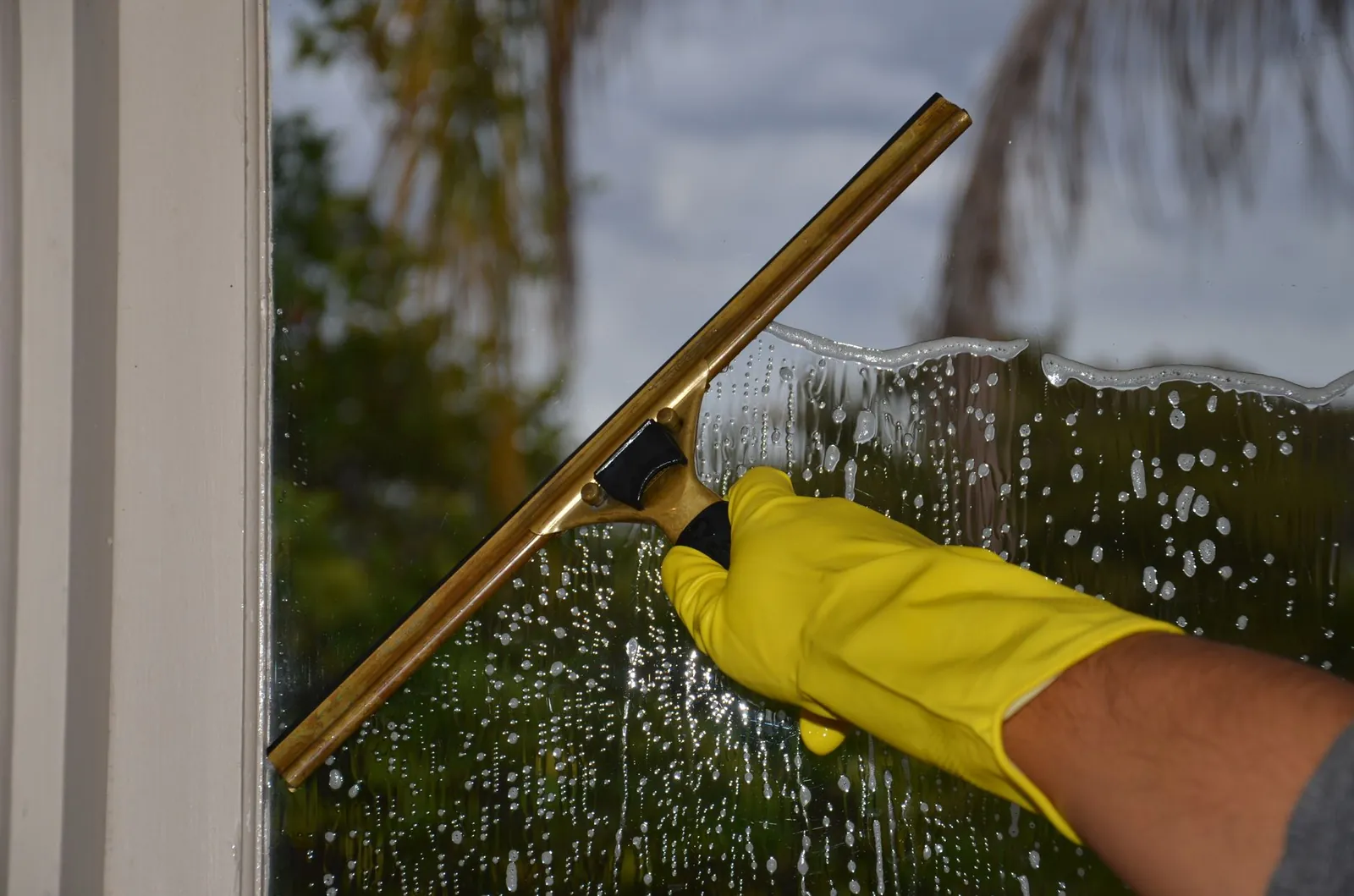
This is the one tool worth spending money on. A squeegee with a replaceable rubber blade (around $8–15) removes solution in a single smooth pass, leaving almost nothing behind. The blade should flex slightly under pressure but spring back immediately—if it doesn’t, it’s due for replacement. A cracked or stiff blade is the single most common reason a good technique still produces streaks.
Microfiber cloths
Microfiber doesn’t shed fibres and absorbs water far more efficiently than cotton or paper. I keep two or three cloths set aside exclusively for windows—using the same cloth for counters or appliances transfers grease back onto the glass. Quality microfiber cloths run $1–3 each and last years with regular washing. See our guide to best microfiber cleaning cloths for specific recommendations.
Soft-bristled brush or sponge
For the initial scrub, a soft brush or non-scratch sponge ($2–5) loosens dirt without scratching the glass. Skip anything abrasive.
Distilled water
A gallon costs $1–2 at any supermarket and eliminates mineral deposits from both your cleaning solution and your rinse water. Worth keeping a jug under the sink.
Step-by-Step Technique
Preparation
Choose an overcast day, or work early morning or late afternoon—direct sun dries solution before you can squeegee it off, locking in streaks. Dust the frame and sill first so dirty water doesn’t drip onto freshly cleaned glass.
Scrub and rinse
Spray the entire pane and let the solution sit for 30 seconds. Scrub gently with a soft brush or sponge in circular motions, paying extra attention to corners. Then rinse with clean distilled water. This rinse step is non-negotiable—any soap left on the glass will streak.
Squeegee technique
Start at the top corner and pull the blade straight down in one smooth stroke. Wipe the blade on a dry cloth after each pass. Overlap each stroke by about half an inch to avoid leaving a water line at the edge. On the final pass, angle the squeegee slightly to direct the last of the water toward the bottom corner.
Final drying
Run a dry microfiber cloth around the edges and corners to catch any drips before they dry on the glass. That’s it.

Mistakes That Cause Streaks
Too much cleaner. A light mist covers the glass; more than that creates excess residue that’s hard to remove completely.
Skipping the rinse. Spraying and immediately squeegeeing leaves soap and loosened dirt on the glass. Always rinse with clean water first.
Wrong drying cloth. Paper towels and cotton cloths shed fibres and smear residue. Microfiber is a $2–3 fix that changes results immediately.
Tap water in the solution. Even water that looks clean deposits minerals as it dries. Use distilled water for both mixing and rinsing.
Cleaning in direct sun. Solution dries in under a minute on a hot, sunny pane—not enough time to squeegee properly. Shade or timing solves this entirely.
Stubborn Grime and Hard Water Stains
For heavy mineral buildup, use a 50/50 vinegar-and-water solution and let it sit for 2–3 minutes before scrubbing. Adding a tablespoon of rubbing alcohol to the mix helps dissolve thick deposits faster. If the buildup is layered and won’t budge, wet the glass first and use a plastic scraper held at a shallow angle—never metal, which scratches. Follow immediately with your standard cleaning routine.
Keeping Windows Clear Long-Term
Cleaning every 2–4 weeks prevents the heavy buildup that makes the job slow. Light, regular passes take five minutes; neglected windows can take twenty. Store your squeegee blade-up so the rubber doesn’t warp against a flat surface, and replace the blade when it cracks or stiffens—typically every 1–2 years of regular use. Replacement blades cost $3–8 and are available wherever the squeegee was sold.
Frequently asked questions
Can I use newspaper or coffee filters instead of microfiber cloths?
Newspaper works in a pinch and sheds less than paper towels, but it’s messy and can leave ink on white window frames. Coffee filters are cleaner but still inferior to microfiber. Given that a pack of microfiber cloths costs $5–10 and lasts years, it’s the obvious upgrade.
Why do my windows still streak after squeegeeing?
The most common cause is incomplete rinsing—soap residue stays on the glass and dries into a haze. Rinse thoroughly with clean distilled water before squeegeeing. If rinsing doesn’t fix it, inspect the squeegee blade; a cracked or worn blade won’t seal against the glass and leaves water lines. Finally, confirm you’re using distilled water, not tap, in your solution.
Is it better to clean windows on a cloudy day?
Yes. Direct sun causes solution to dry in under a minute on warm glass, faster than you can squeegee. Overcast days, early morning, and late afternoon all give you more working time. If you have no choice but to clean in sun, work one small section at a time and squeegee immediately after spraying.
How often should I replace my squeegee blade?
Replace it when it cracks, becomes inflexible, or leaves water lines despite good technique—usually every 1–2 years with regular use. Replacement blades cost $3–8 and take about two minutes to swap out.
Can I use the same solution for interior and exterior windows?
Yes. The vinegar and rubbing-alcohol solutions work on both. Exterior windows typically need a stronger vinegar concentration or a longer soak time because they collect more grime, pollen, and oxidation. Interior windows are usually quicker since they mainly accumulate dust and the occasional fingerprint.

Ellen has renovated three houses, killed more seedlings than she admits, and writes about both.