This article may contain affiliate links. If you buy through them we may earn a commission at no extra cost to you.
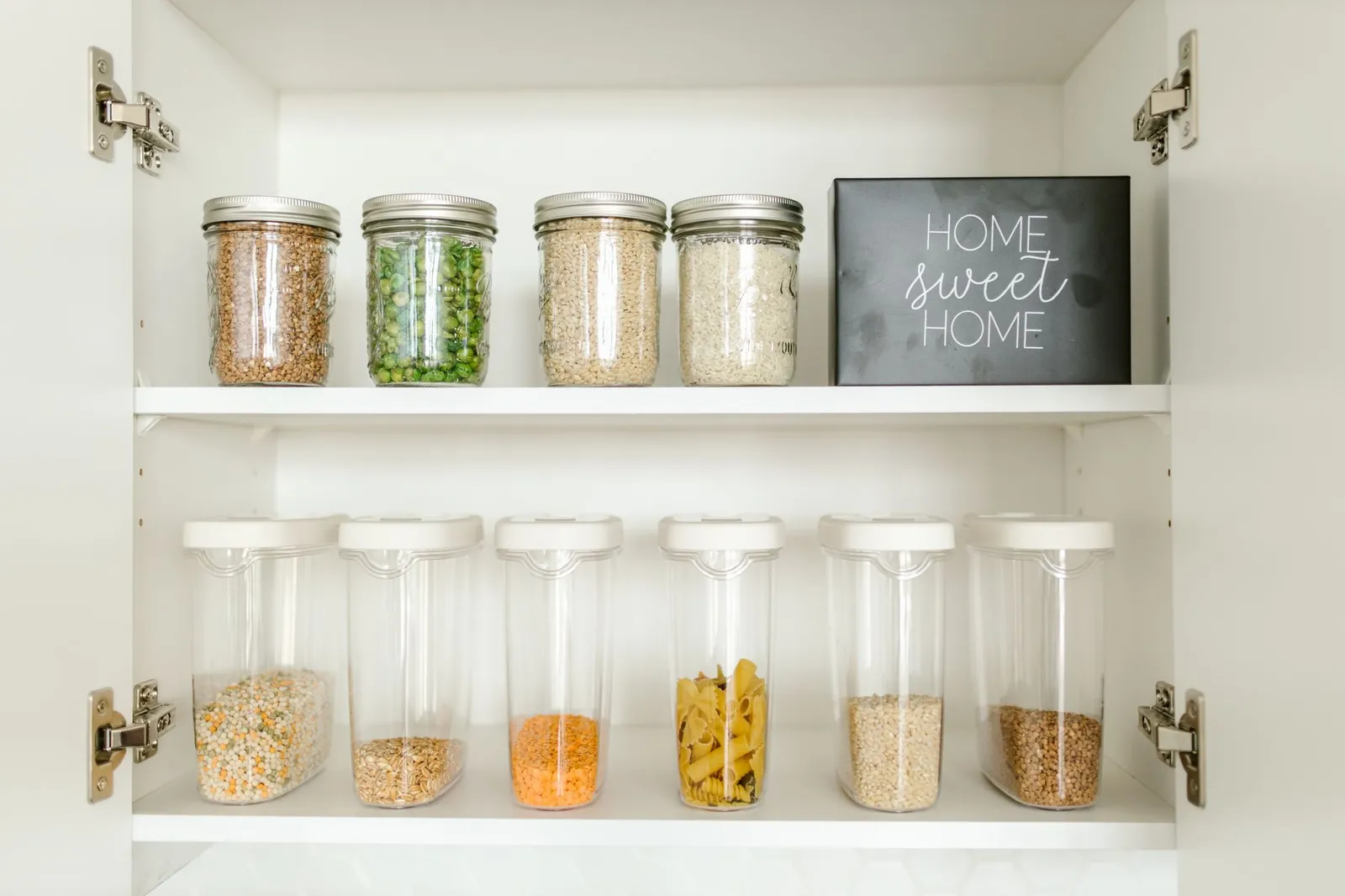
For most pantries, a set of airtight plastic containers ($40–$80 for four to six) handles flour, sugar, pasta, and cereal. Add a few glass containers for long-term storage and stackable bins for packaged goods, and you’ve covered the full range without duplicating what you already own. I’ve been refining this system in my own kitchen for years, and the containers I still reach for share three traits: a silicone gasket that hasn’t cracked, sides clear enough to read at a glance, and lids that survived the dishwasher.
Airtight plastic containers
These are the workhorses. A good silicone gasket creates a genuine seal—not just a snug fit—that keeps moisture and pantry moths out of flour, sugar, cereal, and pasta for months. The gasket is the part that fails first: cheaper containers use thin rubber that cracks within a year or two of regular washing.
What to look for
- BPA-free plastic (check the label; most made after 2012 are, but not all)
- Silicone or thick rubber gaskets—squeeze the lid edge before you buy
- Clear sides with measurement markings (saves time when baking)
- Lids that don’t warp after ten dishwasher cycles
OXO Good Grips, Rubbermaid Brilliance, and Pyrex Simply Store run $8–$20 per container. A starter set of four to six in sizes from 1 quart to 4 quarts typically costs $40–$80 and covers most staples. Gaskets on these mid-range brands last five to eight years with hand-washing; dishwasher use shortens that to three to five.
Glass containers with locking lids
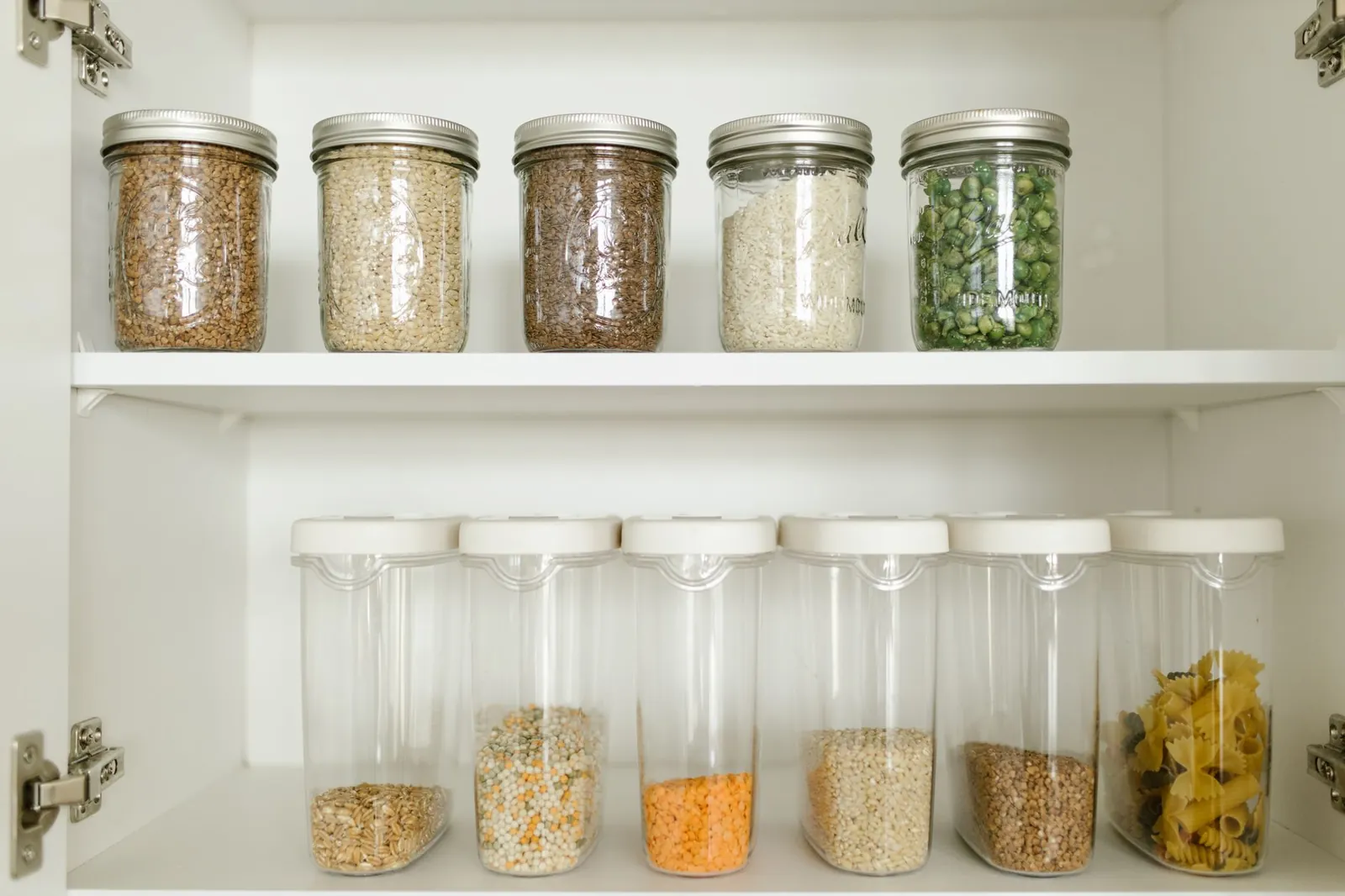
Glass doesn’t stain, doesn’t absorb odors, and doesn’t leach anything into your food over time. I use glass for flours and sugars I store longer than six months, and for spices where I want to see the color. The trade-offs are real: glass is heavier, takes up slightly more shelf depth than straight-sided plastic, and a dropped lid means a replacement purchase rather than a simple swap.
When glass is worth the premium
- Baking ingredients you keep for a year or more
- Spices or loose tea where color signals freshness
- Anyone building a pantry system they want to keep for a decade
Expect $12–$30 per container. Rubbermaid Brilliance Glass and Pyrex sell sets of four for $50–$100. I have glass containers from 2015 that still seal perfectly—the locking clip mechanism outlasts the hinged plastic lids on most plastic sets.
Food storage canisters
Canisters make sense for ingredients you reach for daily: coffee, bread flour, granola, loose tea. They’re designed to sit on a counter or open shelf, so aesthetics matter more here than with containers tucked inside a cabinet. The material determines both the look and the practicalities.
Canister materials compared
- Ceramic or stoneware: Good airtight seal, attractive, but heavy and breakable. $15–$40 each.
- Stainless steel: Durable and easy to wipe down, but opaque—you can’t see how much is left. $12–$35 each.
- Acrylic or clear plastic: Lightweight, see-through, least expensive. $8–$18 each. Scratches more easily than the others.
A set of three to four matching canisters runs $30–$120. I keep coffee, sugar, and flour on my counter in stainless canisters; knowing exactly where those three things live has cut down on pantry rummaging more than any other single change I’ve made.
Stackable bins and drawer dividers
Some pantry items don’t need a seal at all. Crackers, granola bars, and snack pouches stay in their original packaging—what they need is a system that keeps them upright, visible, and grouped so you’re not stacking boxes three deep and forgetting what’s behind them.
Best uses
- Grouping snacks by type (nuts, chips, bars)
- Corralling small baking supplies: extracts, food coloring, sprinkles
- Keeping breakfast cereals upright so you can read the labels
- Creating zones for different household members’ items
Shallow bins cost $3–$8 each; six bins run $15–$30. They’re not about airtightness—they’re about visibility and stopping the avalanche when you pull one thing off a crowded shelf. If you’re trying to organize a small pantry, a few well-placed bins often do more than a full container overhaul.
Comparison table
| Container type | Best for | Cost per unit | Durability | Airtight seal | Space efficiency |
|---|---|---|---|---|---|
| Airtight plastic | Flour, sugar, pasta, cereal | $8–$20 | 5–8 years | Excellent | Very good |
| Glass with locking lids | Long-term storage, baking ingredients | $12–$30 | 20+ years | Excellent | Good |
| Food storage canisters | Daily-use ingredients, countertop display | $8–$40 | 5–15 years (varies by material) | Good to excellent | Good |
| Stackable bins | Packaged goods, grouping items | $3–$8 | 3–5 years | None | Excellent |
| Vacuum-seal bags | Bulk storage, freezer items | $0.20–$0.50 per bag | Single use | Excellent | Very good |
Our verdict
Start with a set of airtight plastic containers ($40–$80) for everyday staples, add three stackable bins ($15–$25) for packaged goods, and pick up a pair of canisters ($20–$40) for whatever you use daily. That’s $75–$145 total and covers the full range of pantry storage. Add glass containers over time for items you store longest—buying everything at once usually means half the containers sit empty until you figure out what you actually need.
A container is only as good as its seal—buy the least expensive airtight container you can find with a silicone gasket, and upgrade to glass only for ingredients you’ll store for a year or more.
Making containers last
The gasket is always the first thing to go. Hand-washing lids in warm soapy water instead of running them through the dishwasher can double their lifespan. Dry gaskets completely before reassembling—trapped moisture grows mold in the groove where you can’t see it.
A few other habits worth keeping:
- Keep plastic containers out of direct sunlight, which warps lids and makes plastic brittle faster
- Label everything with a marker or label maker, even clear containers—flour and powdered sugar look identical at 6 a.m.
- Replace cracked gaskets individually; most manufacturers sell them for $2–$5, far cheaper than a new container
Frequently asked questions
Are airtight containers really necessary for a pantry?
It depends on your climate and how fast you go through ingredients. In humid climates, airtight containers prevent moisture and mold in flour and sugar within weeks. In dry climates, they’re less urgent but still keep pantry moths out. If you buy in bulk or cook infrequently, they’re worth the investment. If you use a bag of flour in two weeks, basic storage is fine.
Can I use old jars or containers I already have?
Yes, if they seal well. Glass jars with metal lids work fine for dry goods. Plastic takeout containers are less reliable—lids often don’t seal tightly and warp with temperature changes. To test any container: fill it, flip it upside down over a sink, and wait five minutes. No leaks means it’s airtight enough for pantry use.
How often should I replace pantry containers?
Plastic containers typically last five to eight years before gaskets degrade or the plastic becomes brittle. Glass lasts indefinitely unless broken. If a lid no longer clicks shut or you can see cracks in the gasket, replace it. Most manufacturers sell replacement lids for $2–$8, which is cheaper than buying new containers.
Should I store all pantry items in containers?
No. Packaged goods like cereal boxes or crackers can stay in original packaging if you use them within a few weeks. Containers earn their place for bulk purchases, ingredients you keep longer than a month, and anything prone to moisture or pests—flour, sugar, spices, rice. Canned goods and sealed shelf-stable items need nothing extra.
What’s the best way to organize containers on shelves?
Group by category—baking, breakfast, snacks—and put daily items at eye level, occasional items higher or lower. Place smaller containers in front of larger ones so nothing hides behind something else. Shelf risers add a second tier on deep shelves and are worth the $10–$20 investment. Label everything, even if containers are clear.

Ellen has renovated three houses, killed more seedlings than she admits, and writes about both.