This article may contain affiliate links. If you buy through them we may earn a commission at no extra cost to you.
The best living room lighting uses three layers: a ceiling fixture or chandelier for ambient light (10–20 lumens per square foot), task lamps beside seating for reading and close work, and accent lights to add depth and visual interest. Get all three working together and you can shift the room from bright and functional to dim and relaxed without touching a single piece of furniture.
The Three Layers of Lighting
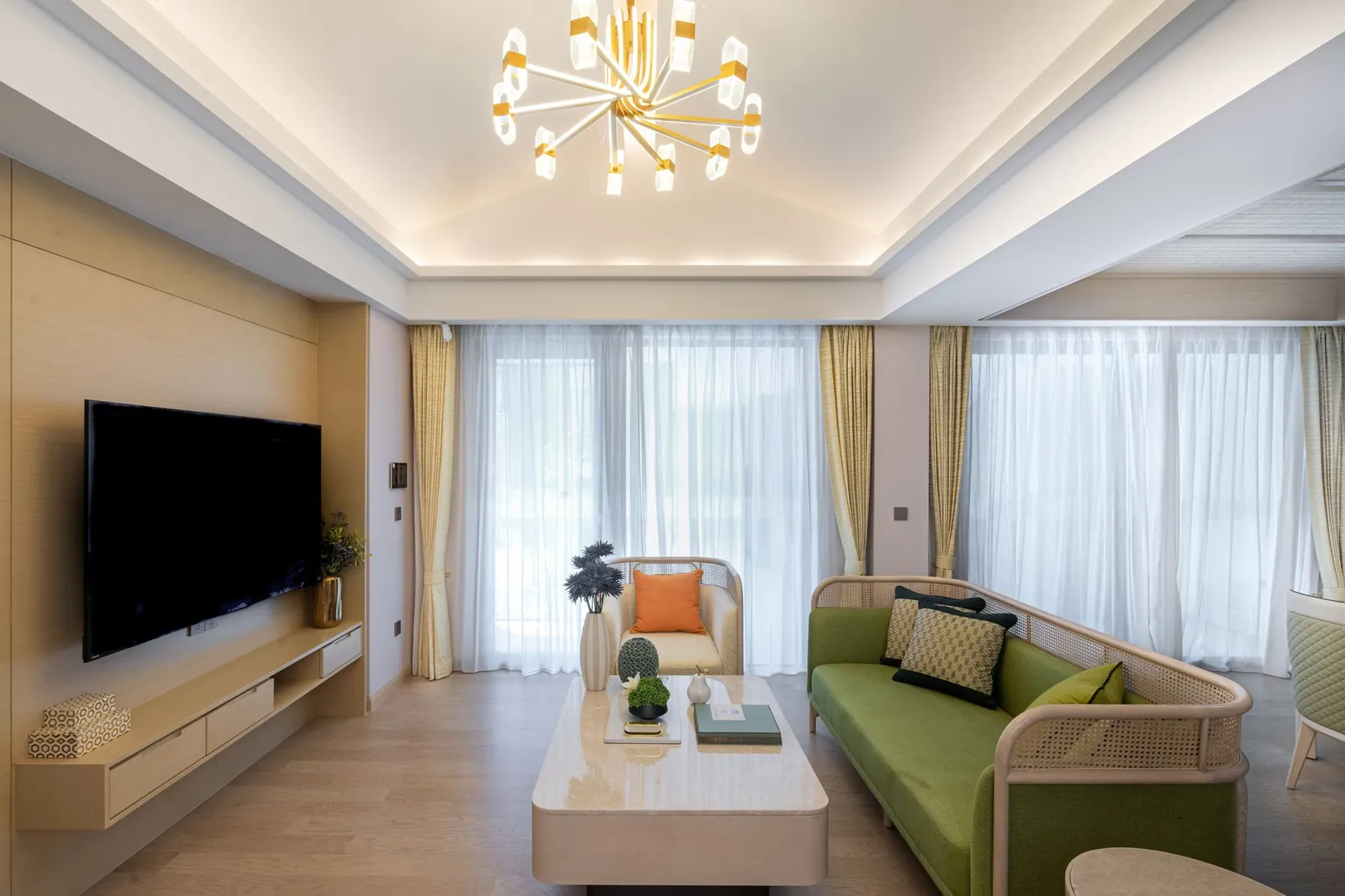
Ambient lighting is your foundation—it fills the room evenly so corners aren’t in shadow. A ceiling fixture, chandelier, or grid of recessed cans handles this job. For a 12×14-foot room (168 sq ft), that means 1,700–3,360 lumens total from your overhead sources.
Task lighting covers specific activities: reading, laptop work, board games. A floor lamp beside a chair or a table lamp on a side table does this job well, delivering 400–800 focused lumens where you actually need them.
Accent lighting adds depth without contributing much raw brightness. Wall sconces, LED strips behind shelving, and picture lights fall here. They’re typically 50% dimmer than your ambient sources—their job is to draw the eye, not light the room.
A single overhead light feels flat and harsh because it creates one uniform plane of brightness with no contrast. Layers let you dial the room up for activity or down for a movie without the compromise of one fixture trying to do everything.
Dimmer switches are your secret weapon: they let one fixture do triple duty as ambient, task, or accent light depending on the moment.
Ambient Lighting Options
Ceiling flush-mounts
The practical workhorse for most rooms. Flush-mounts sit tight to the ceiling and work in spaces with standard 8-foot ceilings where a chandelier would hang too low. Basic styles run $30–$150; designer versions $200–$600. Look for a fixture rated at 1,400–2,100 lumens for a medium living room.
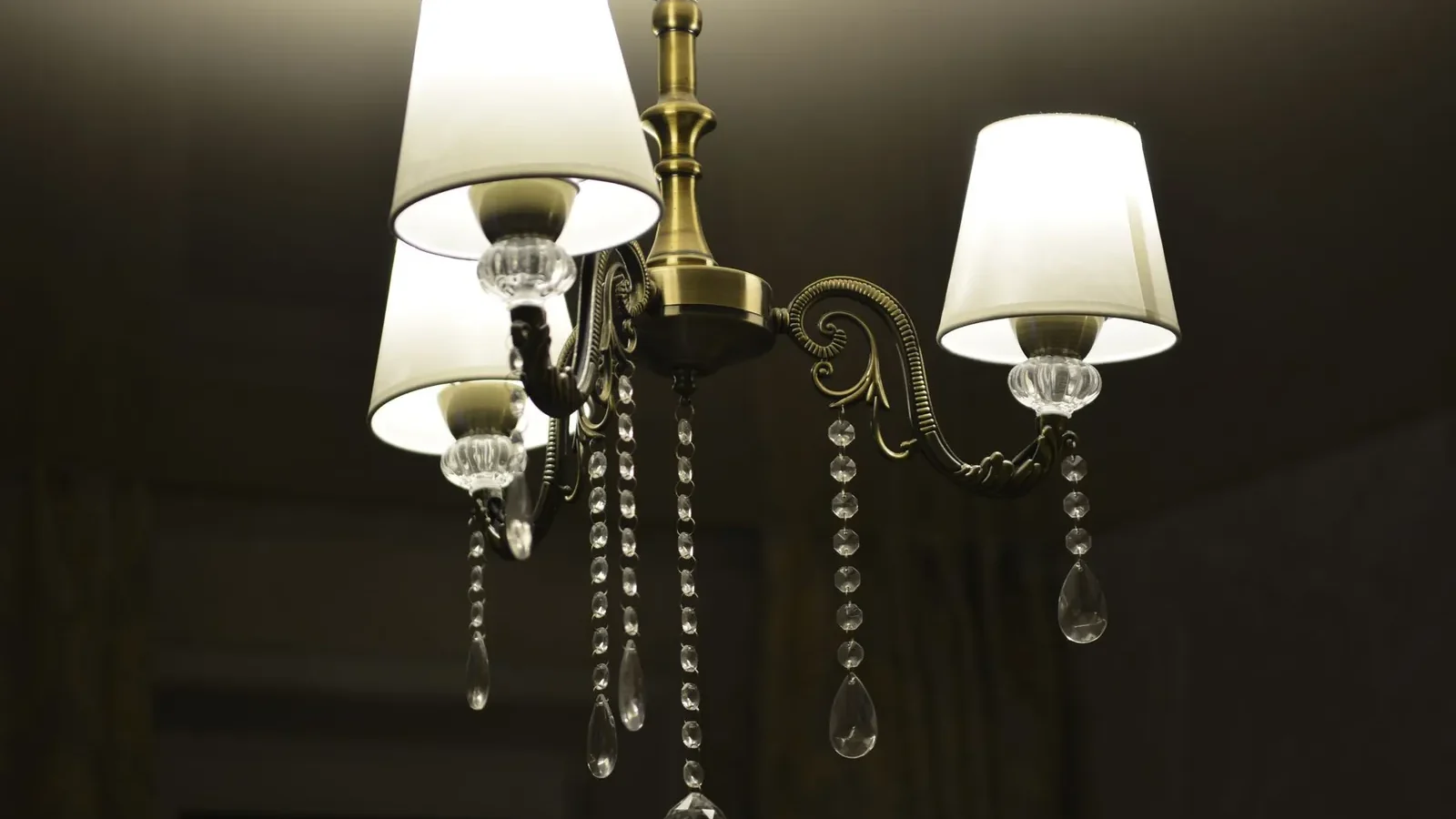
Chandeliers
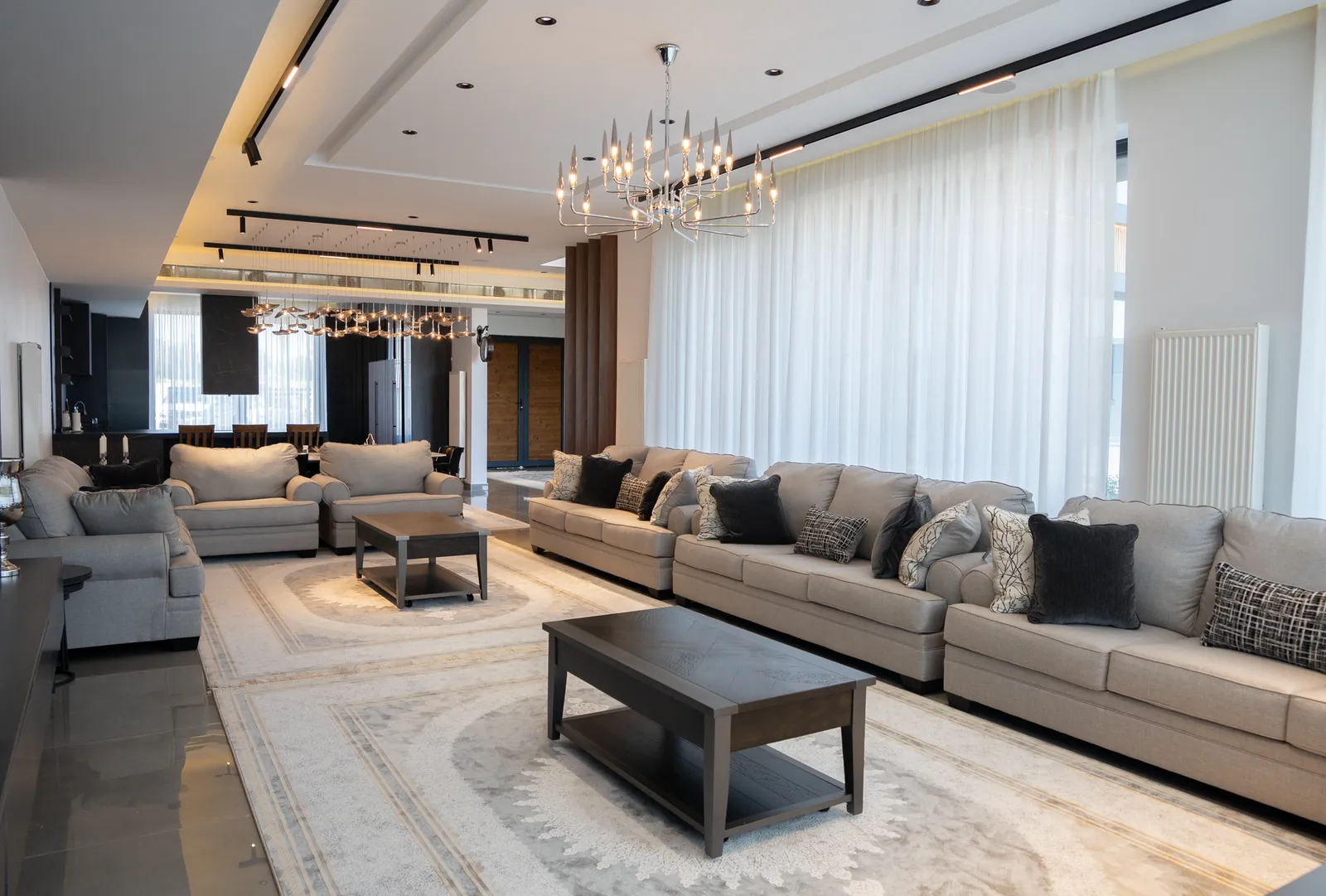
A chandelier earns its place in rooms with 9-foot or higher ceilings. Hang it so the bottom clears 7 feet of head height in an open living area—lower in rooms with very high ceilings risks making the fixture look stranded. Mid-range options cost $80–$400 and deliver 1,500–3,000 lumens across multiple bulbs. Statement pieces start around $500.
Recessed lighting
Recessed cans give a clean, uncluttered look and work well in modern or low-ceiling rooms. Space 4-inch cans 4–6 feet apart in a grid; each produces 600–900 lumens. Fixtures cost $15–$50 each, but installation runs $100–$300 per light including labor—making this the most expensive ambient option upfront. The payoff is flexible, even light you can aim with adjustable trim rings.
Track lighting
A 4-light track kit ($100–$300) lets you aim heads independently, which is useful when your furniture arrangement changes or you want to highlight both artwork and a seating area from one ceiling connection. Each head delivers 400–800 lumens. The trade-off is a more industrial look that doesn’t suit every style.
Task Lighting
Place task lights within arm’s reach of where you’ll use them, positioned to the side and slightly behind your shoulder—not directly overhead, which creates glare on screens and pages. A 60–75-watt equivalent LED (800–1,000 lumens) is the right output for reading without eye strain.
Floor lamps
Arc floor lamps curve light over a chair from behind, keeping the base out of the traffic path. Standard models cost $40–$150; designer brands $150–$400. They’re the fastest upgrade for a dim reading corner.
Table lamps
One lamp per side table is the standard setup. Basic styles run $20–$100; quality pieces with better diffusion $100–$300. The shade matters as much as the bulb—a dense fabric shade cuts output significantly, so check lumen ratings with the shade on if possible.
Swing-arm wall lamps
When floor space is tight, a swing-arm sconce ($50–$200) mounts to the wall and pivots over a chair or sofa end. It provides the same focused light as a floor lamp without the base. Hardwired versions need an electrician; plug-in models with a cord cover are a DIY option.
Accent Lighting
Wall sconces
Sconces work best flanking a mirror, framing a fireplace, or lighting an alcove. Install them 60–66 inches from the floor on either side of a focal point. Cost: $30–$150 per fixture, plus $100–$300 in electrician labor if you need new wiring.
LED strip lighting
Adhesive LED strips behind a TV console, along floating shelves, or under a sofa base add subtle glow for $15–$40 per 16-foot RGB kit. They’re low-commitment—renters can remove them cleanly—and the color-changing versions let you shift from warm white to a specific hue for movie nights.
Picture lights
A small fixture mounted above artwork costs $20–$80 and uses 40–60 watts equivalent. It draws the eye to a piece you want to feature and adds a layer of depth that overhead lighting alone can’t create.
Bulbs and Color Temperature
LED bulbs are the clear choice: 15,000–25,000-hour lifespan, 75% less energy than incandescent, and $2–$8 per bulb. For living rooms, color temperature matters more than most people expect.
- 2,700K (warm white): The color of traditional incandescent light. Best for ambient and accent fixtures—it reads as cozy and relaxed.
- 3,000–4,000K (neutral white): Slightly crisper, good for task lamps where you want clarity without the clinical feel of cool light.
- 5,000K+: Too blue for a living room. Reserve this for garages and workshops.
If you want dimmers—and you should—buy bulbs labeled “dimmable” ($4–$10 each) and confirm your dimmer switch is LED-compatible. Standard dimmers designed for incandescent bulbs often cause LED flicker or buzzing at low settings.
Layout by Room Size
Sketch your furniture placement before buying fixtures. Ambient light centered off-axis creates dark corners; task lights too far from seating go unused.
Small rooms (under 150 sq ft)
One ceiling fixture (800–1,200 lumens), one floor lamp, and one wall sconce is enough. Adding more fixtures in a tight space creates visual clutter without meaningful benefit.
Medium rooms (150–250 sq ft)
A ceiling fixture or chandelier (1,400–2,100 lumens), two task lamps at separate seating areas, and 2–3 accent lights. This is the sweet spot where layering pays off most visibly.
Large rooms (250+ sq ft)
Recessed lighting (6–8 cans) for ambient coverage, task lamps in each seating zone, and 4+ accent lights. A large chandelier can anchor the space visually, but you’ll still need supplemental recessed or track lighting to reach the room’s edges.
Lighting Comparison by Fixture Type
| Fixture Type | Lumens Range | Cost Range (USD) | Best For | Lifespan |
|---|---|---|---|---|
| Ceiling flush-mount | 1,400–2,100 | $30–$150 | Ambient, all room sizes | 15,000–25,000 hrs (LED) |
| Chandelier | 1,500–3,000 | $80–$400 | Ambient, style statement | 15,000–25,000 hrs (LED) |
| Recessed can | 600–900 | $15–$50 (fixture only) | Ambient, modern look | 15,000–25,000 hrs (LED) |
| Track light | 400–800 per head | $100–$300 (kit) | Ambient + accent, flexible | 15,000–25,000 hrs (LED) |
| Floor lamp (arc) | 400–1,000 | $40–$150 | Task, reading | 15,000–25,000 hrs (LED) |
| Table lamp | 400–1,000 | $20–$100 | Task, side tables | 15,000–25,000 hrs (LED) |
| Wall sconce | 200–600 | $30–$150 | Accent, ambiance | 15,000–25,000 hrs (LED) |
| LED strip | 300–800 (16 ft) | $15–$40 | Accent, behind furniture | 20,000–50,000 hrs |
Our verdict
For most living rooms, start with a ceiling fixture or chandelier ($50–$200), add two task lamps ($40–$100 each), and layer in 2–3 accent pieces ($30–$80 each). Total outlay: $200–$500, with no electrician required if you work from existing sockets. Renters and anyone who wants to skip installation should lean on floor lamps, table lamps, and plug-in LED strips—you get 80% of the layered effect at a fraction of the cost and zero wall damage.
Frequently asked questions
How many lumens do I need in a living room?
Aim for 10–20 lumens per square foot of ambient light. A 200 sq ft room needs 2,000–4,000 lumens total from all sources. If your room still feels dim, add task or accent lights rather than pushing one fixture to maximum brightness—contrast between light sources reads as warmth, not inadequacy.
Can I use smart bulbs to control living room lighting?
Yes. Smart LED bulbs ($8–$20 each) work with apps and voice assistants to adjust brightness and color temperature. They’re useful for setting scenes—movie mode, reading mode—but add cost and depend on a stable WiFi connection. Standard dimmers are simpler and more reliable if all you need is on/off and dimming.
What’s the best height for a chandelier in a living room?
Hang it so the bottom clears 7 feet of head height in an open living area. In rooms with very high ceilings (12 feet or more), dropping the chandelier lower on a longer chain keeps it from looking lost. If the living room includes a dining table, hang the fixture 30–36 inches above the tabletop.
Do I need an electrician to install new lighting?
Swapping bulbs or replacing a fixture in an existing socket is a straightforward DIY job. Adding new circuits, recessed cans, or hardwired sconces requires a licensed electrician—typically $100–$300 per fixture for labor. Check local codes; some jurisdictions require permits for any new wiring, even low-voltage work.
How do I avoid harsh shadows from task lighting?
Position the lamp to the side and slightly behind your shoulder rather than directly overhead or in front of you. Use a 60–75-watt equivalent bulb and a shade that diffuses the beam. Going brighter than 1,000 lumens for a reading lamp rarely helps—it increases glare more than useful light.

Rob is a former carpenter who now explains home repairs so you only have to do them once.