This article may contain affiliate links. If you buy through them we may earn a commission at no extra cost to you.
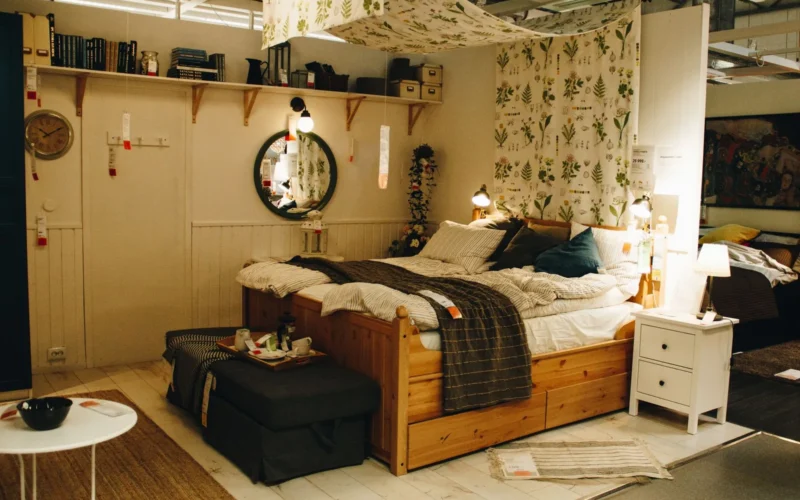
Mixing home decor styles works when you anchor the room with one dominant style (about 60% of the furniture and architectural feel), let a secondary style complement it, then tie both together through a shared color palette and consistent materials. Without that hierarchy, you don’t get personality—you get noise.
Identify Your Dominant and Secondary Styles
Name the style you’re most drawn to: mid-century modern, farmhouse, contemporary, industrial, traditional. That’s your anchor. Your secondary style should share at least one visual language with it—mid-century pairs naturally with Scandinavian because both favor clean lines and functional forms; farmhouse sits comfortably next to industrial because they share weathered textures and exposed materials. Pairing maximalist bohemian with stark minimalism, by contrast, gives each style nothing to hold onto in the other.
How to spot style compatibility
- Do they share a color palette range—warm tones, cool tones, or earthy neutrals?
- Do they use similar materials: wood, metal, natural fiber?
- Do they come from a common era or cultural origin?
- Do they prioritize the same design principle—simplicity, ornamentation, or raw function?
Establish a Cohesive Color Palette
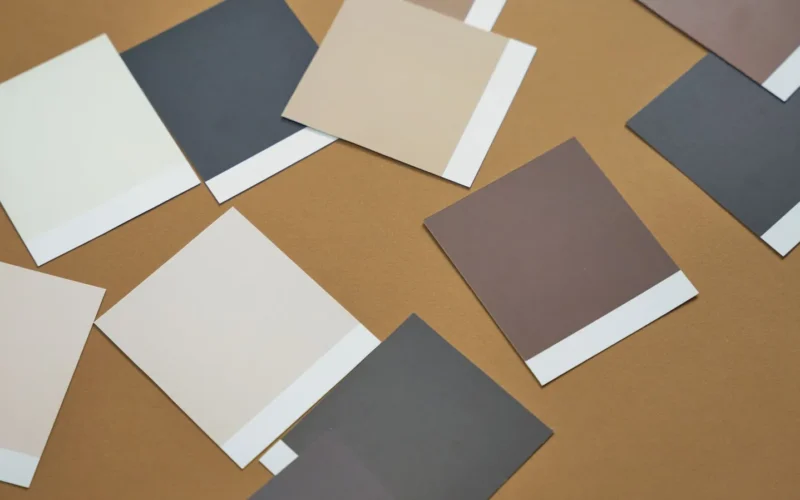
Color is the glue. Choose 2–3 base colors that work across both styles, then 1–2 accents for interest. If you’re mixing industrial and farmhouse, warm grays and cream anchor both styles comfortably; warm wood tones carry through naturally; a rust or sage green accent adds life without fighting either direction. Every piece you bring in—whether a mid-century credenza or a reclaimed-wood shelf—should sit within that palette without negotiation.
Neutral doesn’t mean boring. Warm whites, soft grays, and natural wood tones create a base sophisticated enough to let you layer without visual chaos. See our guide to best neutral paint colors for homes to find a wall color that anchors your mix.
Layer Textures and Materials
Mixed styles live or die by texture. All smooth and polished, and the room feels flat. All rough and raw, and it feels unfinished.
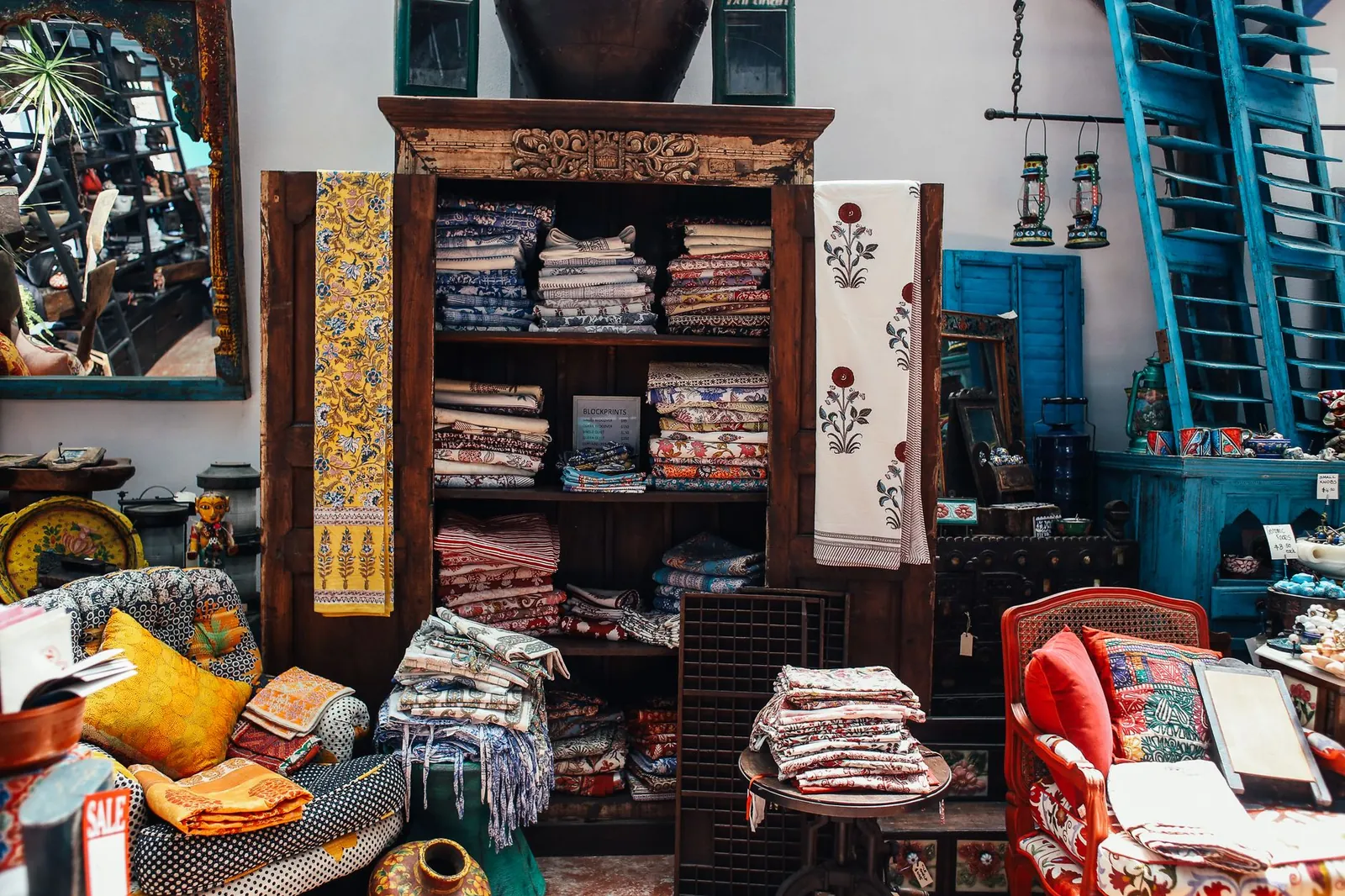
A sleek glass-and-metal coffee table (contemporary) pairs well with a chunky wool area rug (farmhouse). A linen sofa stays neutral enough to sit between styles; a leather ottoman reads industrial; a woven throw leans bohemian. The variety of surfaces—smooth, soft, rough, shiny—creates depth and keeps the eye moving without landing anywhere uncomfortable.
Texture pairings that work
- Hard + soft: Metal shelving with linen curtains
- Smooth + rough: Polished wood table with a jute rug
- Shiny + matte: Brass lamp with a ceramic vase
- Warm + cool: Honey-toned wood with cool-gray upholstery
The best mixed spaces feel like they grew over time, not like you followed a checklist.
Use Anchor Pieces Strategically
Your largest, most visible pieces set the tone and should reflect your dominant style. If mid-century modern is your anchor, invest in a solid sofa or dining table in that vein—typically $800–$2,500 for a piece that will last and do the heavy lifting of establishing your primary aesthetic.
Smaller pieces are where secondary styles and accents enter. A $150 industrial floor lamp beside a $1,500 mid-century credenza reads as deliberate mixing. Reverse it—a $150 mid-century side table beside a $2,000 industrial shelving unit—and it looks like you couldn’t commit. Scale and investment signal intention.
A practical budget framework
- One or two large anchor pieces in your primary style: $1,000–$3,000
- Secondary-style pieces at mid-range: $200–$800
- Accent pieces and decor for low-risk experimentation: $20–$150
Balance Pattern and Visual Weight
Patterns can tie styles together or detonate them. A simple geometric throw pillow (contemporary) on a linen farmhouse sofa reads as cohesive. Add three patterned pillows, a patterned rug, and patterned curtains, and the room becomes exhausting. A reliable ratio: one patterned element per seating area. Solid sofa, patterned pillow. Patterned rug, solid sofa. The restraint is what makes the mix feel curated.
Visual weight follows the same logic. A heavy dark-wood credenza balanced by an airy metal shelving unit feels deliberate. Two heavy pieces stacked in one corner with nothing across the room creates imbalance you’ll feel before you can name it. Step back and squint—your attention should distribute roughly evenly across the space.
Accessorize with Intention
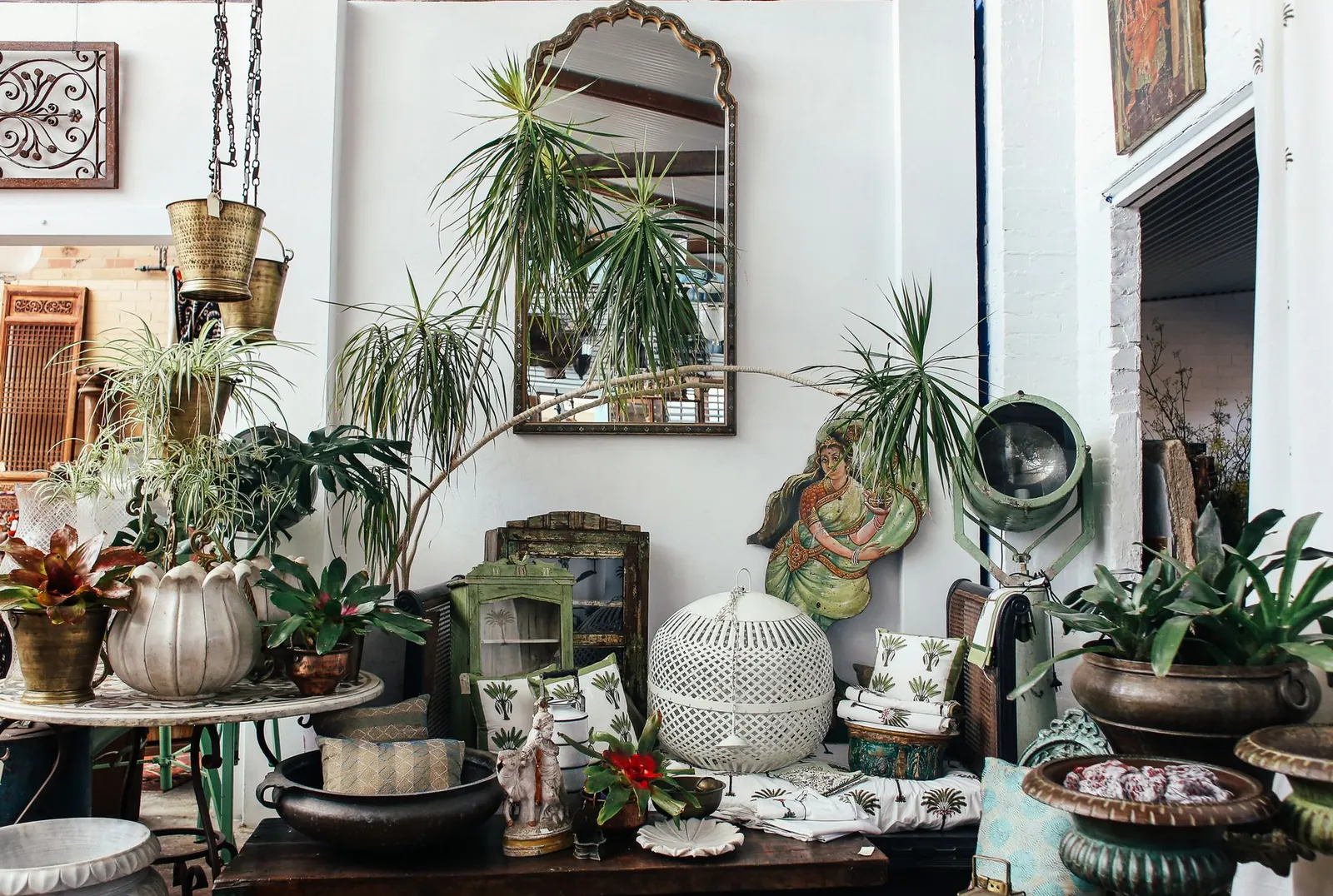
Books, plants, ceramics, and artwork are where personality surfaces—and where you can experiment cheaply. At $10–$100 each, these let you test a secondary style without rearranging furniture.
A gallery wall mixing abstract art (contemporary) with vintage botanical prints (traditional) works when the frames share a finish and the spacing stays consistent. A bookshelf combining leather-bound classics, modern ceramic vessels, and a few woven baskets feels collected rather than scattered because the colors stay inside your palette. Plants are particularly useful: they soften industrial edges, add farmhouse warmth, and read naturally in modern and bohemian spaces alike. A fiddle leaf fig in a ceramic pot is genuinely style-agnostic.
For another way to anchor and unify mixed pieces, see our guide to how to choose area rugs for rooms.
Test Before Committing
Live with your arrangement for at least two weeks before calling it done. Photograph the room in morning light, afternoon light, and evening light—colors shift more than you’d expect, and what looked balanced at the store may feel off against your actual walls. If something still bothers you after two weeks, the problem is usually one of three things: the palette has crept into too many hues (simplify), the textures are too uniform (add contrast), or one style is unexpectedly dominating (rebalance with accent pieces). A swapped pillow or a moved lamp can shift the entire feel of a room.
Frequently asked questions
Can I mix three or more decor styles in one room?
Yes, but the risk compounds quickly. Keep one dominant style, one secondary style, and use a third only for small accents—under 10% of the room. Three styles competing equally creates visual confusion. The more styles you layer, the more critical your color palette becomes, since it’s the only thread holding them together.
What if my partner and I like different styles?
That tension is actually useful. Choose a neutral anchor style you both find tolerable—contemporary or transitional both bridge well—then each of you introduces secondary elements you love. A shared color palette keeps it cohesive. Rooms designed this way often end up more interesting than either person would have chosen alone.
How do I know if my mix is working or just clashing?
Clashing feels random and uncomfortable; mixing feels intentional. If every piece in the room is a different color, era, and texture with nothing in common, it’s chaos. If pieces share a color, material, or design principle with at least one neighbor, it’s mixing. A simple test: can you explain why each piece is in the room? If yes, it works.
Should I mix styles in every room or keep some pure?
There’s no rule. A bedroom can be calm and consistent—one style, one palette—and that’s a legitimate choice. Living rooms and kitchens, where you spend the most time and gather with others, often benefit from subtle mixing because it feels lived-in rather than staged. Go with what makes you comfortable in that specific room.
What’s the easiest style pairing to start with?
Farmhouse plus industrial is forgiving—both share warm natural materials and an appreciation for texture, so pieces rarely fight each other. Mid-century plus Scandinavian works because both prize simplicity and function. Contemporary plus transitional is nearly foolproof; transitional design exists specifically to bridge styles. Hold off on pairing maximalism with minimalism until you’ve got a few successful mixes under your belt.

Ellen has renovated three houses, killed more seedlings than she admits, and writes about both.