This article may contain affiliate links. If you buy through them we may earn a commission at no extra cost to you.
The DeWalt DCD777C2 ($99 kit) is the best cordless drill for most homeowners—20V power, 3.6 pounds, two batteries, and a charger included. If that’s more than your budget or your projects are lighter, the Black+Decker BDCD20C at $59–$75 is a genuinely capable alternative. Below I’ll walk through five models, what separates them, and how to avoid buying more drill than you’ll ever use.
What Makes a Good Cordless Drill for Home Use
A home drill needs to drive 3-inch screws into framing and bore holes up to 1/2 inch in wood without bogging down. That rules out anything under 10.8V for general use. The 18V–20V range handles the full spread of home tasks; 12V drills are fine for trim, drywall, and flat-pack furniture but struggle with structural fastening.
Two-speed transmissions (typically 0–450 and 0–1,500 RPM) matter more than raw voltage. Low speed delivers torque for large fasteners; high speed handles drilling and lighter screws. A keyless half-inch chuck, a built-in LED, and a rubber grip round out what you actually need. Weight under 4 pounds keeps overhead work from becoming a workout.
Top Cordless Drill Models for Home Use
DeWalt DCD777C2
At $99 for the kit—drill, impact driver, two 1.3Ah batteries, charger—this is the most complete package on this list. It weighs 3.6 pounds and fits into tight spaces thanks to a compact barrel. Runtime on a 1.3Ah battery is roughly 30 minutes of mixed use, which covers most single-session projects. I’d start here if you’re buying your first cordless drill and want a brand with wide parts and battery availability.
Makita DF333D
The 10.8V DF333D ($60–$80, bare tool) weighs just 2.6 pounds—noticeably lighter than anything else on this list. Its two-speed transmission (0–400 and 0–1,300 RPM) is responsive for finish work. The trade-off is real: it won’t drive 3-inch structural screws without complaint, and runtime on the standard 1.5Ah battery is around 20 minutes. If your projects are trim, assembly, and drywall, the weight savings are worth it. For anything heavier, step up to 18V.
Milwaukee M18 CBLPD
Milwaukee’s 18V compact drill runs $129–$149 for the bare tool, with batteries sold separately (1.5Ah at $40, 5.0Ah at $80). That pricing stings if you’re starting from zero, but makes sense if you already own M18 tools—one battery platform across a drill, circular saw, and flashlight saves $80–$160 over buying redundant packs. Runtime scales with the battery you choose: expect 45 minutes on a 1.5Ah pack, up to 90 minutes on a 5.0Ah. Torque is the strongest of the five models here.
Black+Decker BDCD20C
The BDCD20C ($59–$75, kit with two 1.5Ah batteries) is the right call if your projects are occasional and your budget is firm. It’s a single-speed drill (0–1,500 RPM), which means less control on heavy fastening but simpler operation for everything else. At 3.8 pounds it’s the heaviest here, though not by much. For hanging pictures, assembling furniture, and light shelf work a few times a year, it won’t let you down.
Bosch PS41-2A
Bosch’s 12V PS41-2A ($99–$120, kit) sits between the Makita and the DeWalt in capability. It weighs 3.2 pounds, runs a two-speed transmission, and takes a half-inch chuck. The 12V platform caps its usefulness on heavy fastening, but Bosch builds these to last—homeowners who buy once and keep tools for a decade tend to favor this brand. Runtime on the included 1.3Ah battery is around 25 minutes.
Cordless Drill vs. Corded: When to Choose Each
Corded drills deliver unlimited runtime and more consistent power under continuous load—useful if you’re boring dozens of large holes in a single session. For typical home work (a few hours, varied tasks, moving between rooms), cordless wins on mobility every time. If you’re on the fence, our cordless vs. corded drill comparison breaks down the specific trade-offs by task type.
Comparison Table
| Model | Voltage | Weight | Runtime (per charge) | Price Range | Best For |
|---|---|---|---|---|---|
| DeWalt DCD777C2 | 20V | 3.6 lb | ~30 min | $99 (kit) | General home use, first-time buyers |
| Makita DF333D | 10.8V | 2.6 lb | ~20 min | $60–$80 | Light tasks, trim, assembly |
| Milwaukee M18 CBLPD | 18V | 3.6 lb | 45–90 min | $129–$149 | M18 ecosystem owners, heavy fastening |
| Black+Decker BDCD20C | 20V | 3.8 lb | ~35 min | $59–$75 | Occasional use, tight budgets |
| Bosch PS41-2A | 12V | 3.2 lb | ~25 min | $99–$120 | Long-term ownership, light to medium work |
Key Features to Prioritize
Battery and Charging
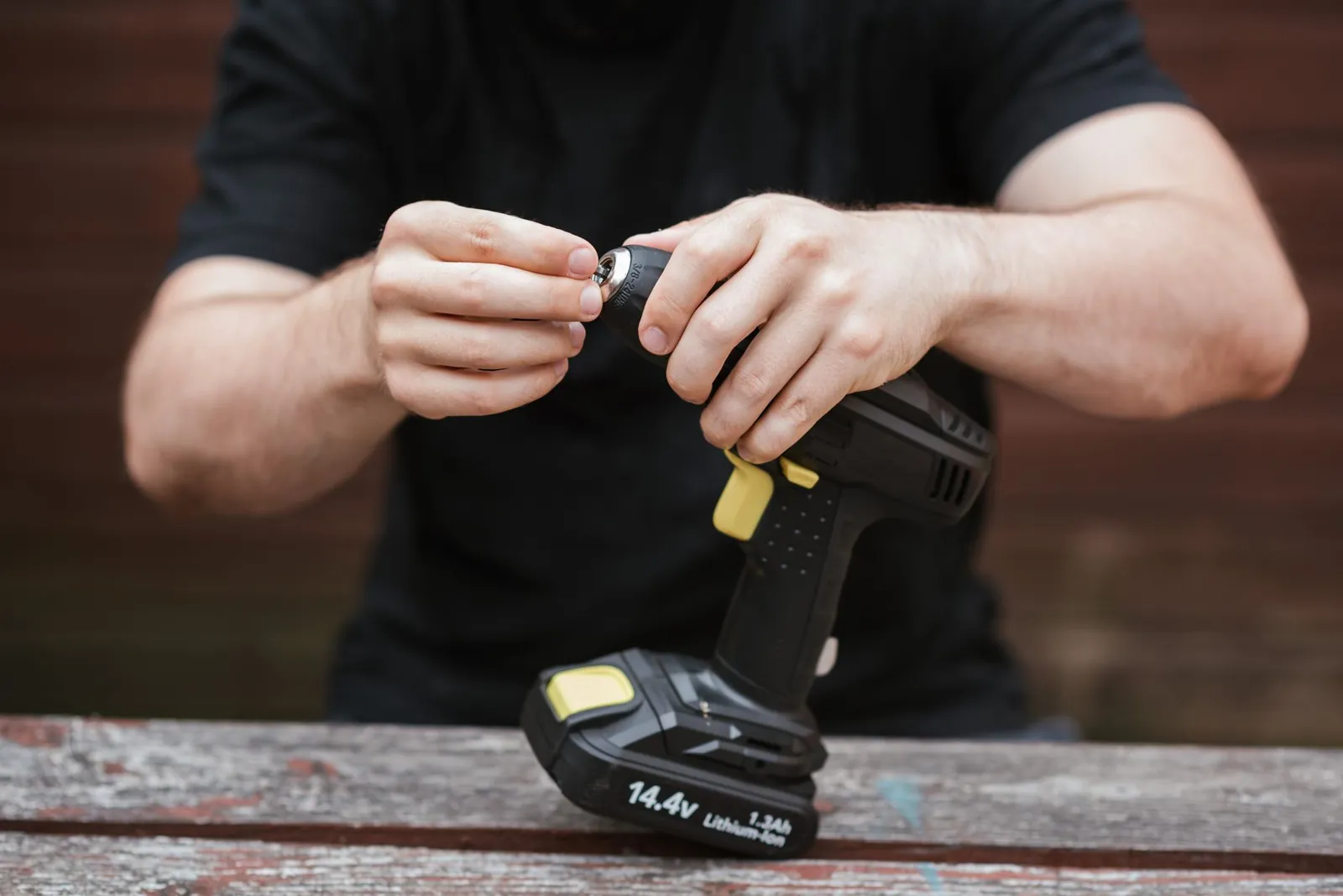
Voltage sets the power ceiling; amp-hours (Ah) set how long you work before recharging. A 1.3–2.0Ah pack gives roughly 20–40 minutes of mixed use. Step up to 4.0–5.0Ah and that stretches to 60–90 minutes. Standard chargers refill a 2.0Ah pack in 30–60 minutes; fast chargers cut that to 20–30 minutes. If you work in sessions longer than an hour, a second battery ($40–$80) eliminates downtime—one charges while you use the other.
Chuck and Bit Compatibility
A half-inch keyless chuck accepts standard hex and round shanks and tightens by hand, faster than a keyed chuck. Confirm the drill accepts 1/4-inch hex bits—they’re universal and the most common type you’ll buy.
Transmission and Speed Control
Low speed (400–500 RPM) drives large fasteners with more torque and less risk of stripping. High speed (1,200–1,500 RPM) drills holes and drives small screws faster. Single-speed drills simplify things but force you to manage torque through trigger pressure alone, which is harder on delicate materials.
Weight and Balance
Four pounds is the practical ceiling for overhead work. A compact barrel (shorter front-to-back) helps in confined spaces like cabinet interiors. A rubber grip prevents slipping when your hands are dusty—which they will be.
A drill you’ll actually reach for beats a powerful one gathering dust in the garage.
Budget Breakdown
Entry-level kits with drill, two batteries, and charger run $50–$100. Mid-range options ($100–$150) add durability, more torque, and better battery ecosystems. Professional-grade tools exceed $200 and include features—brushless motors, 5.0Ah batteries, extended warranties—that most homeowners won’t recoup in value. One practical rule: if you already own two or more tools from a single brand’s battery platform, stick with that brand. Sharing batteries across a drill, circular saw, and work light saves $80–$160 versus buying redundant packs.
Our Recommendation
Our verdict
For most homeowners, the DeWalt DCD777C2 ($99 kit) is the right choice—20V power, under 4 pounds, and two batteries included at a price that doesn’t require justification. For lighter projects or a tighter budget, the Black+Decker BDCD20C ($59–$75) is reliable without being underpowered for typical home tasks. Go with Milwaukee if you’re already in the M18 ecosystem. Skip the professional-grade models unless your weekends look more like a job site than a home.
Frequently asked questions
How long do cordless drill batteries last?
Lithium-ion batteries—standard in every drill on this list—typically hold useful capacity for 3–5 years of normal home use, degrading gradually rather than failing suddenly. Storing them in a cool, dry place and avoiding full discharge extends that. Replacement packs run $40–$100 depending on brand and capacity.
Can I use a cordless drill for masonry or concrete?
Standard cordless drills aren’t built for masonry. Concrete and brick resist rotary-only drilling, and a binding bit can wrench your wrist or stall the motor. Hammer drills add a percussion action that handles masonry properly; they cost $150–$300 to buy. For occasional concrete anchors, renting a hammer drill for $30–$50 a day makes more sense.
What’s the difference between a drill and an impact driver?
A drill rotates smoothly and handles boring holes and driving screws into wood or soft materials. An impact driver adds rapid rotational bursts that drive fasteners faster and with more force—useful for heavy fastening, long screws, and tough materials. Several kits on this list include both. For home use, a drill alone covers most tasks; the impact driver becomes valuable when you’re driving a lot of deck screws or lag bolts.
Do I need a second battery?
It depends on how long you work in a single session. For occasional projects—an afternoon once or twice a month—one battery is enough. For regular weekend work that runs more than an hour, a second battery ($40–$80) keeps you moving while the first one charges.
Are cordless drills waterproof?
Most are splash-resistant, not waterproof. Avoid using them in heavy rain or anywhere they might be submerged. If you work in damp conditions regularly, store the battery indoors between sessions and wipe the drill dry after use. A few premium models carry higher water-resistance ratings, but they cost considerably more and aren’t necessary for typical home work.

Rob is a former carpenter who now explains home repairs so you only have to do them once.