This article may contain affiliate links. If you buy through them we may earn a commission at no extra cost to you.
For most homes, performance fabric or microfiber beats everything else on durability per dollar. Leather lasts longer but costs two to three times as much upfront. Natural fabrics like linen and cotton look beautiful and wear out fast—plan on reupholstering within eight years.
Microfiber: Budget-Friendly and Stain-Resistant
Microfiber has become the workhorse of affordable sofas. Made from ultra-fine polyester fibers, it resists stains better than any natural fabric and costs $400–$900 less than comparable leather pieces.
Why microfiber works
- Tight weave sheds water and repels liquids before they absorb
- Feels soft and warm to the touch, closer to suede than plastic
- Pet hair releases more easily than from darker wovens
- Cleans with mild soap and water
The catch
Microfiber pills—develops small fiber balls—after three to five years of regular use, especially on seating edges and armrests. It holds odors if spills aren’t cleaned promptly, and on hot days it traps more body heat than linen or cotton. Expect a decent three-seater to run $400–$1,200 and last five to seven years before showing real wear.
Performance Fabrics: Durability Meets Comfort
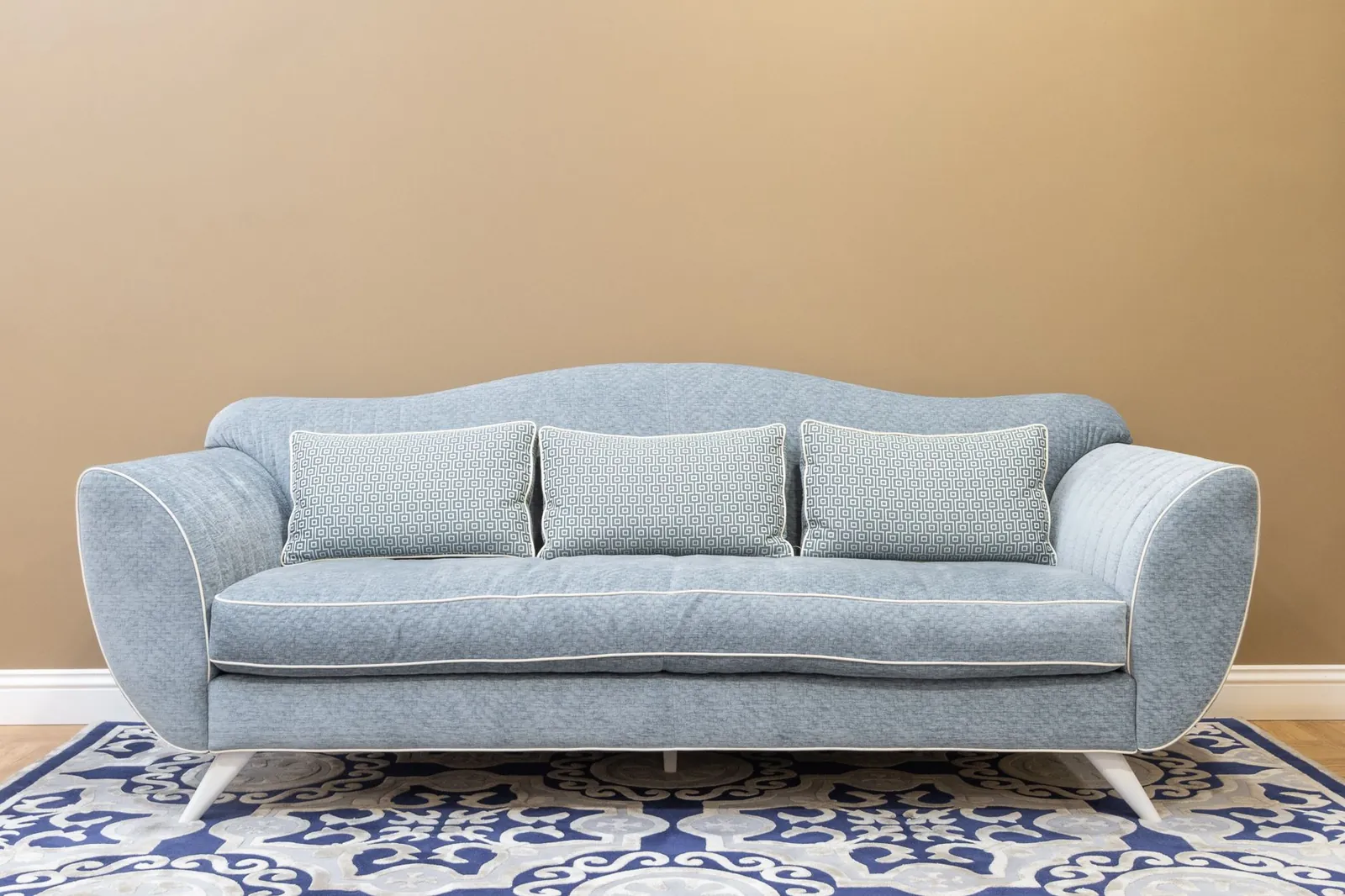
Performance fabrics blend synthetic fibers—typically polyester, nylon, or acrylic—with treatments that resist stains, fading, and abrasion. Sunbrella is the best-known brand; solution-dyed options from other makers fall into the same category.
What makes them different
The fibers are dyed before weaving rather than after, so color penetrates the entire strand. Fading takes ten-plus years instead of three to four. Stain resistance is built into the fiber itself, not applied as a surface coating that washes away over time.
Lifespan and cost
A quality performance sofa lasts eight to ten years with normal use. Expect to pay $1,200–$2,500 for a three-seater—roughly 30–40% more than microfiber but well under leather. If you have kids, pets, or light-colored furnishings, that premium typically saves money over avoided replacements.
Leather: Longevity and Luxury
Genuine leather can last 20-plus years if maintained, and it improves with patina rather than simply looking worn. Spills bead on the surface rather than soaking in—but the type of leather matters enormously.
Types and costs
- Full-grain leather: Most durable, shows natural marks, $2,500–$5,000+ for a three-seater
- Top-grain leather: Sanded smooth for a uniform look, $1,800–$3,500
- Bonded leather: Leather scraps glued to a backing—lasts only five to seven years before peeling, $800–$1,500
Real maintenance demands
Leather needs conditioning every six to twelve months with a leather cream ($15–$40 per bottle); in dry or heavily heated homes, do it closer to every six months. Scratches and scuffs are normal and often add character, but deep gouges require professional repair at $200–$600. Leather also feels cold in winter and hot in summer until body heat warms it—a minor but real daily trade-off.
Real leather is an investment in longevity, not a shortcut to low maintenance.
Linen and Cotton: Natural but Fragile
Natural woven fabrics breathe well and age gracefully—if you accept fading and softening as part of their character. They belong in low-traffic formal rooms or guest spaces, not family rooms with daily use.
Cotton shows visible wear within two to three years; linen lasts slightly longer but wrinkles permanently and absorbs stains readily. Spilled wine or a pet accident soaks in rather than sitting on the surface. Cleaning typically requires professional upholstery services at $200–$400 per treatment. Budget $800–$2,000 for a decent linen sofa, knowing reupholstering may come within eight years.
Fabric Comparison: Which Wins for Your Home?
| Fabric | Durability (years) | Stain Resistance | Cost (3-seater) | Maintenance | Best For |
|---|---|---|---|---|---|
| Microfiber | 5–7 | Excellent | $400–$1,200 | Weekly vacuuming, spot clean | Tight budgets, pets, kids |
| Performance Blend | 8–10 | Excellent | $1,200–$2,500 | Weekly vacuuming, occasional professional clean | High-traffic homes, color retention |
| Full-Grain Leather | 20+ | Very Good | $2,500–$5,000+ | Conditioning every 6–12 months, professional repair | Formal spaces, longevity-focused budgets |
| Linen | 5–8 | Poor | $1,000–$2,500 | Professional cleaning, acceptance of aging | Low-traffic rooms, aesthetic priority |
| Cotton | 3–5 | Poor | $800–$2,000 | Professional cleaning, frequent reupholstering | Guest rooms, formal settings |
Our verdict
For most households, performance fabrics offer the best return: they outlast microfiber, cost less than leather, and genuinely resist stains and fading. If budget is the priority, microfiber works well for five to seven years. If you plan to keep a sofa for 15-plus years, full-grain leather justifies its cost. Natural fabrics suit spaces where aesthetics matter more than durability.
Hidden Durability Factors to Check
Rub count
Manufacturers measure fabric durability using a rub count—how many friction cycles the fabric withstands before showing wear. Above 15,000 rubs is heavy-duty; 10,000–15,000 is moderate; below 10,000 is light use only. Ask your retailer for this number before buying. Most salespeople can look it up from the manufacturer spec sheet.
Frame and seam construction
Fabric matters less if the frame fails first. Kiln-dried hardwood frames last decades; engineered wood typically fails in five to ten years. Double-stitched seams hold significantly better than single-stitched. These details add $300–$800 to the price but extend the sofa’s useful life by years.
Cushion foam density
High-density foam at 1.8 lb per cubic foot or higher resists sagging; low-density foam at 1.2 lb or less flattens within three years. Down-filled cushions feel luxurious but need daily fluffing. For everyday family use, high-density foam is the more forgiving choice.
Care and Cleaning by Fabric Type
Microfiber and performance fabrics tolerate water-based cleaners. Leather needs pH-balanced conditioners—standard household cleaners strip its natural oils. Natural fabrics usually require professional dry cleaning; water-based spot treatment risks watermarks and shrinkage.
Vacuum all sofas weekly to prevent dust and pet hair from working into the weave and accelerating wear. Blot spills immediately with a dry cloth—rubbing spreads the stain and pushes it deeper. Test any cleaner on a hidden seam before applying it to a visible panel. Professional upholstery cleaning every 12–18 months costs $150–$400 and meaningfully extends fabric life.
Check our sofa buying guide for living rooms for more on frame quality and overall selection criteria.
Frequently asked questions
Is microfiber or leather better for pets?
Microfiber edges it out because pet hair doesn’t cling as readily and stains from accidents or muddy paws resist absorption. Leather is also pet-friendly but shows claw scratches more visibly. Both beat natural fabrics, which absorb odors and stains quickly.
Can you fix a stain on performance fabric?
Most stains clean easily with mild soap and water or a fabric cleaner designed for synthetics. Ink and grease need professional treatment ($50–$150). Because stains don’t absorb immediately, you typically have 15–30 minutes to act before permanent setting.
How often does leather need conditioning?
Every six to twelve months in normal climates; more often in dry or heavily heated environments. Conditioning replaces natural oils lost to air exposure and keeps leather supple. Skip it consistently and leather becomes stiff and prone to cracking after ten to fifteen years.
What’s the difference between solution-dyed and piece-dyed fabric?
Solution-dyed fibers are colored before weaving, so color runs through the entire strand and resists fading for ten-plus years. Piece-dyed fabric is dyed after weaving; dye sits on the surface and fades in three to five years. Solution-dyed costs 15–25% more but holds color far longer in sunlit rooms.
Is bonded leather worth buying?
No. Bonded leather looks like leather but lasts only five to seven years before peeling and cracking. For the same price, microfiber or performance fabric will outlast it. If you want genuine leather, save for top-grain or full-grain; if the budget doesn’t stretch that far, synthetics are the better call.

Rob is a former carpenter who now explains home repairs so you only have to do them once.