This article may contain affiliate links. If you buy through them we may earn a commission at no extra cost to you.
A beginner lawn care schedule comes down to six core tasks spread across the year: rake and test in early spring, fertilize and overseed in spring and fall, mow and water correctly all season, aerate in September, and let the lawn rest in winter. This guide follows cool-season grasses (fescue, bluegrass, ryegrass) in USDA zones 3–6. If you grow warm-season grass—bermuda, zoysia, St. Augustine—in zones 7–10, shift every timing below forward by four to six weeks.
Spring: March Through May

Early spring (March–April)
Once the soil is dry enough that you don’t sink in when you walk, rake out dead grass and debris. This breaks up the thatch layer—the mat of decomposed stems that blocks water and nutrients from reaching roots. For lawns under 5,000 square feet, a stiff-tined rake ($20–40) does the job. Larger lawns benefit from a power rake, which you can rent for $40–60 per day.
Test your soil pH before you buy a single bag of fertilizer. A basic kit costs $10–15 at any garden center. Cool-season grasses prefer 6.0–7.0; outside that range, nutrients lock up in the soil and fertilizer goes to waste. If pH is too low, apply lime in early spring. Too high, apply sulfur in fall. Either amendment takes three to six months to shift pH measurably, so don’t skip the test.
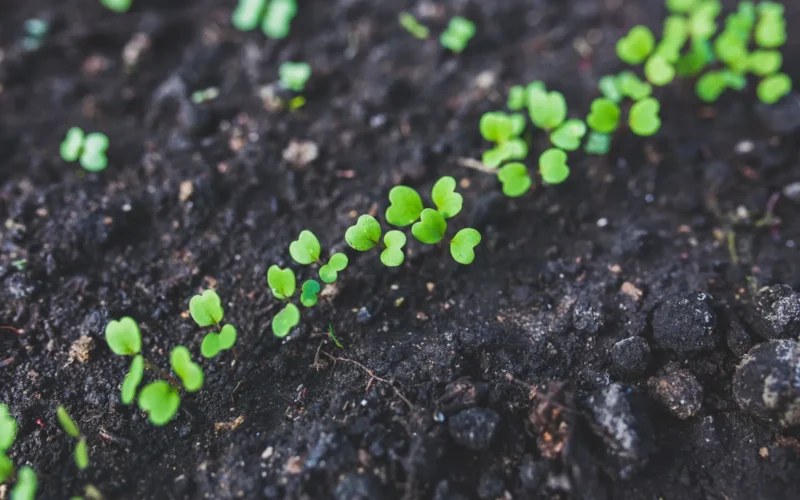
Apply a spring fertilizer with a higher first number—nitrogen—such as 10-5-5. The target rate is 1 pound of actual nitrogen per 1,000 square feet. If your lawn has bare or thin patches, overseed now: soil is cool, moisture is reliable, and weed competition is low. Spread seed at 3–4 pounds per 1,000 square feet, rake lightly into bare spots, and keep the top inch of soil moist for two to three weeks until grass sprouts.
Late spring (May)
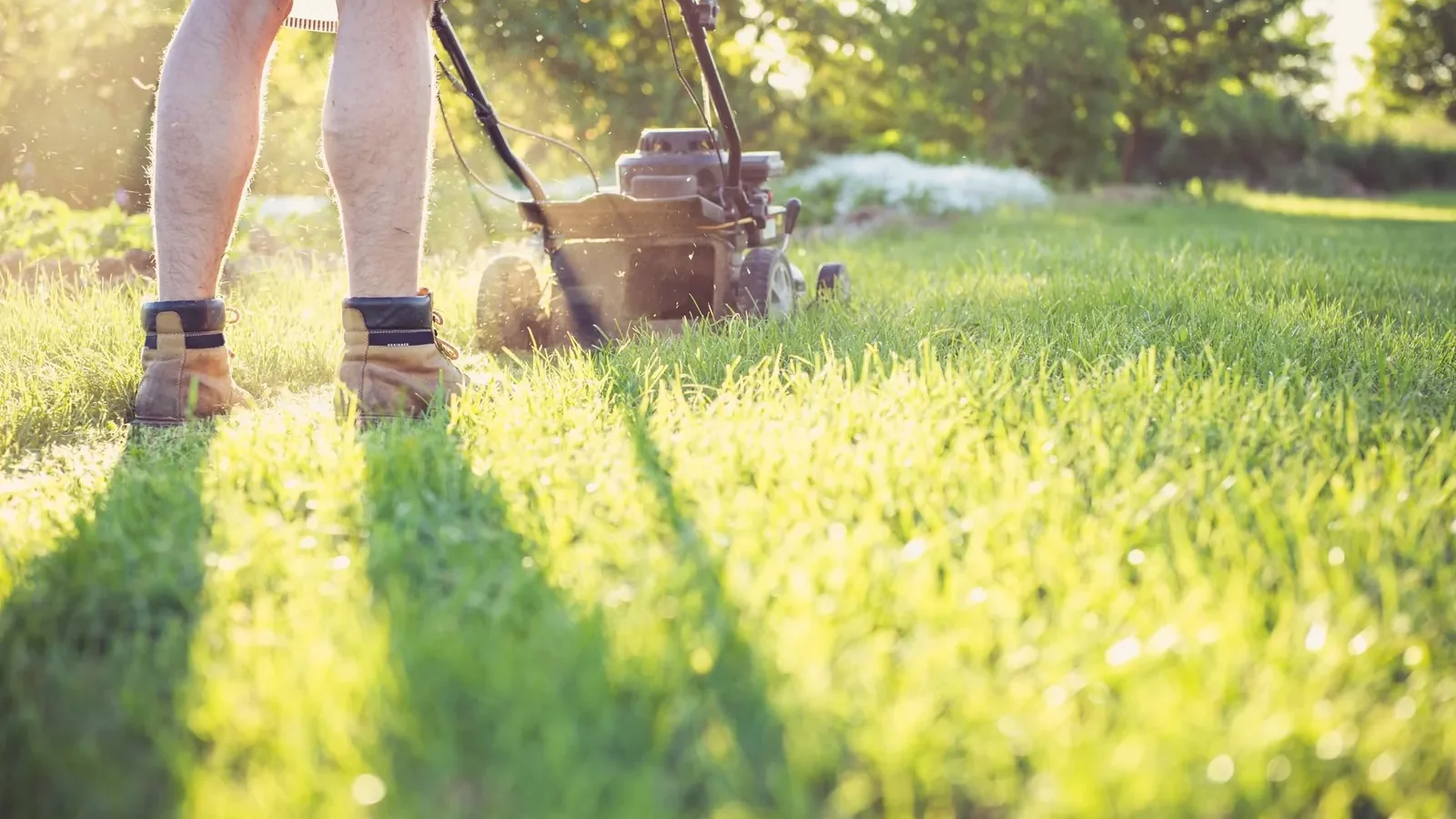
Start mowing once grass reaches 3–4 inches tall. Set the blade to 2.5–3.5 inches and never remove more than one-third of the blade height in a single pass. Leave clippings on the lawn—they decompose quickly and return enough nitrogen to cut your annual fertilizer needs by roughly 25–30%.
Apply a pre-emergent herbicide in mid-May to block crabgrass before it sprouts. The trigger is soil temperature: three to five consecutive days at 55–60°F. Once crabgrass germinates, pre-emergent does nothing. A $10 soil thermometer takes the guesswork out of timing.
Summer: June Through August
Mowing and watering
Raise your mower blade to 3–4 inches for summer. Taller grass shades the soil, slows evaporation, and keeps roots cooler during heat stress. Mow every seven to ten days, depending on growth rate.
Water deeply and infrequently. Most cool-season lawns need 1–1.5 inches per week, counting rain. A tuna can or rain gauge placed in the sprinkler zone tells you exactly how long to run each zone to hit that target. Watering daily for 10 minutes grows shallow roots; watering once or twice weekly for 60–90 minutes per zone grows deep ones. Water before 8 a.m. to reduce evaporation and lower the risk of fungal disease.
Pest and disease watch
Walk the lawn weekly and look for patterns. Circular brown patches 2–6 inches across suggest dollar spot fungus. Yellowing in hot, dry corners often points to chinch bugs. Irregular dead patches with a spongy feel underfoot can mean grub damage below the surface. Identifying the problem correctly matters more than treating fast—many summer issues clear up by simply raising the mower height or adjusting watering.
When treatment is necessary, use targeted products: insecticidal soap for soft-bodied insects, a labeled fungicide for fungal disease. Broad-spectrum pesticides kill beneficial insects alongside the pests. Apply in early morning or late evening when pollinators aren’t active.
Fall: September Through November
Fall is the most productive season for lawn repair. Soil is still warm enough for seed germination, air temperatures are cooler, and annual weeds are dying off rather than competing with new grass.
Aeration and overseeding
Aerate in early September. A core aerator pulls small plugs of soil from the ground, relieving compaction and opening channels for water, air, and nutrients to reach roots. Rent a core aerator for $50–80 per day, or hire a lawn service for $100–300 depending on lawn size. Aerate when soil is moist but not waterlogged—the day after a rain is ideal.
Overseed immediately after aeration. Seed that falls into the open holes makes direct soil contact and germinates at 70–80%; seed scattered on undisturbed turf germinates at closer to 30–40%. Water daily for three weeks until seedlings are established, then resume your normal deep-watering schedule.
Fertilizing and leaf cleanup
Apply a fall fertilizer higher in phosphorus and potassium—such as 5-10-10—in mid-September, then again in early November. Fall feeding builds root reserves before dormancy and produces noticeably denser growth the following spring.
Rake leaves weekly once they start falling. A thick mat smothers grass and traps moisture long enough to invite snow mold and other fungal diseases. Shred leaves with your mower and compost them, or bag for yard waste pickup. A basic leaf blower runs $80–150 and saves significant time on larger properties.
The best lawn care schedule is one you’ll actually follow—start simple with mowing, watering, and one annual fertilizer application, then add steps as your confidence grows.
Winter: December Through February
Cool-season grass goes dormant once soil temperatures drop below 45°F. Growth stops, but a few habits protect the lawn until spring.
Avoid walking on frosted grass when you can help it. Ice crystals inside dormant blades snap under foot traffic and leave brown footprints that persist until new growth covers them in May. Hold off on fertilizer, herbicide, and fungicide entirely—dormant grass can’t take up nutrients, and anything you apply will leach into groundwater.
Clear leaves and debris before the first snow. Snow cover itself doesn’t harm grass; a leaf mat trapped under snow creates the warm, wet conditions that snow mold needs to establish.
Use the downtime to service your mower: change the oil, replace the spark plug, sharpen the blade, and either drain the fuel tank or add fuel stabilizer. Professional blade sharpening costs $15–30 and makes a real difference—a dull blade tears grass rather than cutting it cleanly, leaving ragged tips that turn brown and invite disease.
Tools and Supplies You’ll Actually Use
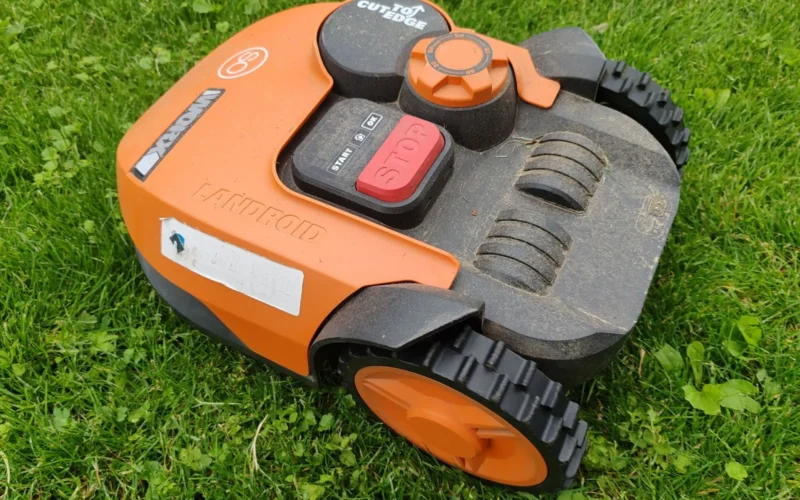
- Push mower: $150–300. Battery-powered models are quieter and easier to maintain; gas models cost less upfront but need more seasonal servicing. A robot mower is worth considering for flat lawns under 5,000 square feet.
- Rake: $20–40 for a stiff-tined rake; $15–25 for a leaf rake. You’ll use both.
- Spreader: $30–80. A drop spreader applies fertilizer accurately in straight lines; a broadcast spreader covers ground faster but takes practice to calibrate.
- Soil test kit: $10–15. Buy one before you buy fertilizer.
- Hose and sprinkler: $40–100. Any consistent system beats hand-watering. A soaker hose is more water-efficient than an oscillating sprinkler.
- Fertilizer: $15–40 per bag. A 50-pound bag covers 5,000–15,000 square feet depending on the formula; check the label for your lawn’s square footage.
Getting Started Mid-Season
If you’re reading this in July, don’t try to catch up on everything at once. Mow at the right height, water deeply once or twice a week, and mark your calendar for fall aeration. Lawns recover well from neglect when given consistent basic care. Keep a simple phone note of what you do and when—dates you fertilized, seeded, or treated a problem. After one full year, that record will tell you more about your specific lawn than any general guide can.
Frequently asked questions
How often should I fertilize my lawn?
Most lawns need two to four applications per year. A simple beginner schedule is spring (April) and fall (September), then add an early summer application in June if growth seems weak or color is pale. Always check package directions for your lawn’s square footage and follow the rate—more fertilizer does not mean faster results, and over-application burns grass.
What’s the best height to cut my grass?
Cool-season grasses do best at 2.5–3.5 inches; warm-season grasses at 1–2.5 inches. Raise the blade by half an inch during summer heat. Never remove more than one-third of the blade in a single mow—if the lawn got away from you, step the height down gradually over two weeks rather than scalping it in one pass.
How much should I water my lawn?
Most lawns need 1–1.5 inches of water per week, including rainfall. Water once or twice weekly for 60–90 minutes per sprinkler zone rather than daily for short bursts. Daily shallow watering grows shallow roots that stress quickly in heat. A rain gauge or tuna can in the spray zone tells you exactly how long your system takes to deliver an inch.
Can I overseed a lawn without aeration?
Yes, but germination rates drop sharply. Seed on unbroken soil germinates at roughly 30–40%; seed in aeration holes germinates at 70–80%. If renting an aerator isn’t practical, dethatch with a power rake and rough up bare spots with a metal rake before seeding—it’s not as effective as aeration, but it beats scattering seed on compacted turf.
What’s the cheapest way to start lawn care?
Mow at the correct height, water deeply once a week, and skip fertilizer entirely in year one. Those two habits alone improve most neglected lawns noticeably and cost almost nothing. In year two, add one spring fertilizer application ($20–40). Aerate and overseed in fall of year two if thin patches remain. Spreading the investment over two seasons is easier on the budget and less overwhelming than tackling everything at once.

Ellen has renovated three houses, killed more seedlings than she admits, and writes about both.