This article may contain affiliate links. If you buy through them we may earn a commission at no extra cost to you.
A sofa seats two to three people in 78–92 inches of width. A sectional seats five to seven in an L or U footprint that starts at 9×9 feet. If your living room is under 200 square feet, the sofa wins by default. If you’re regularly squeezing guests onto a loveseat and an office chair, the sectional is worth the extra cost and floor space.
Layout and Space Requirements
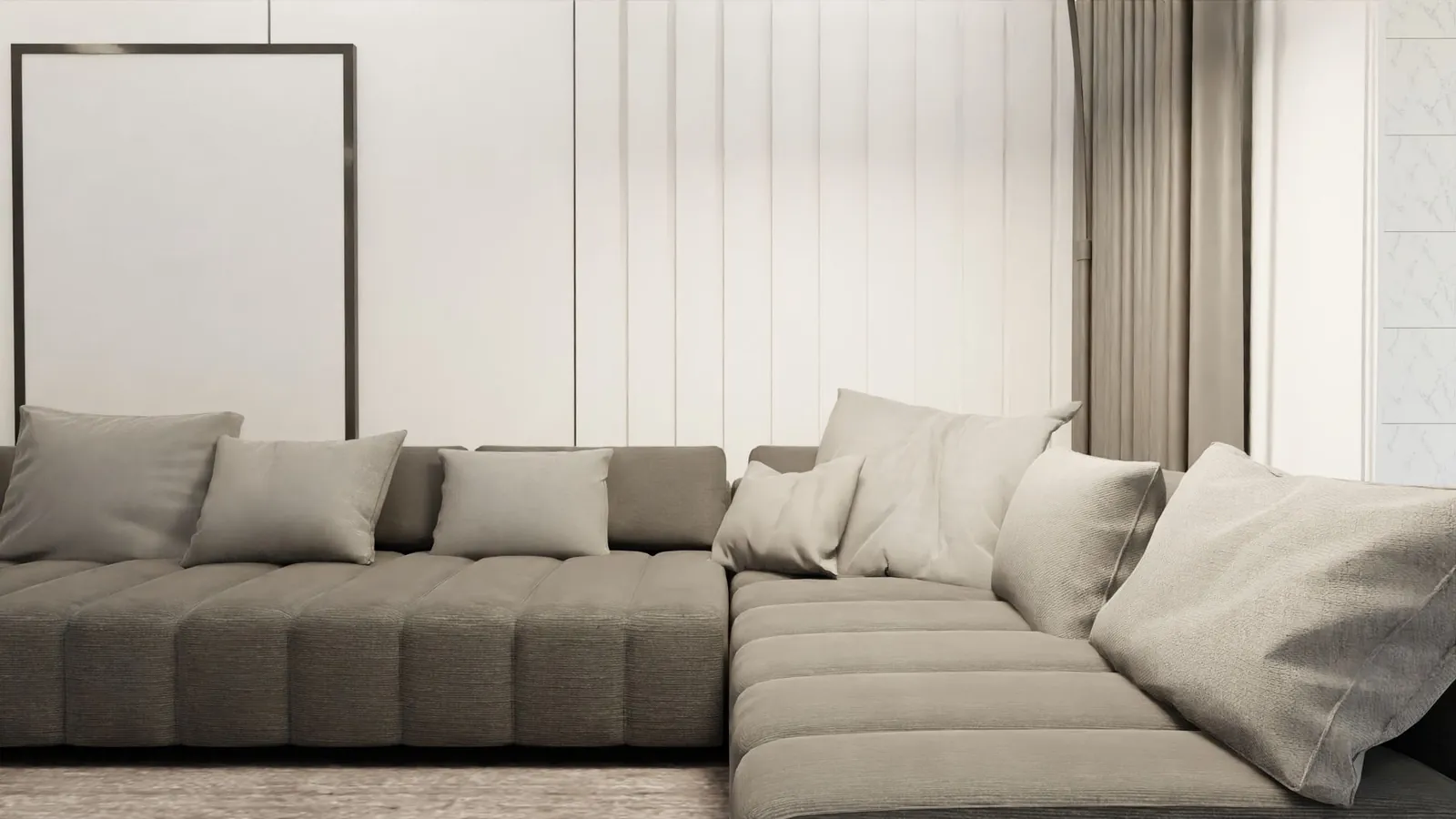
A standard sofa runs 78 to 92 inches wide and 35 to 40 inches deep—manageable in a rectangular room under 200 square feet or in a combined living-dining space where every foot counts. I keep a sofa in my own narrow front room for exactly this reason; a sectional would block the path to the kitchen entirely.
Sectionals need a genuine corner to work. An L-shape typically claims a 9×9-foot footprint; a U-shape can stretch 12 feet or more along one wall. Before ordering, lay out the dimensions with painter’s tape on the floor. It takes ten minutes and prevents a very expensive mistake.
Right-sizing for your room
Under 150 square feet: a sofa plus a chair or two reads as intentional. A sectional reads as a mistake. Between 200 and 350 square feet, either can work depending on your traffic flow and whether the room has an open corner. Over 350 square feet, a sectional earns its place—without it, the room can feel like furniture is floating in a void. See our guide on arranging furniture in small rooms for specific layout strategies by room shape.
Seating Capacity and Comfort
A three-seat sofa holds three adults, or two adults and two children who don’t mind touching elbows. A sectional with a chaise or corner unit comfortably seats five; six or seven is possible but starts to feel like a packed subway car. The real advantage isn’t raw headcount—it’s that different people can sit differently at the same time. One person reads upright on the arm, another stretches out on the chaise, a third claims the corner seat. No negotiating.
That said, a sectional used by one or two people daily can feel cavernous. A sofa with a side chair creates a more natural conversation arrangement for smaller households and costs less to fill with people.
Cost Comparison
| Furniture Type | Entry Price | Mid-Range | High-End |
|---|---|---|---|
| Sofa (3-seat) | $400–$800 | $1,200–$2,500 | $3,500+ |
| Sectional (L-shape) | $700–$1,400 | $2,000–$4,500 | $5,500+ |
| Sectional (U-shape) | $1,200–$2,200 | $3,500–$6,500 | $8,000+ |
A comparable sectional runs 30 to 40 percent more than a sofa at the same quality tier, simply because it uses more fabric, more foam, and more frame material. At the entry level, Article and IKEA put sofas around $400–$700 and L-shaped sectionals at $700–$1,400. Mid-range brands like Room & Board and West Elm land at $1,200–$2,500 for a sofa and $2,000–$4,500 for a sectional. Restoration Hardware and custom makers push well past $5,000 for either.
If the sectional price is a stretch, a sofa paired with a quality accent chair and a large ottoman often costs $400–$800 less than a comparable sectional while still giving you flexible seating for four.
Flexibility and Reconfiguration
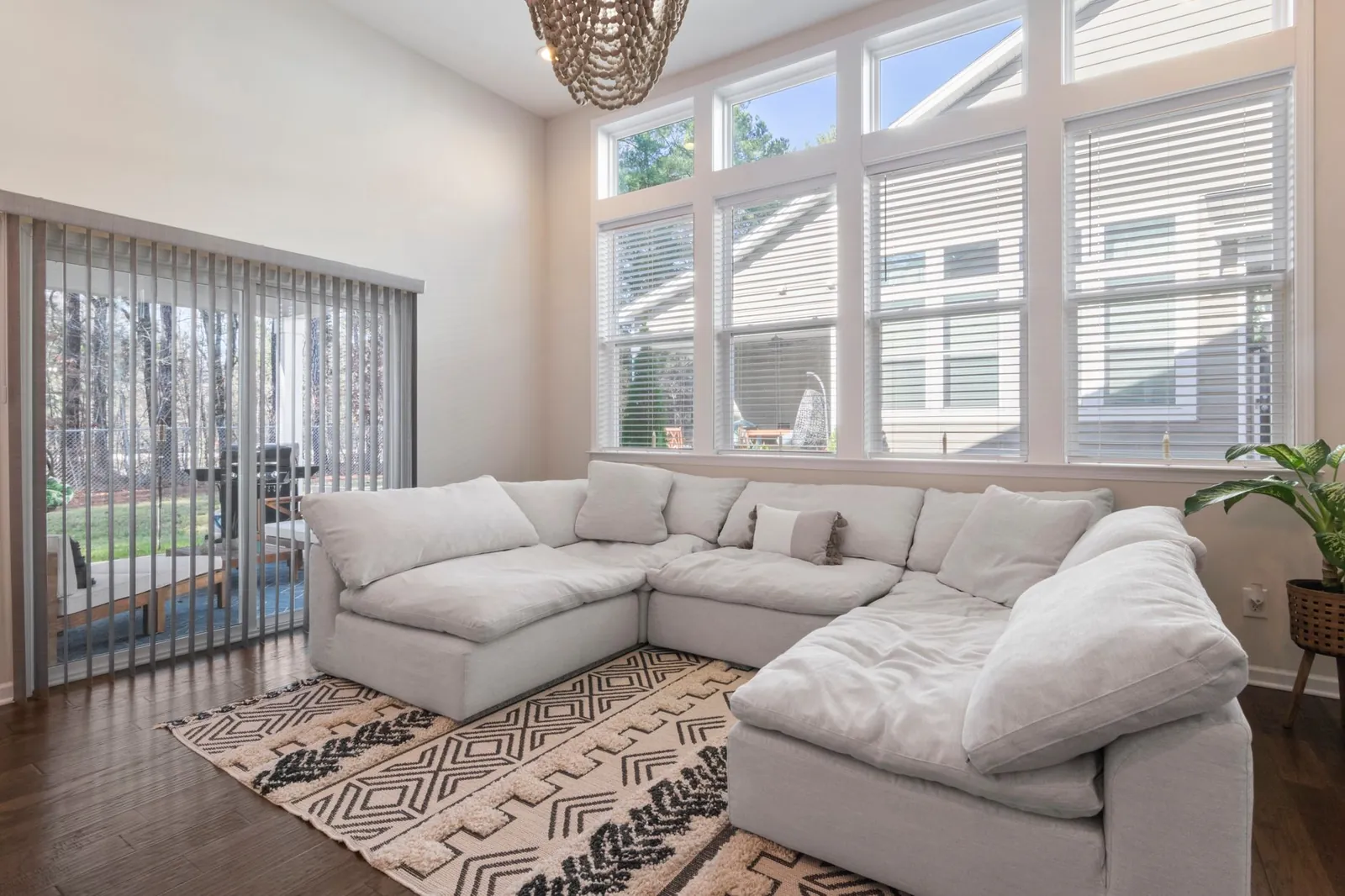
Sofas move easily. One person and a furniture dolly can get a sofa through a standard 32-inch doorway. Sectionals almost always require disassembly, and professional movers typically charge $300–$800 more to handle them. If you rent or expect to move within five years, that’s a real number worth factoring in before you buy.
Modular sectionals split the difference. A three-piece L-shape might detach into a sofa, a corner unit, and a chaise—pieces that can be rearranged or moved independently. Expect to pay 15 to 25 percent more for genuine modularity. Ask the retailer specifically whether replacement pieces are sold separately; some brands discontinue configurations within two or three years, leaving you unable to add or replace a section later.
Maintenance and Durability
Sectionals have more seams, more crevices, and more surface area—so they collect more crumbs, pet hair, and dust. A weekly pass with a hand vacuum along the seams keeps things manageable, but it takes longer than vacuuming a sofa.
Fabric choice matters more than the furniture type. Microfiber and performance fabrics (Crypton, Sunbrella) resist stains and abrasion better than linen or velvet, and that advantage compounds on a sectional because replacing a single damaged section is harder than recovering one sofa cushion. Budget sectionals often use lower-density foam that compresses and gaps within two to three years of daily use; quality sectionals use tied cushions or high-density foam cores (1.8 lb/ft³ or higher) that hold their shape.
Lifespan for both types: 7–15 years with regular care, 5–7 years for budget pieces. The frame determines the ceiling—a solid hardwood or kiln-dried frame can be reupholstered; a stapled particleboard frame cannot.
Aesthetics and Style
A sofa is visually neutral. It doesn’t anchor a room so much as participate in it, which makes it easier to rearrange, easier to pair with other pieces, and easier to carry into a new home with different proportions. Minimalist, farmhouse, mid-century, eclectic—a well-chosen sofa works in all of them.
A sectional makes a claim on the room. It says: this is where we sit, this is the center of gravity. In a contemporary family room or a large open-plan space, that’s exactly right. In a formal sitting room or a space that doubles as a home office, it can feel like the furniture is running the show.
A sofa suits rooms where you want flexibility in arrangement; a sectional suits rooms where you want to maximize comfort for groups.
Choosing Between Them: A Decision Framework
Measure your room before anything else. If you don’t have a 9×9-foot open corner, the sectional decision is already made for you. If you do have the space, your next question is how many people sit in that room on a typical evening—not your best-case holiday gathering, but Tuesday night.
Renters, frequent movers, and anyone who rearranges seasonally should default to a sofa. Homeowners with stable living situations, large rooms, and three or more people sharing the space regularly will get more daily value from a sectional. For more detail on evaluating sofas specifically, see our sofa buying guide for living rooms.
Sit on demo models in person for at least five minutes before committing. Check seat height (16–18 inches suits most adults), seat depth (18–24 inches; deeper feels luxurious until you can’t sit upright), and arm height (12–16 inches). A sectional that photographs beautifully in a 2,000-square-foot showroom can feel oppressive in a 280-square-foot living room.
Our verdict
Choose a sofa if your room is under 200 square feet, you move often, or you typically have two to three people using the space. Choose a sectional if you have a genuine corner to fill, regularly seat five or more, and plan to stay put long enough to justify the moving cost. The price gap is real—30 to 40 percent at comparable quality—so make sure the seating capacity justifies it.
Frequently asked questions
Can a sectional fit in a small living room?
Yes, but only if the room is at least 200 square feet and has an open corner. An L-shaped sectional in a small space can feel cramped and block traffic flow. A compact sectional (around 8 feet wide) with a shallow chaise works better than a full U-shape. Measure first and use painter’s tape to outline the footprint before purchasing.
Are sectionals harder to clean than sofas?
Sectionals have more seams and crevices, so they collect more debris. They’re not harder to clean, just more time-consuming. Use a hand vacuum weekly to manage crumbs in the seams. Choose performance fabrics if you have kids or pets; they resist stains better than natural fibers.
Can you replace just one part of a sectional?
It depends on the sectional. Modular sectionals with detachable pieces allow you to replace a single chaise or arm if it wears out. Non-modular sectionals are harder to repair; you may need to recover the entire piece. Ask about modularity and replacement part availability before buying.
What’s the typical lifespan of a sofa or sectional?
A well-made sofa or sectional lasts 7 to 15 years with regular care. High-quality pieces with solid wood frames and high-density foam last longer. Budget pieces may need replacement after 5 to 7 years. The frame matters more than the upholstery; a good frame can be reupholstered, but a weak frame cannot be repaired.
Should I buy a sectional if I’m not sure I’ll stay in my home?
Probably not. Sectionals are expensive to move and difficult to fit into different room layouts. If you might relocate in the next 5 years, invest in a quality sofa instead. You can always add a chair or ottoman for extra seating without the commitment of a large sectional.

Rob is a former carpenter who now explains home repairs so you only have to do them once.