This article may contain affiliate links. If you buy through them we may earn a commission at no extra cost to you.
Sustainable outdoor products now cover nearly every patio and garden need, from decking and dining sets to lighting and planters. The practical case is straightforward: several of these options cost less to own over time than their conventional counterparts, even when the sticker price is higher. What follows is a category-by-category breakdown of what’s available, what it costs, and where the real trade-offs lie.
Recycled Plastic and Composite Decking
Composite decking—made from recycled plastic and wood fiber—has matured into a genuinely low-maintenance product. It resists rot, splinters, and insect damage better than treated lumber, and it never needs staining or sealing. A 500-square-foot deck in composite runs $3,500–$6,000 installed, versus $2,500–$4,500 for pressure-treated wood. That gap closes fast: wood needs restaining every 2–3 years at $200–$500 per treatment, while composite needs only an occasional wash.
Leading brands now offer boards with up to 95% recycled content. The color range has expanded well beyond early gray and tan—charcoal, warm brown, and realistic grain textures are all common. Installation is identical to traditional decking, so no contractor retraining is needed. Expect a 25–30 year lifespan from quality composite versus 15–20 years from well-maintained treated wood.
Recycled Metal Outdoor Furniture
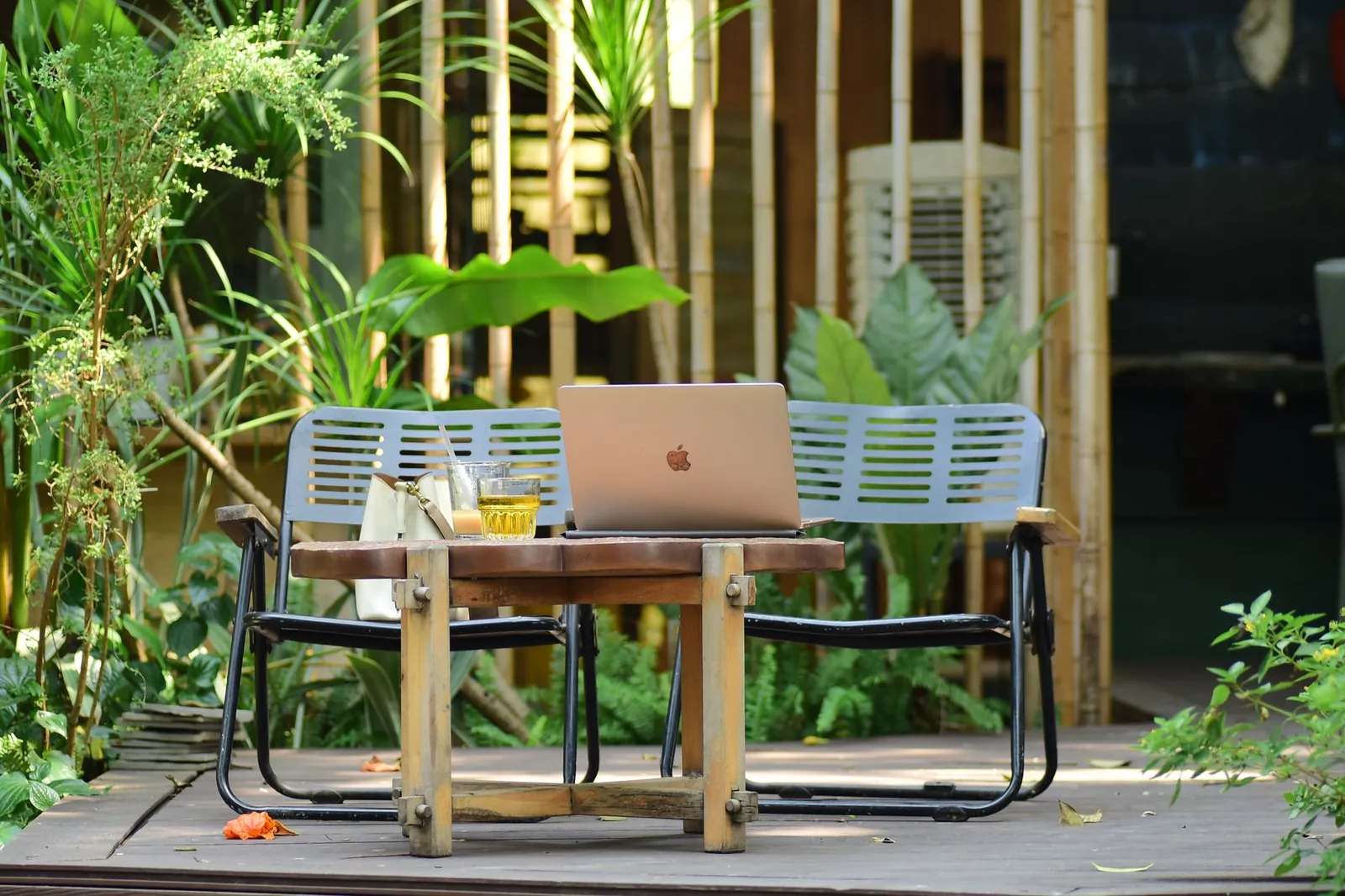
Steel and aluminum furniture made from post-consumer scrap is easier to find than it was three years ago. It weighs less than cast iron, won’t rust under proper powder coating, and can be recycled again at end of life. A four-chair dining set in recycled aluminum typically costs $800–$1,400, compared to $600–$1,000 for new aluminum—a 20–30% premium for the environmental benefit.
Powder coating durability
Quality powder coating lasts 5–10 years in most climates. If you live within a mile of saltwater, budget an extra 15–20% for a higher-grade marine finish—standard coatings degrade noticeably faster in salt air.
Natural Fiber and Cork Accessories
Cork and sustainably harvested rattan have found a practical place in outdoor accessories: cushion covers, placemats, and storage baskets. Cork is water-resistant, naturally antimicrobial, and harvested from tree bark without felling the tree—a single cork oak can be stripped every 9–12 years for a century or more. A set of cork coasters runs $15–$25; a woven rattan storage bench costs $200–$400.
Both materials work best under a covered patio or in dry climates. In humid regions, bring cushions and woven textiles indoors at the end of the season to prevent mildew from shortening their lives.
Solar-Powered Garden Lighting
Modern LED solar lights charge in 6–8 hours and run 8–12 hours on a full battery—enough to replace low-voltage wired systems for most residential uses. A set of 10 solar pathway lights costs $40–$80, versus $150–$300 for equivalent wired lights plus installation labor.
Solar lights eliminate wiring and electricity costs, but they need direct sunlight and won’t perform reliably in deep shade or at latitudes above roughly 50°N during winter months.
Price predicts lifespan more reliably here than in almost any other category:
- $3–$5 each: Fail after one season in most cases
- $8–$15 each: Typically last 3–5 years
- $20–$35 each: Upgraded batteries and optics; 7–10 years is realistic
Rainwater Harvesting Systems
A 50-gallon rain barrel made from recycled plastic or reclaimed wood costs $60–$120 and connects to a downspout with a simple diverter kit. Over a year, a typical residential roof captures 600–1,000 gallons per inch of rainfall—enough to meaningfully offset irrigation demand during dry spells. Depending on local water rates, that translates to $20–$60 in annual savings, putting the payback period at 2–4 years.
Some municipalities offer rebates of $50–$150 for rain barrel installation. Check your local water authority’s website before purchasing—the rebate can effectively cut the cost in half.
FSC-Certified Wood Furniture and Structures
Pergolas, raised beds, benches, and dining tables made from Forest Stewardship Council–certified wood confirm that the timber was harvested under verified sustainability standards. FSC certification adds roughly 10–20% to the price of comparable uncertified wood. A solid FSC teak or white oak dining table runs $1,200–$2,500.
Teak is naturally rot-resistant and weathers to a silvery gray without any treatment. Cedar and ipe are solid FSC alternatives at lower price points, though both benefit from periodic sealing. One important note: not every product labeled “sustainably sourced” carries FSC certification. Verify the certification number on the product label or the seller’s documentation before buying.
Biodegradable Plant Pots and Planters
Terra-cotta, coconut coir, and paper-based pots break down in soil or compost, cutting plastic waste from seed starting and seasonal planting. A pack of 50 biodegradable seed pots costs $10–$20. Larger decorative planters in compressed coir or recycled wood fiber run $25–$80.
These pots are lighter and more fragile than plastic, which makes them well suited to seed starting and container gardening but a poor fit for permanent outdoor displays. For long-term patio planters that stay outside year-round, recycled resin or composite pots hold up better.
What Makes an Outdoor Product Truly Sustainable
Three factors determine whether a product earns the label: material source, lifespan, and end-of-life disposal. A composite deck board that lasts 30 years with no maintenance has a lower environmental footprint than a cheaper recycled-content product that needs replacing every five years—even though both use recycled materials. Durability is the multiplier that makes everything else matter more.
For patio design and layout guidance, explore our article on how to design a patio layout to pair sustainable products with a thoughtful plan. You can also learn more about the best outdoor furniture materials to compare performance and environmental trade-offs across the full range of options.
Frequently asked questions
Are sustainable outdoor products more expensive?
It depends on the category. Composite decking costs more upfront than treated wood but saves money over 20+ years by eliminating staining and sealing. Solar lights cost less than wired systems from day one. Rain barrels pay for themselves in 2–4 years through water savings. FSC-certified wood furniture does carry a 10–20% premium, but the longevity of species like teak usually justifies it.
How long do recycled plastic furniture and decking last?
Quality composite decking lasts 25–30 years with minimal maintenance—no staining, sealing, or sanding required. Recycled plastic furniture typically lasts 10–15 years before fading or brittleness sets in, depending on sun exposure and climate. Powder-coated recycled metal furniture lasts 10–20 years with proper care, shorter near saltwater without a marine-grade finish.
Can I install sustainable decking or furniture myself?
Composite decking installs the same way as wood decking, so DIY is straightforward if you have basic carpentry skills and a miter saw. Most outdoor furniture arrives pre-assembled or requires simple bolt-together assembly. Rain barrels and solar lights are both beginner-level projects. For large decking installations, a contractor ensures proper joist spacing and preserves the manufacturer’s warranty.
Do sustainable outdoor products need special maintenance?
Composite decking and recycled plastic furniture need occasional cleaning with soap and water—nothing more. Recycled metal furniture benefits from annual cleaning and touch-up coating in coastal areas. FSC wood furniture needs periodic sealing to extend its life, with frequency depending on species: teak can go years without treatment, while cedar benefits from annual application. Solar lights need occasional lens cleaning and battery replacement every 3–5 years.
Where can I buy sustainable outdoor products?
Home Depot and Lowe’s stock composite decking, recycled metal furniture, and solar lights. Specialty online retailers often carry certified FSC wood and premium recycled-content products with better documentation than big-box stores. Local garden centers are the most reliable source for rain barrels and biodegradable pots. Wherever you shop, check for FSC certification numbers and recycled-content percentages on the label—not just marketing language on the packaging.

Ellen has renovated three houses, killed more seedlings than she admits, and writes about both.