This article may contain affiliate links. If you buy through them we may earn a commission at no extra cost to you.
Teak and aluminum outlast every other common outdoor furniture material—teak by sheer density and natural oils, aluminum because it simply can’t rust. If those don’t fit your budget or style, resin wicker and powder-coated steel cover most situations at a lower entry price. Here’s what each material actually costs, how long it lasts, and where it falls short.
Teak: Premium Durability and Longevity
Teak is dense, naturally oily, and resists rot, insects, and weathering better than any other outdoor wood. A teak dining set or lounger will last 15–25 years outdoors with minimal intervention—no sealant required, though it silvers to a gray patina if left untreated.
Cost and maintenance
Expect to pay $800–$2,500 for a solid teak dining set and $300–$800 for a single chair. Maintenance is light: occasional cleaning with mild soap and water. To keep the honey-brown color, apply teak oil every 1–2 years ($20–$40 per bottle). If you prefer the silver-gray weathered look, you’re done after unpacking.
Downsides
Teak is heavy and expensive. It’s also slow-growing, so check for FSC certification if sustainable sourcing matters to you—some teak is responsibly harvested, some isn’t.
Aluminum: Lightweight and Rust-Proof
Aluminum doesn’t rust, corrode, or rot, and it’s light enough to rearrange without help. It performs well in any climate, including salt air and heavy rain. Most outdoor aluminum frames are powder-coated in colors that hold for 5–10 years before fading or chipping.
Typical pricing
A six-piece aluminum dining set runs $400–$1,200; individual chairs cost $60–$200. For larger sets, aluminum is one of the better value propositions among durable materials.
Limitations
Thinner-gauge frames can feel wobbly compared to wood or steel. Quality varies enough that it’s worth checking frame thickness and joint construction before buying—better sets use reinforced corners and heavier-gauge tubing. The frame will outlast the cushions or slings by years; budget $40–$100 per cushion for replacements around the 3–5 year mark.
Resin Wicker: Synthetic and Low-Maintenance
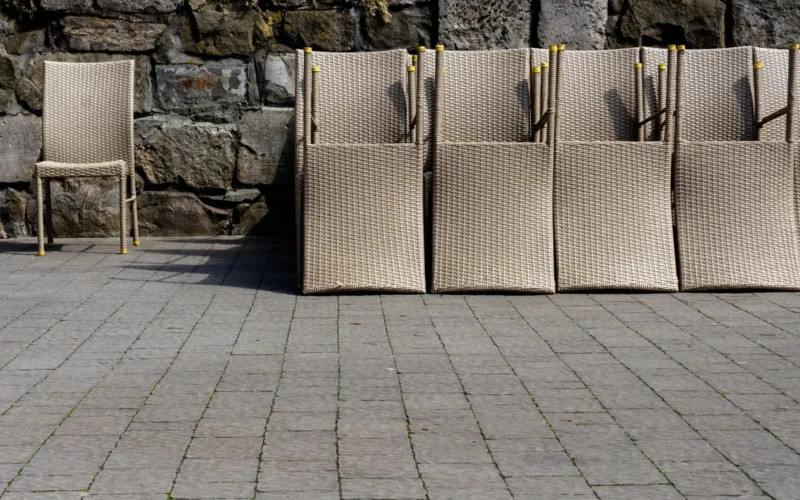
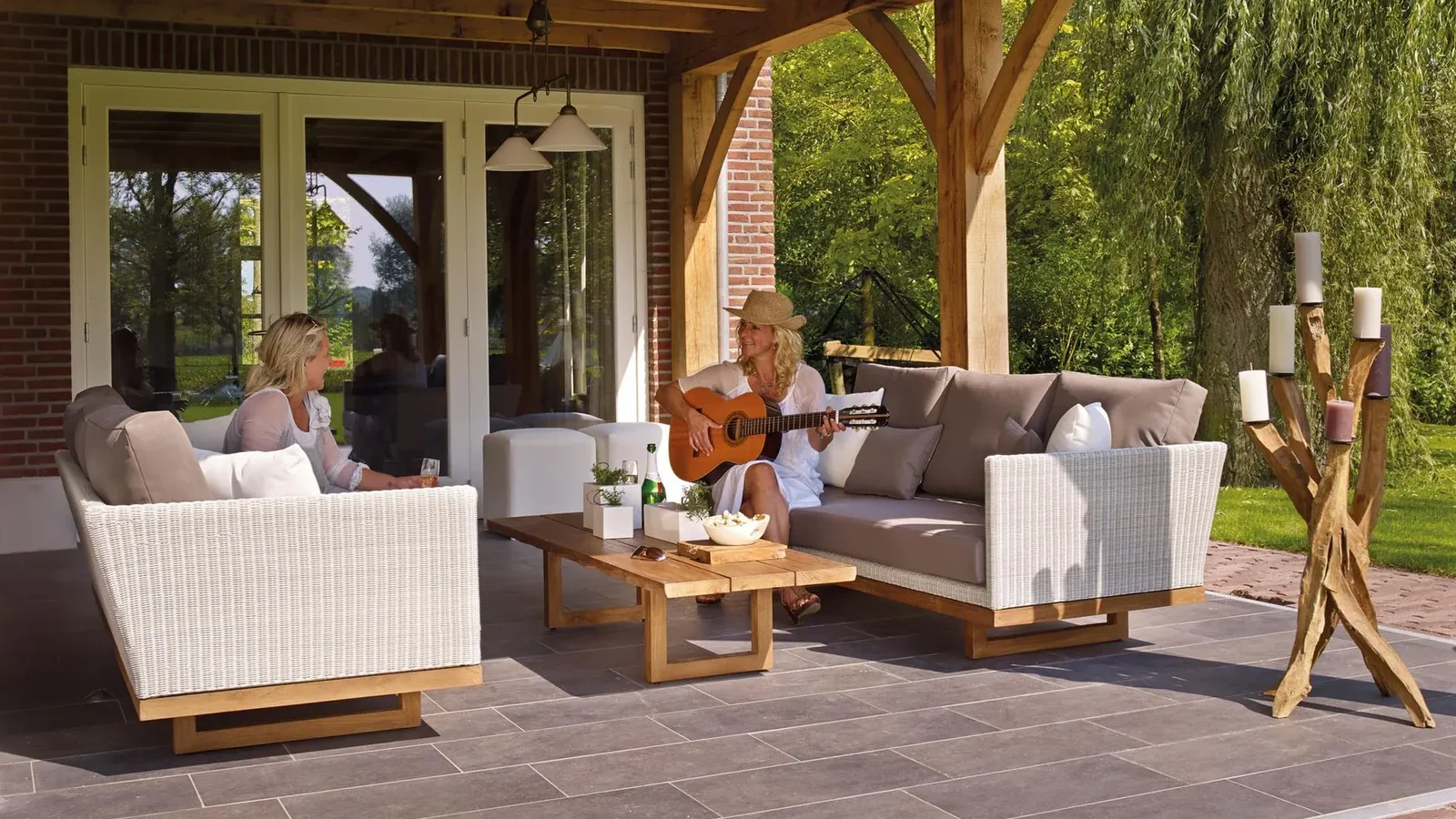
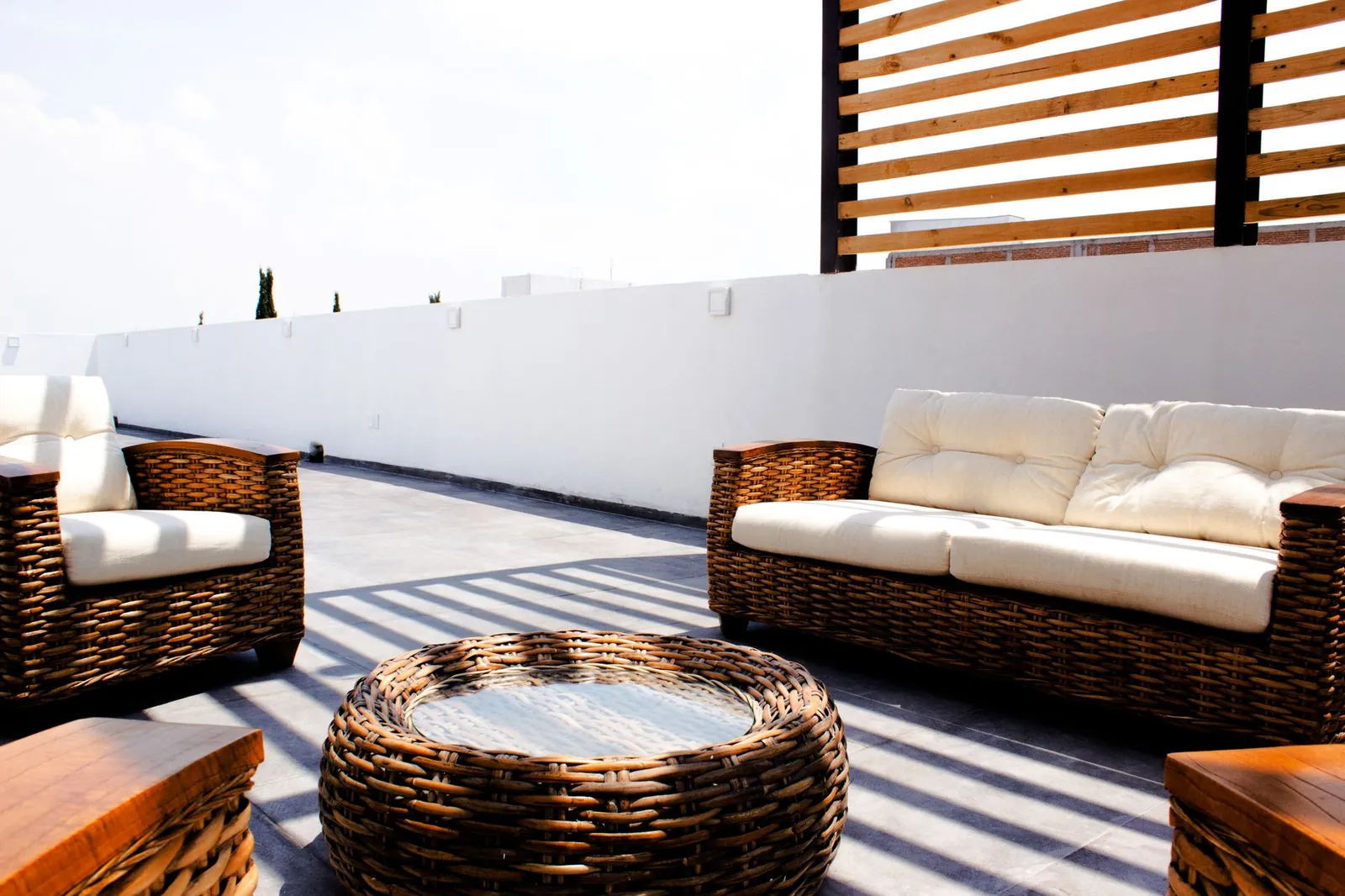
Resin wicker (also called synthetic or poly rattan) uses plastic fibers woven over aluminum or steel frames. Unlike natural rattan, it won’t rot, fray, or absorb moisture, which makes it a practical choice for humid or coastal climates.
Cost range
A four-piece conversation set costs $300–$800—cheaper than teak and comparable to mid-range aluminum. Replacement cushions run $40–$100 each.
Care requirements
Rinse with a hose a few times a year and wipe down after storms. No sealing, staining, or oil needed. The aluminum or steel frame underneath typically lasts 8–12 years. The wicker fibers themselves may show fading or slight surface cracking after 5–7 years in direct sun; UV-resistant formulas hold color longer but add $50–$150 to the set price.
Steel and Iron: Heavy-Duty and Affordable
Steel and cast iron are stable, heavy, and inexpensive. They won’t tip in wind and feel substantial underfoot—a real advantage on an exposed deck. Wrought iron suits traditional or cottage gardens; tubular steel fits modern minimalist layouts.
Pricing
A steel bistro set (two chairs and a small table) costs $150–$400. Cast iron chairs run $80–$250 each. Both are among the lowest upfront costs of any outdoor furniture material.
The rust problem
Steel and iron rust without protection. Most outdoor pieces are powder-coated or painted from the factory, and that coating holds for roughly 3–5 years depending on climate and sun exposure. Once it chips, rust spreads quickly beneath the surface. Plan on touch-up paint every few years, or accept a patina. In humid or coastal areas, rust becomes a recurring maintenance task rather than an occasional one. See our guide to protecting outdoor furniture for rust prevention tips.
Concrete and Stone: Permanent and Sculptural
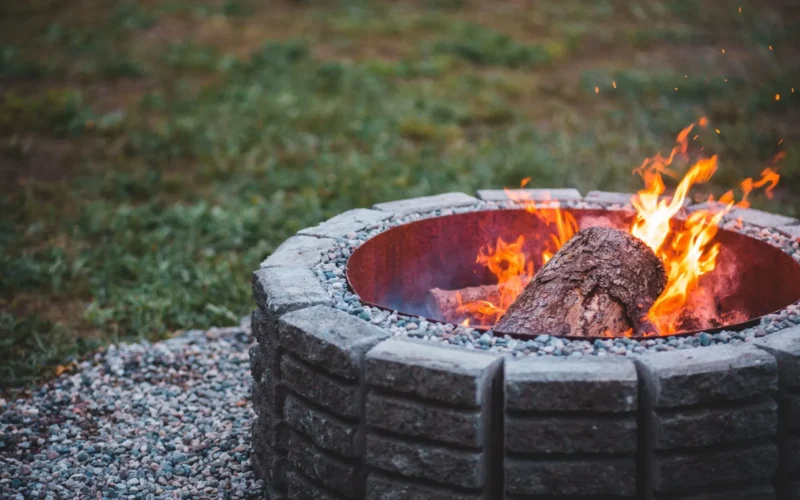
Concrete, stone, and composite materials are immobile by design—ideal for built-in benches, fire pit surrounds, or statement pieces that anchor a space. Properly installed, they last decades with almost no upkeep beyond occasional cleaning.
Cost considerations
Precast concrete benches or planters run $200–$600. Natural stone (granite, slate) starts around $400 and climbs past $1,500 for larger or finished pieces. Custom-poured concrete can cost less ($150–$400) but typically needs a professional to form and cure correctly.
Practical limits
These materials suit fixed focal points, not flexible layouts. In freeze-thaw climates, seal them before winter—water that infiltrates unsealed concrete or stone expands when it freezes and can crack the piece from the inside.
Cushioned Upholstery and Fabrics
Cushions add comfort but wear faster than any frame material. Outdoor-rated fabrics—Sunbrella is the most recognized brand—resist fading and mildew far better than standard polyester, but they still degrade with sun exposure and use.
Lifespan and cost
Quality outdoor cushions last 3–5 years with typical seasonal use; budget fabrics may show wear in 1–2 years. A set of four seat cushions costs $150–$400; individual replacements run $40–$120. Year-round use in intense sun shortens that timeline by a year or more.
Protection strategy
Storing cushions indoors during the off-season extends their life by 1–2 years and keeps them from developing mildew. Waterproof furniture covers ($20–$80) are a reasonable alternative if indoor storage isn’t practical.
Material Comparison Table
| Material | Lifespan | Cost (typical set) | Maintenance | Best for |
|---|---|---|---|---|
| Teak | 15–25 years | $800–$2,500 | Minimal; optional oil | Long-term investment, any climate |
| Aluminum | 8–12 years | $400–$1,200 | Occasional cleaning | Lightweight, salt air, tight budgets |
| Resin wicker | 8–12 years | $300–$800 | Rinse yearly | Humid climates, cozy aesthetics |
| Steel / iron | 5–8 years | $150–$400 | Paint touch-ups, rust prevention | Budget-conscious, classic style |
| Concrete / stone | 20+ years | $200–$1,500 | Occasional cleaning, seal if needed | Fixed installations, focal points |
Our verdict
For most homeowners, aluminum or resin wicker offer the best balance of cost, durability, and ease. If you’re willing to spend more upfront, teak is the smartest long-term choice. Steel and iron are fine for accent pieces or if you enjoy periodic maintenance. Concrete and stone work best as permanent fixtures, not flexible seating. Cushions are a comfort upgrade—plan to replace them every 3–5 years regardless of frame material.
The material that lasts longest isn’t always the best choice—consider your climate, how often you’ll use the furniture, and whether you enjoy tinkering with maintenance.
Frequently asked questions
Which outdoor furniture material is best for humid or coastal climates?
Aluminum and resin wicker are your safest bets. Aluminum doesn’t corrode, and resin wicker won’t rot or mildew like natural rattan. Teak also handles salt air well, but it costs significantly more. Avoid bare steel or iron in coastal areas unless you’re committed to repainting every few years.
How often do I need to replace outdoor furniture cushions?
Quality outdoor cushions last 3–5 years with typical use. Left outside year-round in intense sun, expect 2–3 years. Storing them indoors during winter or using a waterproof cover extends life by 1–2 years. Budget $40–$120 per cushion for replacements.
Is teak worth the extra cost?
If you plan to keep furniture for 10+ years and want minimal maintenance, yes. Teak costs 2–3 times more than aluminum upfront but lasts much longer and needs almost no upkeep. For shorter-term use or tighter budgets, aluminum or resin wicker offer better value per year of service.
Can I leave outdoor furniture outside year-round?
It depends on the material and your climate. Teak, aluminum, and concrete handle year-round exposure well. Resin wicker and cushions last longer with winter storage. Steel and iron need protection from snow and ice to slow rust. In climates with hard freezes, moving furniture to a garage or shed can add several years to its life.
What’s the cheapest durable outdoor furniture material?
Steel and iron are cheapest upfront at $150–$400 for a set, but rust maintenance adds cost and effort over time. Resin wicker offers better long-term value at $300–$800 with minimal upkeep. Aluminum sits in the middle at $400–$1,200—rust-free, lightweight, and reliably lasting 8–12 years with almost no maintenance.

Rob is a former carpenter who now explains home repairs so you only have to do them once.