This article may contain affiliate links. If you buy through them we may earn a commission at no extra cost to you.
For most patios, the answer is layered lighting: string lights or pendants overhead for ambiance, recessed or deck lights at ground level for safety, and one or two spotlights to add depth. I’ve run through every combination on my own 14×16-foot deck, and the type that matters most depends on whether you have a nearby outlet, how much sun your patio gets, and whether you’re eating out there or just relaxing.
String Lights and Bistro Lights
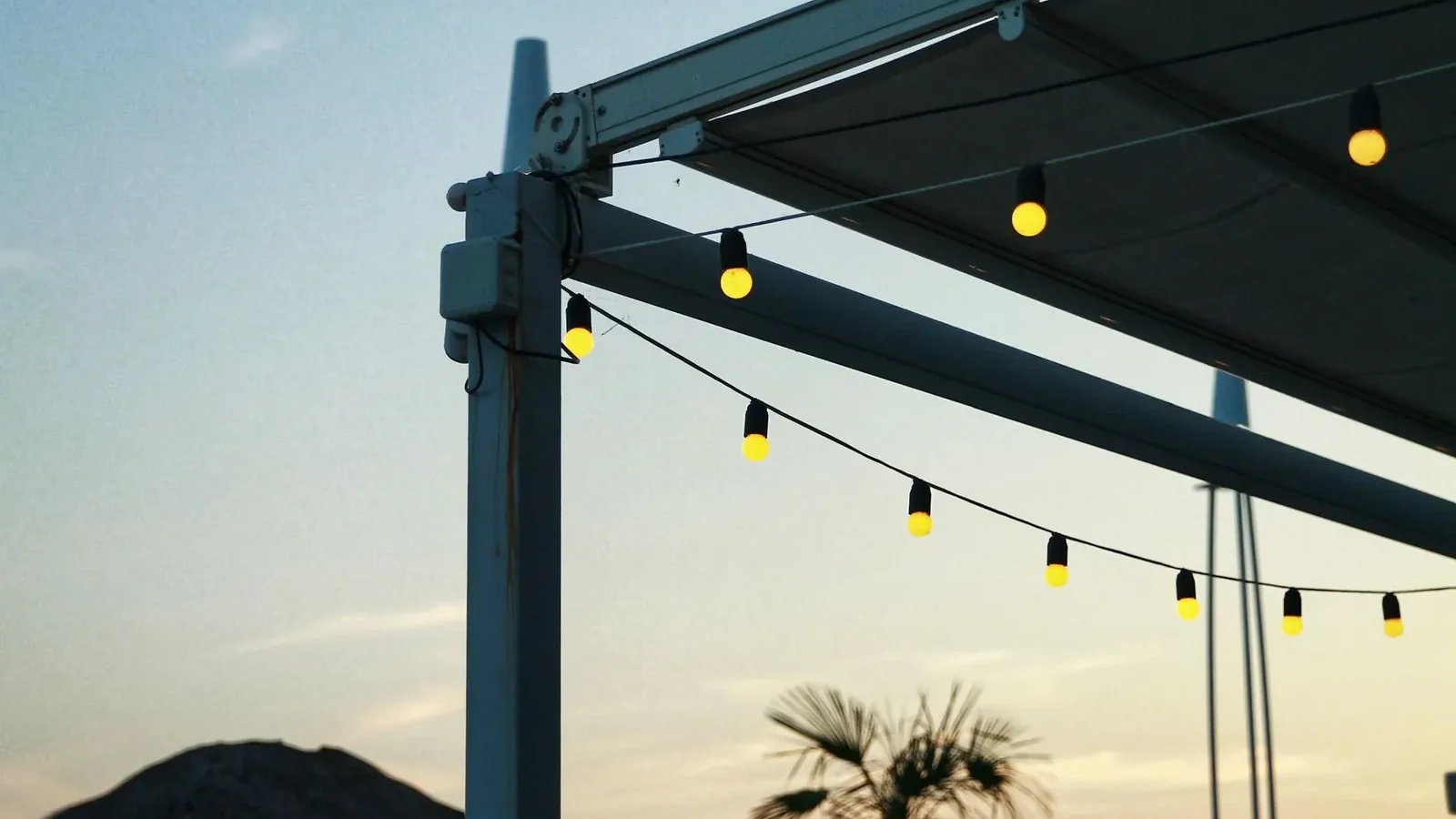
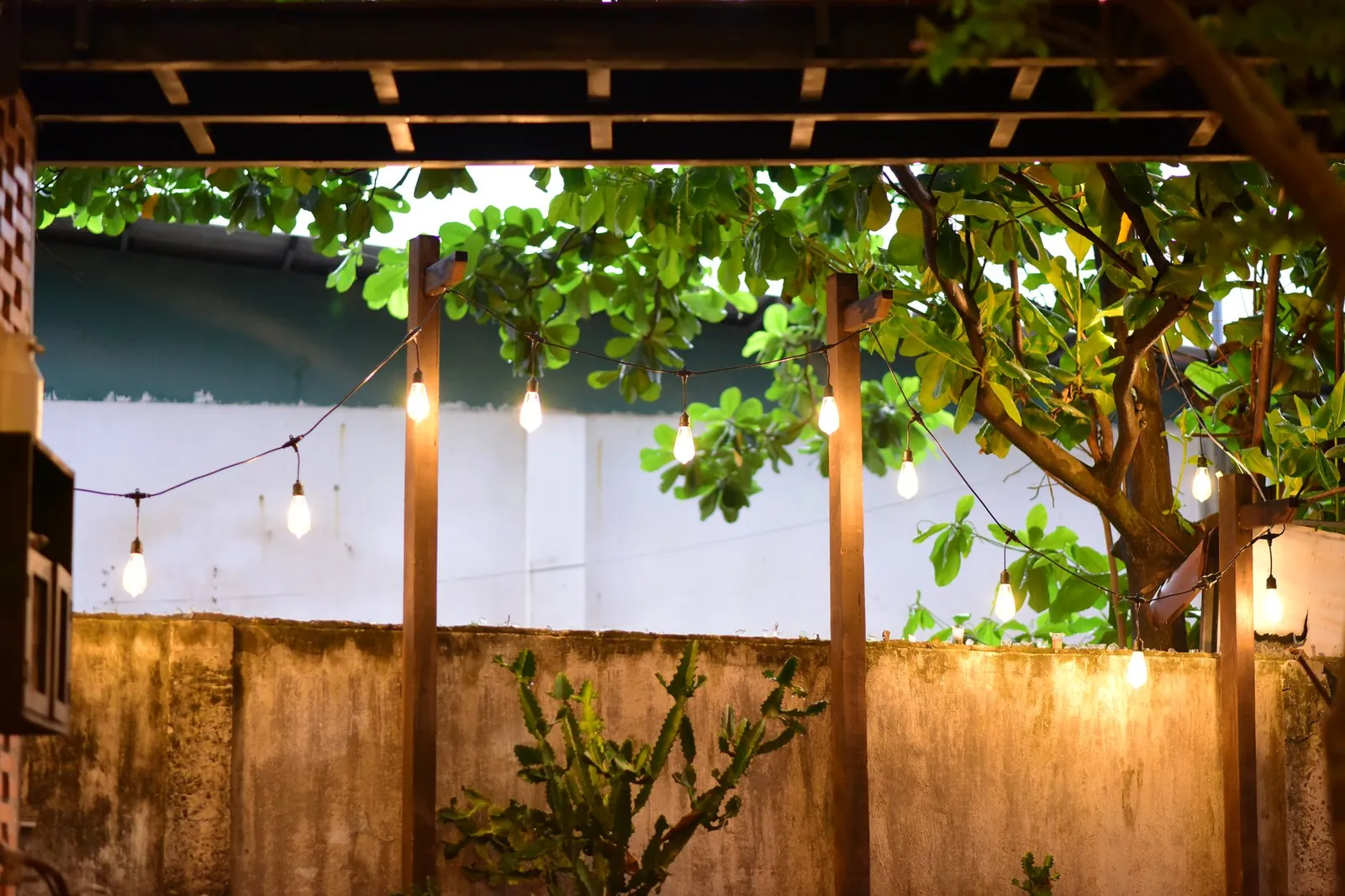
String lights are the fastest way to add warmth to a patio. A 50-foot strand draped across a pergola or between posts transforms the space in an afternoon, with no electrician required.
What to look for
Edison-style incandescent bulbs run $0.50–$2 each and give a classic amber glow, but they draw more power and last only around 1,000 hours. LED string lights cost $1–$3 per bulb, use roughly 80% less electricity, and last 25,000+ hours. Globe-style bistro lights come in both types and span 20–50 feet per strand.
Color temperature matters more than most people expect. Warm white (2700K) feels inviting and flatters skin tones; cool white (4000K+) reads as clinical under an open sky. I use warm white for any space where people gather. For IP ratings: IP44 handles light rain, IP65 handles direct jets of water—if your patio is exposed rather than covered, pay the small premium for IP65.
Cost and setup
A 50-foot LED string light kit costs $25–$60 at most hardware stores and plugs into a standard 15-amp outlet. Add a weatherproof extension cord ($15–$30) if your outlet is more than a few feet away. Mounting with eye bolts, hooks, or a tension wire kit adds $20–$50 and takes a couple of hours.
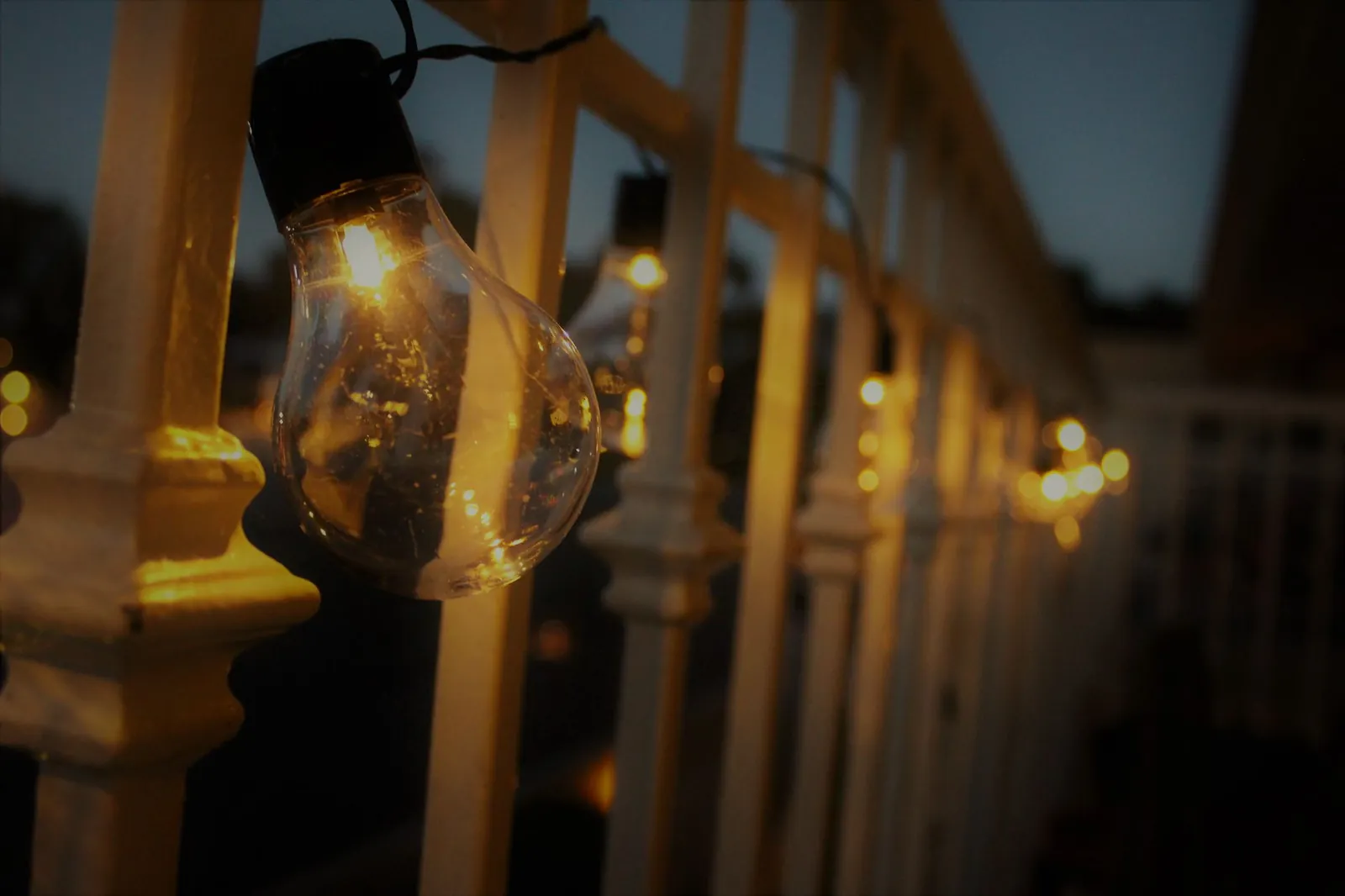
Recessed and Deck Lights
Recessed and deck lights sit flush with surfaces, so they light the patio without visually cluttering it—useful when you want the landscaping or furniture to read first.
Recessed patio lights
These mount into the ground or patio surface and cast light upward or outward. LED versions use 5–12 watts each and cost $15–$40 per fixture. Space them 4–8 feet apart along walkways or the patio perimeter. Installation means drilling holes and running low-voltage wire (typically 12V) back to a transformer—manageable as a DIY project on a weekend if you’re comfortable with basic wiring.
Deck lights
Smaller than recessed lights, deck lights mount into railing faces or stair risers. They use 1–3 watts and cost $10–$25 each. Solar deck lights skip wiring entirely but dim noticeably after two or three cloudy days in a row—a real limitation in the Pacific Northwest or anywhere with long overcast stretches.
For a 12×16-foot patio, plan on 8–12 recessed fixtures and budget $200–$600 for fixtures plus $100–$300 for wiring and a transformer if you’re hiring an electrician.
Solar and Battery-Powered Lights
Solar lights cost nothing to run and install in minutes. The trade-off is straightforward: they need 6+ hours of direct sun daily to deliver a full night’s output, and they underperform in shade or winter.
Solar string lights
A 30-foot solar LED string runs $20–$50. On a full charge, expect 6–8 hours of runtime—longer with premium models that have larger panels. These work well for south-facing patios with no tree cover; they’re a poor fit for shaded courtyards.
Solar stake and pathway lights
Individual stakes cost $3–$12 each. Cheap models produce barely visible light; quality ones in the $8–$15 range reach 50–100 lumens. I’ve found that spacing them every 2 feet instead of the suggested 4 makes a noticeable difference in how well they actually light a path.
Battery-powered alternatives
Rechargeable LED lanterns and spotlights ($30–$80) give you brightness control and placement flexibility without depending on sun. They’re the right call for shaded patios or temporary setups where running wire isn’t practical.
The best patio lighting combines ambient light (from above or overhead) with task light (to see steps or seating) and accent light (to highlight plants or features).
Overhead and Pendant Lights
If your patio has a roof, pergola, or solid overhang, pendant lights and ceiling fixtures deliver the kind of reliable, bright light you need for dining or games—something string lights alone can’t match.
Pendant lights
Single-cord or chain-hung pendants cost $30–$150 per fixture. LED versions use 6–12 watts and last 25,000+ hours. Three or four pendants spaced 4–6 feet apart over a dining table give even coverage without dark spots at the edges.
Flush and semi-flush mounts
For ceilings under 8 feet, flush mounts are safer and less obtrusive. They cost $25–$120 each, and a pair covers a 12×14-foot patio adequately for eating and reading.
Installation
With an existing hardwired outlet or fixture box, an electrician can install pendant lights for $200–$400 per fixture including labor and materials. A new circuit run from the panel adds $300–$800 depending on distance and whether the route requires opening walls.
Spotlights and Uplighting
A few well-placed spotlights create layers that flat overhead lighting can’t—uplighting a tree or washing a fence line makes a patio feel designed rather than just lit.
LED spotlights
Directional LED spotlights cost $20–$60 each and use 5–15 watts. For landscape uplighting, 3000K (warm white) reads as natural; cooler temperatures can make foliage look washed out. Mount them 12–24 inches above ground at roughly a 45-degree angle to avoid glare in seated sightlines, and space them 6–10 feet apart along a fence or planting bed.
RGB and color-changing lights
RGB spotlights ($40–$100) let you shift colors via remote or app. They’re genuinely useful for parties; for everyday use, the novelty fades quickly. I run mine as accent lights on a separate switch so they’re easy to skip.
Lanterns and Portable Lights
Portable lights earn their place on patios that change configuration seasonally or when you want intimate zones without rewiring anything. A rechargeable lantern ($30–$80) on a side table does what no fixed fixture can: it moves with you. Smaller tabletop accent lights ($10–$40, 1–5 watts) are good for defining a seating cluster without adding overhead clutter. For more on arranging these zones, see how to design a patio layout.
Comparison Table: Patio Lighting Options
| Type | Cost per Unit | Power Source | Brightness | Lifespan | Best For |
|---|---|---|---|---|---|
| LED String Lights | $25–$60 (50 ft) | Outlet | Medium | 25,000 hrs | Ambiance, easy install |
| Solar String Lights | $20–$50 (30 ft) | Solar | Low–Medium | 3–5 years | No wiring, sunny areas |
| Recessed Patio Lights | $15–$40 each | Low-voltage wire | Medium | 25,000+ hrs | Subtle walkway light |
| Pendant Lights | $30–$150 each | Hardwired | High | 25,000+ hrs | Task light, dining |
| LED Spotlights | $20–$60 each | Hardwired or low-voltage | High | 25,000+ hrs | Accent, uplighting |
| Battery Lanterns | $15–$80 each | Rechargeable battery | Low–Medium | 2–4 years | Portable, flexible |
Our verdict
Start with LED string lights ($30–$60) for ambiance—they’re low-risk and easy to reposition. Add recessed or deck lights ($200–$400 total installed) if you have steps or a walkway that needs reliable safety lighting. One or two pendant lights ($100–$300 installed) over a dining or seating zone handle task lighting that string lights can’t. A pair of spotlights ($100–$200 total) aimed at a tree or fence line adds depth for very little money. Skip RGB systems unless color-changing effects are something you’ll actually use more than twice a season.
Frequently asked questions
How many lumens do I need for a patio?
Aim for 100–300 lumens per 100 square feet for ambient light, and 500+ lumens directly over a dining or game table. A 12×16-foot patio (192 sq ft) needs roughly 200–600 lumens of ambient light plus brighter task lighting overhead. String lights handle the ambient layer; pendants and spotlights cover the rest.
Should I choose warm or cool white outdoor lights?
Warm white (2700K–3000K) flatters skin tones and feels inviting—the right call for entertaining spaces. Cool white (4000K+) works better for security lighting or task-heavy areas like an outdoor workshop. Mix temperatures and the patio looks disjointed; pick one and stick with it.
Can I mix different types of patio lighting?
Yes, and you should. String lights for ambient overhead glow, recessed lights for pathway safety, and pendants for task lighting over a table is a combination that covers every use case without any single fixture doing too much. The key is keeping all bulbs at the same color temperature so the layers read as intentional.
Do outdoor lights need to be IP65 rated?
IP44 handles light rain and splash—fine for a covered patio or pergola. IP65 handles direct jets of water and is the safer choice for exposed areas or regions with heavy seasonal rain. Check where each fixture will actually sit before buying; the rating difference rarely adds more than a few dollars per unit.
What’s the cheapest way to light a patio?
Solar string lights ($20–$50) have zero wiring cost and no electricity bill, but only deliver full output in sunny locations. LED string lights plugged into an existing outlet ($25–$60) are slightly more expensive upfront and more reliable everywhere. If you need permanent task lighting, recessed or deck lights ($200–$400 total for a medium patio) cost more initially but are cheaper long-term than replacing batteries or solar panels every few years.

Rob is a former carpenter who now explains home repairs so you only have to do them once.