This article may contain affiliate links. If you buy through them we may earn a commission at no extra cost to you.
Concrete is the cheapest patio material at $3–$15 per square foot installed; natural stone is the most durable at 50+ years but starts at $15 per square foot. Pavers, wood, and composite fall in between—each with a distinct maintenance profile and climate suitability. Here’s how they compare so you can match material to your actual situation.
Concrete Patios
A basic slab runs $3–$8 per square foot installed. Add stamping, color, or a decorative finish and that climbs to $8–$15. On a 12×16-foot patio (192 sq ft), you’re looking at $576–$2,880 depending on finish complexity—the widest cost range of any material here.
Concrete is ready to walk on in 24–48 hours and needs little beyond sweeping and sealing every 2–3 years ($0.50–$1.50 per square foot per application). The catch: freeze-thaw cycles in cold regions cause cracking and spalling, typically showing up after 10–15 years if drainage beneath the slab is poor.
Downsides
- Plain gray looks utilitarian without a decorative finish.
- Cracks and stains are hard to repair invisibly—a patch always shows.
- Slippery when wet unless textured or treated with a non-slip additive.
- Absorbs heat in direct sun; can be uncomfortable barefoot in summer.
Patio Pavers
Clay brick, concrete, and permeable pavers run $10–$25 per square foot installed, putting a 192-sq-ft patio in the $1,920–$4,800 range. That higher upfront cost buys something concrete can’t offer: individual units you can lift and replace without disturbing the rest of the surface. A single cracked paver swapped out in an afternoon; a cracked concrete slab is a much bigger job.
Maintenance is straightforward—sweep, rinse, and re-sand the joints every 2–3 years at roughly $0.25–$0.75 per square foot. Permeable pavers let water drain through the joints, which matters if your yard has standing-water problems after rain. For more on selecting the right unit, see our guide to choosing patio pavers.
Downsides
- Weeds push through joints even with polymeric sand; sealing slows but doesn’t stop it.
- Uneven settling appears within 3–5 years if the gravel base wasn’t compacted in proper 2-inch lifts.
- Labor-intensive installation is a large share of the total cost—often 50% or more.
Natural Stone Patios
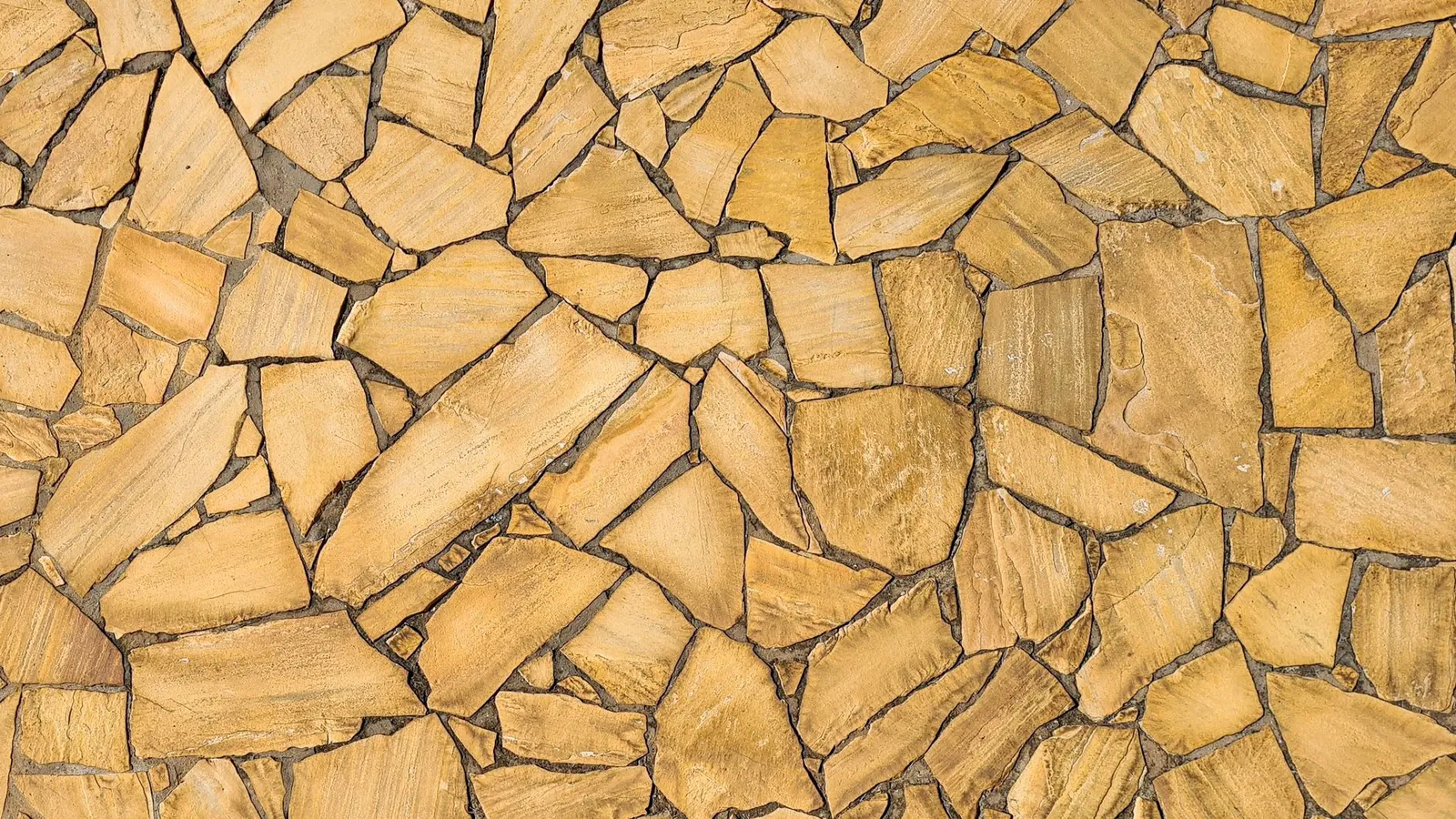
Bluestone, flagstone, granite, and travertine start at $15–$30 per square foot installed, and rare or imported stone can push well past that. A 192-sq-ft patio in bluestone typically lands between $5,000 and $7,000 before any site prep costs. The trade-off for that price is longevity: properly set stone can outlast the house.
Porous varieties—limestone, travertine—need sealing every 1–2 years ($1–$2 per square foot per application) or they stain from spilled wine, cooking grease, and leaf tannins. Granite is dense enough that every 3–5 years is usually sufficient. Honed finishes grip better underfoot than polished; worth specifying if the patio gets wet regularly.
Downsides
- Highest material and labor cost of any option here.
- Weight demands skilled base preparation—skimping leads to frost heave and cracked slabs.
- Porous stones stain readily and punish skipped sealing cycles.
Wood and Composite Decking
Pressure-treated pine runs $8–$15 per square foot installed and is the go-to for raised or grade-level decks where a wood aesthetic matters. Composite—a wood-plastic blend from brands like Trex or TimberTech—costs $15–$25 per square foot but eliminates most of the annual upkeep that makes wood ownership tedious.
With wood, plan on sealing or staining every year ($0.50–$1 per square foot) and replacing boards as they splinter or rot, particularly in humid climates where moisture sits under the surface. Composite sidesteps that cycle—a hose-down once or twice a year is usually enough—though it can fade slightly after several years of intense UV exposure and never quite loses a faintly plastic feel underfoot. Both materials last 15–20+ years with reasonable care. See our guide to outdoor materials for how these hold up alongside furniture choices.
Downsides
- Wood rots and attracts carpenter ants and termites in wet climates.
- Composite’s upfront cost rivals natural stone on smaller projects.
- Both become slippery when wet without a textured surface profile.
- Expansion and contraction with temperature swings can loosen fasteners over time.
Permeable and Recycled Materials
Permeable pavers and recycled rubber tiles typically run $12–$20 per square foot. Permeable systems manage stormwater on-site, which can matter if your municipality charges for runoff or if you’re working near a drainage easement. Recycled rubber is softer underfoot than any hard material—genuinely useful around a play area—and is slip-resistant even wet.
The limitations are real: recycled rubber fades and can transfer color to light-colored shoes in hot weather. Permeable joint systems need annual flushing to clear sediment; let them clog and you’ve lost the drainage benefit you paid for.
Comparison Table
| Material | Cost per sq ft | Lifespan | Maintenance | Best for |
|---|---|---|---|---|
| Concrete | $3–$15 | 10–30 years | Seal every 2–3 years | Budget-conscious, quick install |
| Pavers (concrete/clay) | $10–$25 | 20–50 years | Re-sand joints, occasional sealing | Design flexibility, easy repair |
| Natural stone | $15–$30+ | 50+ years | Seal every 1–2 years | Premium aesthetic, long-term investment |
| Wood decking | $8–$15 | 15–20 years | Seal/stain annually | Warm look, mild climates |
| Composite decking | $15–$25 | 20–30 years | Occasional cleaning | Low maintenance, modern style |
| Permeable pavers | $12–$20 | 20–40 years | Annual flushing | Drainage management, sustainability |
Our verdict
Choose concrete if budget is tight and you need it done fast. Pavers make sense if you want design flexibility and the ability to repair in sections without a jackhammer. Natural stone is worth the premium only if you’re planning to stay 20+ years and want a surface that improves with age. Composite earns its higher upfront cost if you genuinely won’t maintain a wood deck annually. Permeable options are a practical choice when drainage is a documented problem, not just a nice-to-have.
The cheapest material upfront isn’t always the cheapest over 20 years when you factor in sealing, repairs, and replacement.
Frequently asked questions
Which patio material is easiest to maintain?
Composite decking requires the least upkeep—occasional sweeping and rinsing, nothing annual. Concrete is close behind, needing only sealing every 2–3 years. Natural stone and wood demand the most attention: stone needs sealing on a strict schedule to prevent staining, and wood needs annual treatment or it deteriorates noticeably within a few seasons.
Can I mix patio materials?
Yes, and it often looks better than a single material throughout. A common combination is a concrete or paver field with wood decking as a border or step detail. The practical consideration: different materials expand and contract at different rates, so transitions need a flexible joint or gap rather than a rigid bond, or you’ll see cracking within a year or two.
What’s the best patio material for a cold climate?
Concrete and pavers handle freeze-thaw cycles well when installed over a properly compacted, well-draining gravel base—typically 4–6 inches deep in cold regions. Avoid porous stone like limestone and travertine where hard freezes are common; water infiltrates the surface, expands, and spalls the face off. Wood and composite can warp or gap in extreme swings but generally recover; the base preparation matters more than the surface material in cold climates.
How long do patios typically last?
Concrete lasts 10–30 years; pavers 20–50 years; wood 15–20 years; composite 20–30 years; natural stone 50+ years. Lifespan depends more on installation quality and base preparation than on the material itself. A poorly compacted base under any surface will cause failure within 5–10 years regardless of what’s on top.
Is a patio a good return on investment?
Patios typically recoup 50–80% of their cost at resale, with the range driven by local market conditions and material quality rather than size alone. Mid-range materials—pavers or stamped concrete in good condition—tend to perform better at resale than high-end stone, which buyers may not value proportionally. The stronger case for any patio is years of personal use before you ever think about selling.

Rob is a former carpenter who now explains home repairs so you only have to do them once.