This article may contain affiliate links. If you buy through them we may earn a commission at no extra cost to you.
For most patios, the sharpest value sits in the $100–$300 range per seat: aluminum or teak frames with Sunbrella cushions that hold up for a decade without constant fussing. Budget below that and you’re replacing pieces every few years; spend above $500 per seat and you’re paying for aesthetics, not durability. Here’s how the main categories break down.
Dining Chairs
Outdoor dining chairs take the most abuse—daily meals, impromptu drinks, kids climbing on them. Stability and weather resistance matter more than looks.
Stackable and folding models
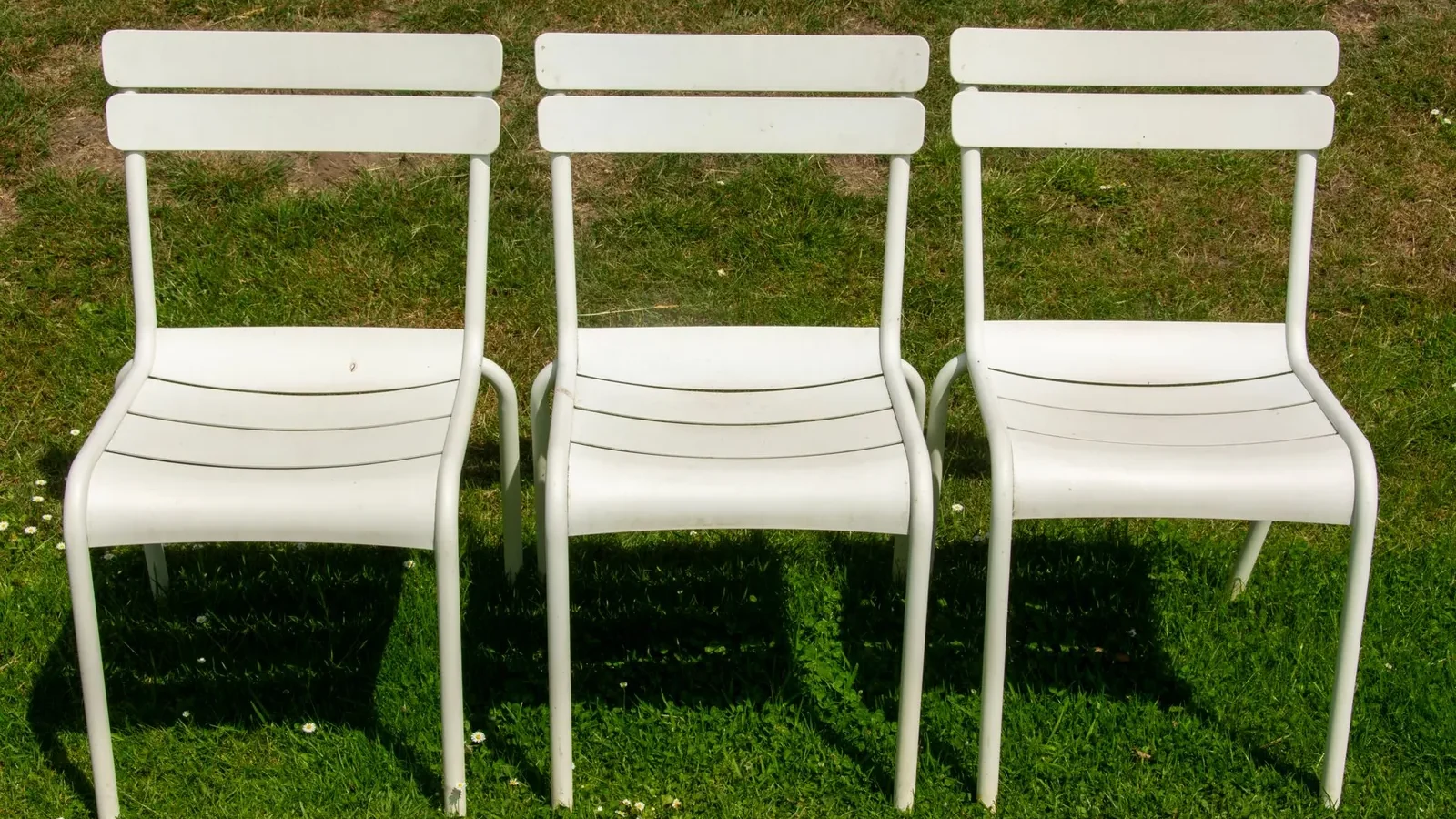
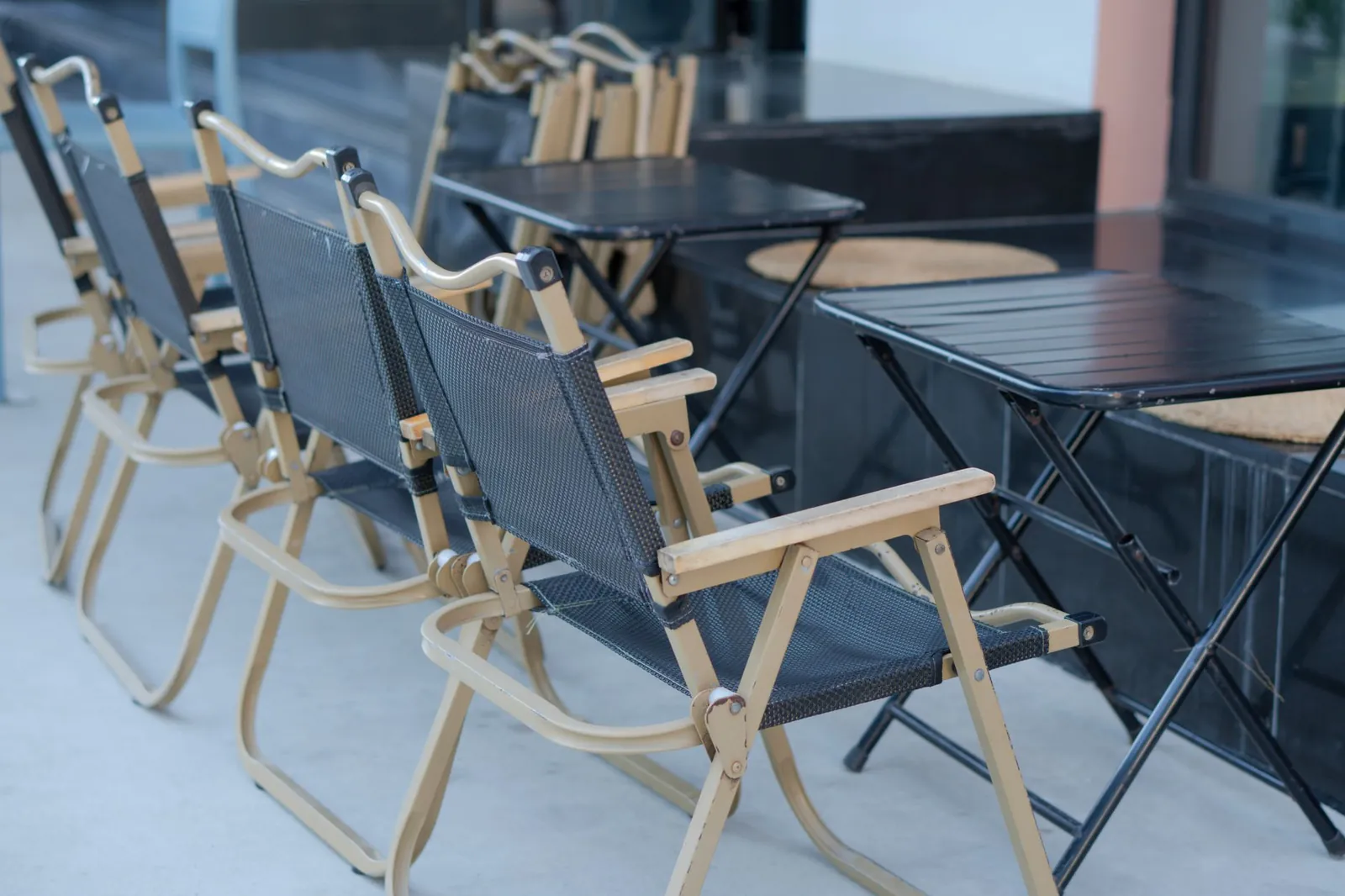
Plastic stackable chairs run $25–$60 each, weigh 3–5 pounds, and stack 6–8 high for storage. They’re not elegant, but they’re genuinely useful for households that host irregularly. Metal-frame stackables with sling fabric cost $40–$100 and look noticeably better without much weight penalty. Folding wood or aluminum chairs ($30–$150) pack flat—useful if you’re hauling seating to a fire pit or a different part of the yard.
Fixed dining chairs
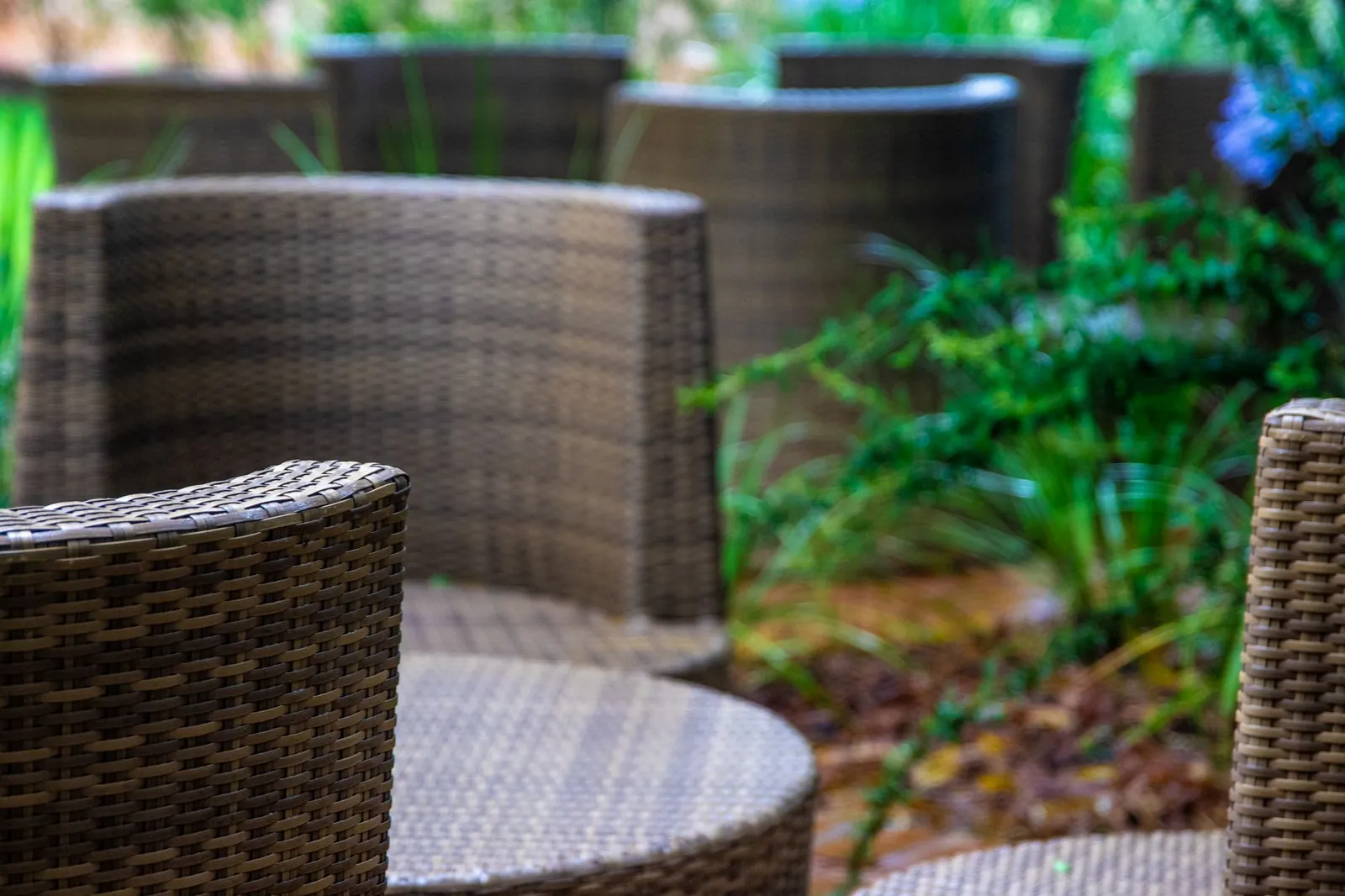
Teak, cedar, or treated pine chairs run $80–$250 each and develop a silver-gray patina if you skip the annual sealing—some people prefer it that way. Metal chairs with cushions cost $100–$300 and come in more finish colors. Woven rattan or all-weather wicker on metal frames ($120–$280) add texture but need a covered patio or seasonal storage in damp climates, where the weave can loosen within a few years.
Lounge Chairs and Chaise Lounges
Loungers are purpose-built for staying put—reading, napping, watching the garden. The frame and recline mechanism matter as much as the cushion.
Sling loungers
Aluminum frames with fabric slings cost $60–$200, fold flat for storage, and dry within minutes after rain. The trade-off: sling fabric typically fades or tears within 3–5 years in full sun, and replacement slings for name-brand chairs can run $40–$80.
Cushioned loungers
Thicker padding makes a real difference for anything longer than 20 minutes. A quality cushioned lounger runs $150–$400; pair a teak or cast-aluminum frame with Sunbrella cushions and you’re looking at $200–$500, but those cushions resist UV fading for 5+ years instead of 2–3. In humid climates, plan to store cushions in a deck box or indoors from November through March.
Zero-gravity and reclining loungers
Zero-gravity chairs distribute your weight across the frame rather than concentrating it at your lower back—worth considering if you spend more than an hour at a stretch outdoors. Outdoor versions cost $100–$300. Standard reclining loungers with adjustable backs run $120–$350.
Benches and Settees
A 4-foot bench seats 2–3 adults and earns its place as overflow dining seating, a garden focal point, or a spot to pull on boots. It’s also the easiest piece to tuck against a wall or fence when space is tight.
Wood benches
Teak or cedar benches cost $150–$400 for a 4-foot model and last 10+ years with occasional sealing—or longer if you let them gray naturally. Treated pine or composite benches run $80–$200 and are a reasonable starting point if you’re not ready to commit to a permanent layout.
Metal and upholstered settees
Metal-frame settees with cushioned backs and seats ($200–$500) feel closer to indoor furniture and work well on a covered porch. Wicker or rattan settees ($180–$450) add warmth but need more attention in wet climates—the weave traps moisture and can mildew if left uncovered through a rainy season.
The best outdoor seating fits your climate first—choose moisture-resistant materials if you’re in a humid area, and prioritize fade-resistant fabrics in full sun.
Sectionals and Modular Sets
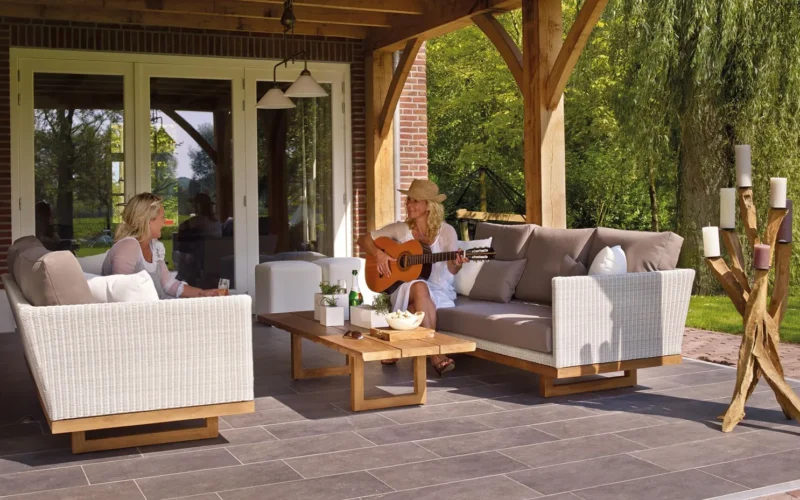
A sectional turns a patio into a room. Modular pieces let you reconfigure when you move, redecorate, or add a fire pit to the layout.
Entry-level 4–5 piece sets start at $400–$800—expect thinner cushions and lighter frames that may need replacing in 5–7 years. Mid-range sets with better cushioning and powder-coated aluminum or steel frames run $1,000–$2,000 and are where I’d put my money for daily use. High-end teak or designer sectionals exceed $3,000. Whichever tier you choose, confirm that cushion covers are removable and machine-washable—it’s the detail most buyers overlook and regret. For layout ideas, see our guide to designing a patio layout.
Swings, Rockers, and Statement Pieces
These slow people down in the best way—guests who sit in a porch swing or a rocker tend to stay longer.
Porch swings and hanging chairs
A classic wood or metal porch swing costs $150–$400. Hanging egg chairs and cocoon swings run $200–$600. Both require solid overhead support rated for at least 300 pounds—a structural beam, not a decorative pergola rafter.
Rocking chairs
Wood or metal-frame rockers cost $100–$300 and suit a porch or a quiet garden corner well. Polywood rockers (made from recycled plastic lumber) run $150–$250 and need nothing beyond an occasional rinse—no sealing, no sanding, no winter storage.
Adirondack chairs
Wood Adirondacks cost $80–$250; Polywood or composite versions run $150–$350 and skip the annual refinishing. They’re comfortable for an hour of reading but not designed for long lounging—the fixed recline angle suits some people and frustrates others.
Material Comparison and Durability
| Material | Price Range | Durability | Maintenance | Best For |
|---|---|---|---|---|
| Teak wood | $150–$500 | 15+ years | Annual sealing (optional) | High-end permanent setups |
| Aluminum | $60–$300 | 10–15 years | Occasional washing | Most climates, lightweight needs |
| Steel (powder-coated) | $80–$400 | 8–12 years | Touch-up paint if scratched | Modern designs, budget-conscious |
| Wicker/rattan | $100–$400 | 5–8 years | Regular cleaning, cover in winter | Covered patios, dry climates |
| Polywood/composite | $100–$350 | 10–20 years | Minimal (wash with soap and water) | Low-maintenance, eco-conscious buyers |
| Plastic sling | $25–$150 | 3–5 years | Rinse after use | Budget seating, temporary setups |
Learn more about materials in our article on the best outdoor furniture materials.
Our verdict
For most homeowners, a mix works best: a few sturdy dining chairs ($100–$150 each) for meals, one lounger ($150–$300) for relaxation, and a bench or settee ($200–$400) for overflow seating. Choose aluminum or teak frames and Sunbrella cushions if you’re in a humid or sunny climate. If budget is tight, start with stackable plastic chairs ($40–$60) and upgrade one piece at a time as your patio matures.
Frequently asked questions
How much should I spend on outdoor seating?
It depends on how often you use your patio and how long you want the furniture to last. A basic setup of 4 dining chairs and 1 lounger can run $300–$600 with budget materials, or $800–$1,500 with mid-range options. If you use your patio daily, investing $150–$300 per seat in quality frames and cushions pays off over 5–10 years compared to replacing cheaper pieces every 3–4.
What’s the most durable outdoor seating material?
Teak wood and powder-coated aluminum last 10–15+ years with minimal maintenance. Polywood (recycled plastic lumber) rivals them at 10–20 years and needs almost no upkeep. Wicker and cushioned fabrics are less durable (3–8 years) and require seasonal storage or covers in harsh climates.
Do I need to cover or store outdoor seating in winter?
It depends on your climate. In dry, mild regions, you can leave aluminum and teak out year-round. In areas with snow, ice, or heavy rain, store cushions indoors and consider covering frames with breathable tarps. Wicker and fabric slings should be brought inside or heavily covered in cold, wet winters.
How do I clean outdoor seating?
For most frames, rinse with a garden hose and wipe with mild soap and water. For teak, use a soft-bristle brush and avoid pressure washers. Cushions can be vacuumed or wiped; removable covers should be hand-washed or machine-washed on gentle. Mold or mildew on fabric can be treated with a 1:1 vinegar-and-water spray.
Can I leave cushions outside year-round?
Sunbrella and other solution-dyed fabrics resist fading and mildew better than standard outdoor fabrics, but moisture still builds up. In humid or rainy climates, store cushions in a deck box or indoors during off-season months. If you leave them out, use a breathable cover and ensure water drains away from seating areas.

Rob is a former carpenter who now explains home repairs so you only have to do them once.