This article may contain affiliate links. If you buy through them we may earn a commission at no extra cost to you.
Pick a sunny spot, fix the soil, and choose three to five forgiving crops—most beginners can harvest their first vegetables within 50 to 80 days of planting. You don’t need a big yard or expensive equipment. A 4-by-8-foot bed is enough to feed a family of four in salads all summer.
Pick Your Location
Sunlight is the single biggest factor in garden success. Tomatoes, peppers, and squash need 8 or more hours of direct sun daily. Lettuce and spinach get by on 4 to 6 hours. Walk your yard at 9 a.m., noon, and 3 p.m. on a clear day and note where shade falls from trees or buildings—it moves more than you’d expect.
Place the garden within 50 feet of a spigot. Hauling a hose farther than that gets old fast, especially in July. Avoid low spots where water pools after rain; wet roots rot within days.
Flat or gently sloping ground is easiest to work. If your yard is steep or rocky, a raised bed solves both problems without major earthmoving.
Decide on In-Ground or Raised Beds
In-ground gardens
Digging straight into existing soil costs almost nothing and works well if your soil drains reasonably and isn’t compacted clay or potentially contaminated (older urban lots near painted structures can carry lead). You’ll need a shovel ($20–40) and a garden fork ($25–50). Dig 8 to 12 inches deep, break up clumps, and mix in 2 to 4 inches of compost. Budget 2 to 4 hours for a 100-square-foot bed.
Raised beds
A 4-by-8-foot raised bed runs $60–150 in materials (untreated cedar or composite boards hold up best) and needs about 32 cubic feet of soil mix, which costs another $40–80 in bags. You skip the digging and can plant the same day you build. The trade-off: soil settles and compacts over a few years, so plan to top it off with a few inches of compost each spring. Worth it if your native soil is poor, compacted, or suspect.
Prepare Your Soil
Dig a 12-inch hole, fill it with water, and time the drainage. If it takes more than 24 hours to empty, the soil is too dense and needs serious amendment—work in 4 inches of compost and retest before planting.
For most yards, spreading 2 to 4 inches of compost over the bed and digging it in to 8 to 10 inches is enough to get started. Bagged compost costs $3–8 per cubic foot; a yard of bulk compost from a local supplier typically runs $30–50 delivered and covers a lot more ground. Avoid fresh manure—only aged or composted versions are safe around edible plants.
If your plants struggle in year one despite good sun and watering, a soil test from your local university extension office ($10–20) will tell you exactly why—pH, nitrogen, phosphorus, potassium, and any deficiencies. Most vegetables prefer pH 6.0–7.0.
Soil is alive; feed it compost every season and it will feed your plants.
Choose Your Vegetables
Start with 3 to 5 kinds rather than a dozen. More variety means more to learn at once, and a crowded bed is harder to manage than a focused one.
Easy winners for a first garden
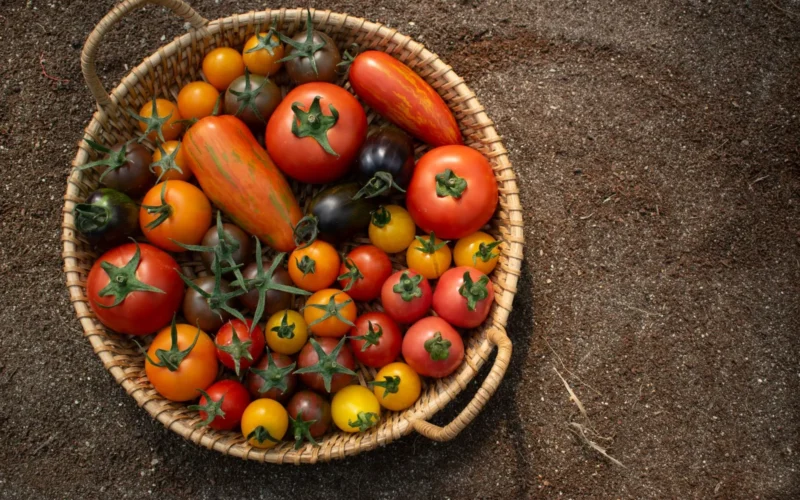
- Cherry tomatoes – More forgiving than beefsteaks, produce heavily, and ripen faster. Need stakes or cages ($5–15 each) and 8+ hours of sun.
- Zucchini and summer squash – Ready in about 50 days; two or three plants will outpace a small family by midsummer.
- Lettuce and spinach – Grow in cool spring and fall weather, ready in 30–50 days, and tolerate partial shade better than any other food crop.
- Bush beans – No support needed, fix nitrogen in the soil, and go from seed to harvest in about 55 days.
- Basil – Grows fast, thrives next to tomatoes, and costs $4–6 per bunch at the store—easy to justify the garden space.
Save cabbage, cauliflower, broccoli, and root vegetables for year two. They need more space, stricter timing, and more active pest management than the crops above.
Timing and Planting
Your last spring frost date and first fall frost date set the schedule for everything. Find yours at almanac.com/gardening/frostdates or call your local cooperative extension office—they’ll tell you in 30 seconds.
Warm-season crops (tomatoes, peppers, squash, beans) go in after your last frost date, once soil temperature reaches 60°F. Cool-season crops (lettuce, spinach, peas) go in 2 to 4 weeks before that date and again in late summer for a fall harvest.
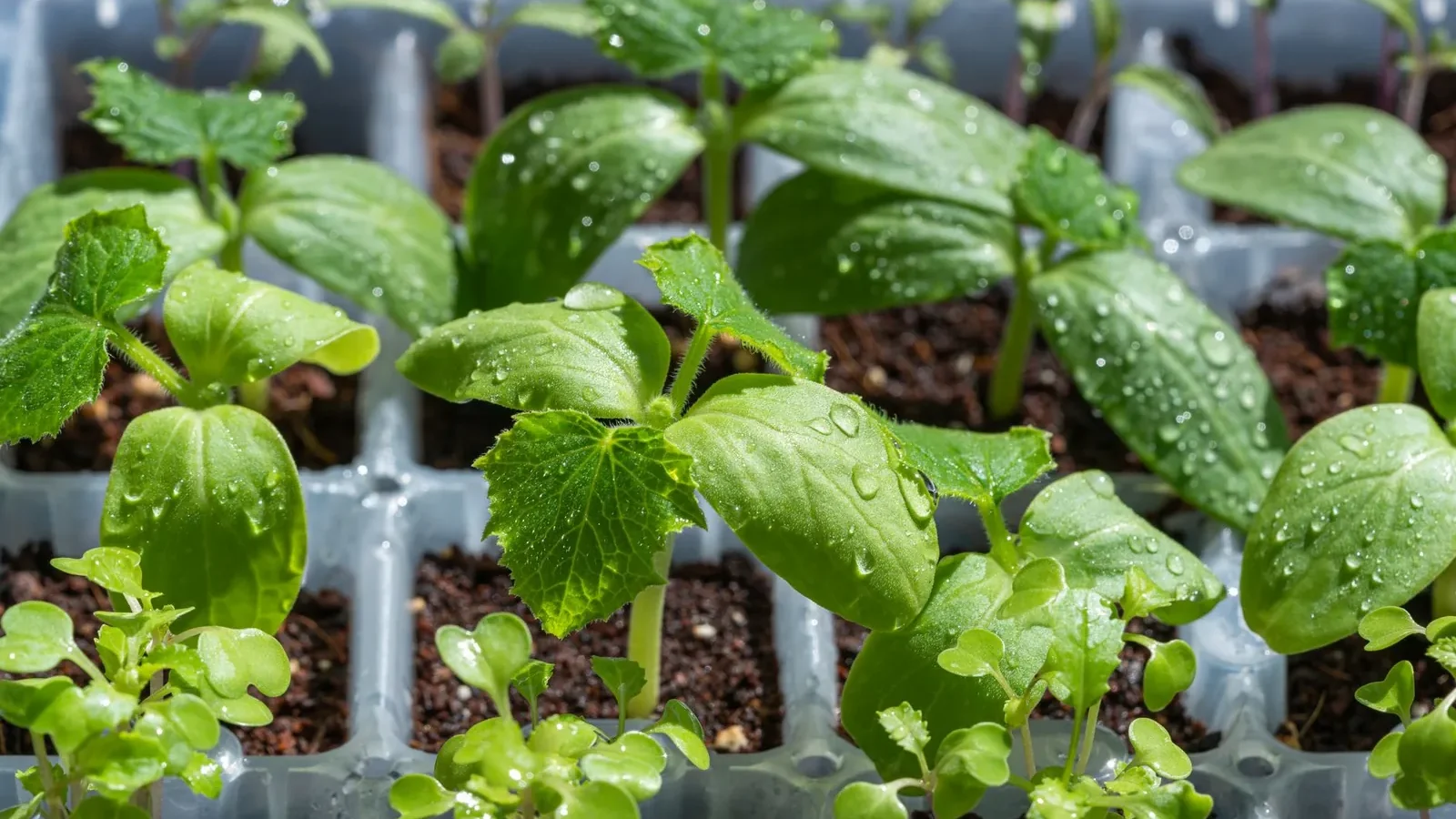
Seeds cost $1–3 per packet and yield dozens of plants. Transplants cost $3–8 per six-pack but are ready to go in the ground immediately. For your first year, buy transplants for tomatoes and peppers—they take 6 to 10 weeks to grow from seed indoors and are fussy about temperature. Grow beans, squash, and greens directly from seed; they germinate fast and don’t transplant well anyway.
Follow spacing on the seed packet or transplant label. A 4-by-8-foot bed realistically holds 4 tomato plants, 2 squash, 2 rows of bush beans, and a small lettuce section—and that’s full. Overcrowding cuts airflow, invites disease, and reduces yields.
Watering and Basic Care
Water deeply and infrequently rather than a little every day. Most vegetable gardens need 1 to 2 inches of water per week—more during heat waves, less during cool cloudy stretches. Deep watering encourages roots to grow down where moisture lasts longer. Shallow daily watering keeps roots near the surface, where they dry out fast.
Water in the morning so foliage dries before evening; wet leaves overnight is how fungal diseases start. A drip line or soaker hose ($15–40) delivers water directly to roots, cuts water use by roughly half compared to overhead sprinklers, and keeps foliage dry automatically.
Lay 2 to 3 inches of straw or wood chip mulch around plants ($5–15 per bag). It holds soil moisture, keeps roots cooler in summer heat, and suppresses weeds—which compete aggressively for water and nutrients in the first 6 weeks after planting.
If you mixed compost into the bed before planting, that’s usually enough fertility for the first season. If plants look pale or stop growing mid-season, side-dress with compost or apply a balanced granular fertilizer (10-10-10) every 3 to 4 weeks. More fertilizer isn’t better—excess nitrogen produces big leafy plants with fewer fruits.
Pest and Disease Management
Inspect plants weekly, especially the undersides of leaves where aphids and spider mites cluster first. Catching problems at 10 insects is far easier than at 10,000. Squish aphid colonies by hand, pick caterpillars off by hand, and knock spider mites loose with a firm spray from the hose.
Powdery mildew and early blight spread in humid, crowded conditions. Space plants as directed, water at the soil line, and strip the lower 6 to 8 inches of leaves off tomato plants as the season progresses—it improves airflow dramatically. Pull out any plant showing severe infection rather than letting it spread.
Skip broad-spectrum insecticides your first season. They kill beneficial insects—ground beetles, parasitic wasps, ladybugs—that do free pest control. Neem oil ($10–15) and insecticidal soap ($8–12) handle most soft-bodied pests without that collateral damage.
Harvest and Learn
Tomatoes are ripe when fully colored and give slightly under a gentle squeeze. Zucchini is best at 6 to 8 inches—leave it longer and you’ll be eating baseball bats. Lettuce is most tender when young; once it sends up a flower stalk, it turns bitter within days. Harvest beans when pods snap cleanly rather than bend.
Pick regularly. Tomatoes and zucchini slow down or stop producing if you leave ripe fruit on the vine too long. A quick harvest every two to three days keeps plants in production mode.
Keep a simple notebook: what you planted, when, what worked, what didn’t. One season of notes is worth more than any gardening book for your specific yard, soil, and climate. After the season, chop spent plants and add them to a compost pile, or bag them for yard waste pickup if they showed any disease.
For a deeper dive into layout and spacing, see our guide to the best vegetable garden layout for beginners.
Frequently asked questions
How much does it cost to start a vegetable garden?
A small in-ground garden costs $50–100 in soil amendments and seeds. A 4-by-8-foot raised bed runs $100–250 total once you add bed materials and soil. Starting from scratch with no tools, budget another $50–150 for a shovel, garden fork, and hose. Total first-year cost: $150–400, depending on how much you already own. Seeds save money over transplants; transplants save time.
Can I start a vegetable garden in spring if I’ve never gardened?
Yes—spring is the right time in most climates. Plant cool-season crops (lettuce, spinach, peas) 2 to 4 weeks before your last frost date. Wait until after that date and once soil hits 60°F to plant tomatoes, peppers, squash, and beans. Most of those warm-season crops will be ready to harvest within 50 to 80 days.
Do I need to test my soil before planting?
Not required for a first garden on soil that looks reasonably healthy. Mix in 2 to 4 inches of compost and most vegetables will grow fine. If plants grow slowly or look pale despite good sun and regular water, a $10–20 test through your local extension office will pinpoint whether it’s a pH problem, a nutrient deficiency, or something else.
What’s the difference between heirloom and hybrid vegetables?
Heirlooms are open-pollinated varieties—save the seeds and you’ll grow the same plant next year. Hybrids are purpose-bred crosses; their seeds won’t grow true to type, so you buy new each season. Hybrids generally offer better disease resistance and more consistent yields, which matters in a first garden. Heirlooms offer wider flavor variety and the ability to save seed, which matters more once you know what you’re doing.
How do I know when to harvest vegetables?
Seed packets list days to maturity and describe harvest signs—read them before you plant, not after. General rules: tomatoes are ripe when fully colored and slightly soft; zucchini at 6–8 inches; beans when pods snap rather than bend; lettuce when leaves are young and full but before a flower stalk appears. When in doubt, taste one. Harvesting a day early beats missing the window by a week.

Rob is a former carpenter who now explains home repairs so you only have to do them once.