This article may contain affiliate links. If you buy through them we may earn a commission at no extra cost to you.
Drive your stake or set your cage the same day you transplant seedlings—not a month later when the plant is flopping over. The method that suits you depends on whether you’re growing compact bush tomatoes (determinate) or tall vining types (indeterminate), and how much weekly attention you want to give them.
Why Stake Tomato Plants
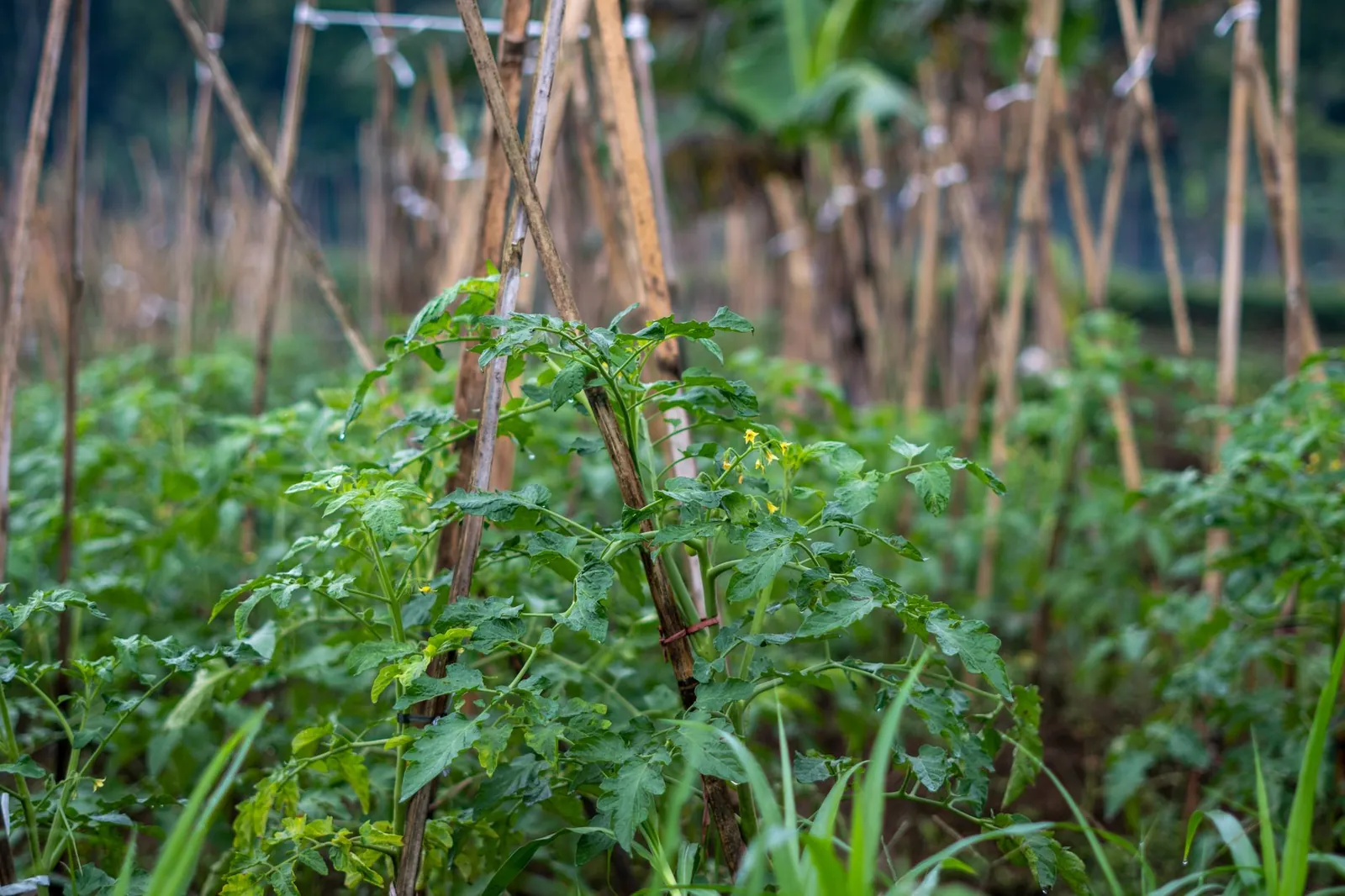
Once fruit sets, tomato branches get heavy fast. Without support, they snap, fruit rests on soil where it rots or draws slugs, and foliage stays wet after rain—exactly the conditions that invite early blight and septoria leaf spot. Lifting the plant into moving air dries leaves faster and makes problems visible before they spread.
Staked plants also take up less horizontal space, which matters in a raised bed or on a patio. Harvesting is easier when you’re not parting a tangle of vines at ankle height.
When to Stake Tomatoes
Install support at planting time. Driving a stake near a mature plant risks slicing through established roots, and bending heavy branches to reach a late-added cage breaks them. Young stems are flexible and train easily.
If you inherit an unstaked plant that’s already 12–18 inches tall, work carefully. Drive the stake at an angle away from the base rather than straight down, and use extra-loose ties so the stem can flex while it adjusts over the next week or two.
Stake Methods for Different Tomato Types
Determinate (Bush) Tomatoes
Determinate varieties top out at roughly 3–4 feet and ripen most fruit within a two- to three-week window. They’re compact and need little pruning. A single 4–5 foot stake or a standard wire cage handles them well. Common examples include ‘Roma’, ‘San Marzano’, and ‘Mountain Magic’. See our guide to tomato varieties for beginners for more options.
Indeterminate (Vining) Tomatoes
Indeterminate varieties grow until frost kills them—often reaching 6–8 feet in a home garden, sometimes taller. A standard 4-foot cage is undersized by July. You’ll need a 6–8 foot heavy-duty cage, a tall metal post, or a string trellis, plus weekly pruning to keep growth manageable. ‘Sungold’, ‘Brandywine’, and ‘Cherokee Purple’ all fall here.
Stake and Support Options
| Method | Cost | Height | Best For | Maintenance |
|---|---|---|---|---|
| Bamboo stake (6 ft) | $1–3 | Up to 6 ft | Determinate; compact space | Tie plant as it grows |
| Metal stake (6–8 ft) | $5–12 | Up to 8 ft | Indeterminate; longevity | Tie plant; reusable |
| Tomato cage (4–5 ft) | $8–15 | 4–5 ft | Determinate; easy setup | Minimal; plant grows through |
| Heavy-duty cage (6–8 ft) | $20–40 | 6–8 ft | Indeterminate; large plants | Minimal; sturdy |
| String/twine trellis | $2–5 | Variable | Indeterminate; high density | Tie or spiral regularly |
| Florida weave (posts + twine) | $10–20 | Variable | Multiple rows; efficient | Add twine as plants grow |
Our verdict
For most home gardeners, a sturdy 6-foot bamboo or metal stake and soft plant ties offer the best balance of cost, reusability, and control. Cages work well for determinate varieties but often aren’t tall enough for vigorous indeterminate types. String trellises are economical for large plantings but require more hands-on management.
How to Install Stakes Properly
For Single Stakes
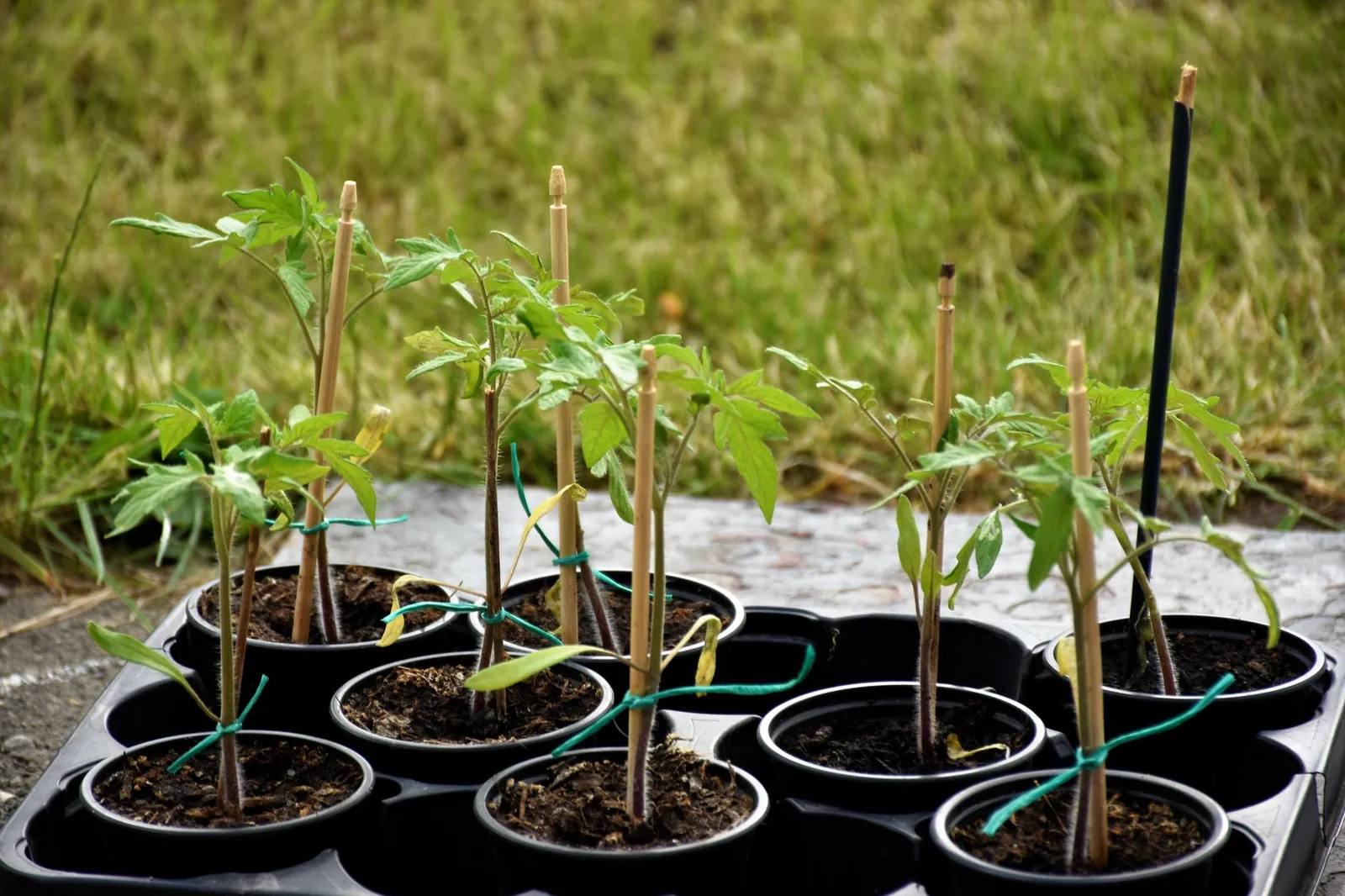
- Drive the stake first. Push it 12 inches into the soil, at least 3 inches from the plant stem. Use a mallet if the ground is hard. A firmly anchored stake won’t wobble in wind or rock the root ball.
- Choose soft ties. Use strips of old cotton cloth, soft plant tape, or commercial tomato ties. Avoid wire or thin twine—both cut into stems as they thicken. Anything narrower than half an inch concentrates too much pressure in one spot.
- Create a loose figure-eight loop. Loop around the stake first, cross the tie, then loop loosely around the stem, leaving 1–2 inches of slack. The stem needs room to flex and swell as it matures.
- Tie every 8–12 inches. Add new ties higher up as the plant grows. Check all ties monthly and loosen any that have started to bite in.
For Cages
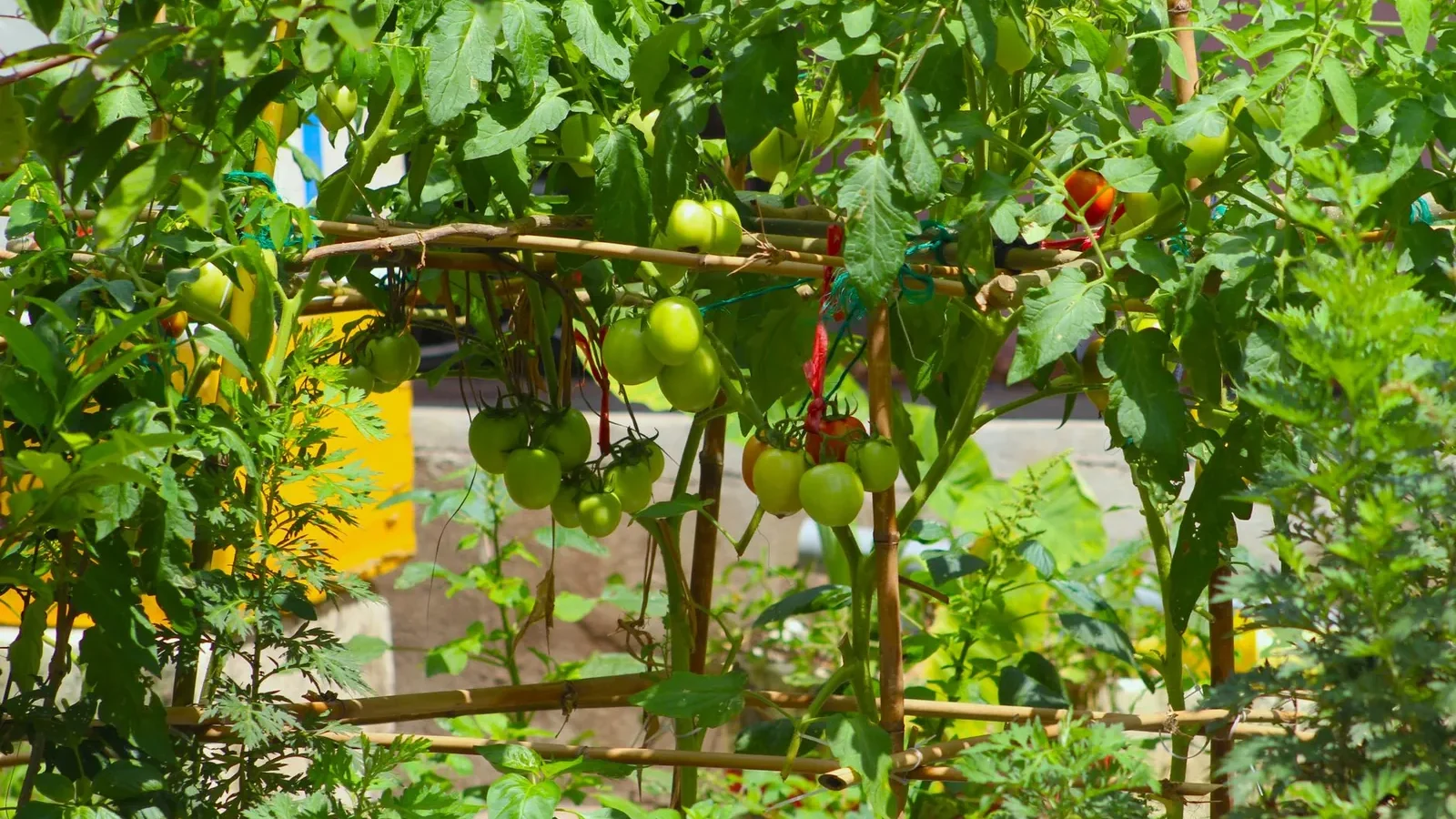
Set the cage over the plant at planting time and press the legs at least 6 inches into the soil. For tall indeterminate varieties, drive a ground stake alongside the cage and wire them together—a fruit-laden plant in a summer storm will pull a free-standing cage right out of the ground.
For String Trellises
Anchor twine or jute to a horizontal wire or post above the row, then spiral it loosely around each stem as it grows, or tie it off every 12 inches. This method suits dense plantings and uses very little material per plant.
A loose tie that allows the stem to move slightly is safer and stronger than one pulled tight, which cuts off sap flow and invites disease.
Pruning and Training Staked Tomatoes
For indeterminate varieties, staking works best alongside regular pruning. Suckers—the shoots that emerge in the crotch between the main stem and a branch—grow into full side stems if left alone, turning one plant into an unmanageable thicket. Pinching them off weekly keeps the plant to one or two main stems, improves airflow, and pushes energy into the fruit already on the vine.
About four to six weeks before your first expected frost, pinch out the growing tip entirely. The plant stops putting energy into new growth and focuses on ripening what’s already there.
Determinate varieties need almost none of this—just remove diseased or damaged leaves as you spot them. For both types, stripping the lower leaves once the first fruit cluster is visible reduces the splash-back of soil-borne fungal spores during rain.
Common Staking Mistakes to Avoid
- Staking too late. A plant with a 12-inch root spread and heavy branches is hard to stake without snapping something. Do it at transplant time.
- Stakes that are too short. A 4-foot stake is adequate for a determinate variety but will be buried in foliage by mid-July on a vigorous indeterminate. Match stake height to the variety’s mature size, then add a foot.
- Ties that are too tight. Constricting ties strangle the stem’s vascular tissue. Always leave slack, and check monthly.
- Ignoring wind. Anchor cages and tall stakes to a fence or a second ground stake in exposed sites. A plant carrying two pounds of fruit can topple a free-standing 6-foot stake in a strong gust.
- Assuming staking prevents disease. Better airflow helps, but you still need to remove lower leaves and clear fallen debris to keep fungal pressure low.
Staking Tips for Small Spaces and Containers
Container-grown tomatoes need support just as much as in-ground plants. Size the stake to the pot: a 5-gallon bucket pairs well with a 4–5 foot stake; a 15-gallon container can handle a 6-footer. Clip or tie the stake to the pot rim so it doesn’t shift when you water or move the pot.
In a raised bed with tight spacing, the Florida weave—horizontal twine strung between posts at 8–10 inch intervals as the plants grow—supports an entire row without individual stakes for each plant. Check your planting zone to time transplanting, and have your stakes ready before you dig the first hole.
Frequently asked questions
Can I stake a tomato plant after it’s already growing?
Yes, but carefully. If the plant is under 12 inches, you can stake it normally. If it’s larger, drive the stake at an angle away from the base, not straight down, to avoid root damage. Use extra ties for support and expect the plant to adjust over a week or two.
What’s the difference between a tomato cage and a stake?
A cage is a self-supporting structure; you just set it over the plant. A stake requires you to tie the plant to it as it grows, giving you more control over shape and pruning. Cages are easier for beginners but often aren’t tall enough for vigorous varieties. Stakes are better for indeterminate tomatoes and large plants.
How often should I check and adjust ties?
Check ties every 2–3 weeks during the growing season, especially after heavy rain or wind. Loosen any that are cutting into the stem or restricting growth. Add new ties higher up as the plant grows taller.
Do I need to prune if I’m staking my tomatoes?
For determinate varieties, minimal pruning is needed. For indeterminate varieties, pruning suckers and lower leaves improves air flow and fruit quality, and it’s much easier on a staked plant. Remove suckers weekly and prune lower leaves once fruit sets.
What’s the best material for ties?
Soft, flexible materials work best: strips of old cotton cloth, commercial soft plant tape, or jute twine. Avoid wire, thin plastic twine, or anything that doesn’t stretch or cushion the stem. Ties should be at least half an inch wide to distribute pressure across the stem rather than concentrate it.

Ellen has renovated three houses, killed more seedlings than she admits, and writes about both.