This article may contain affiliate links. If you buy through them we may earn a commission at no extra cost to you.
A patio heater turns on in seconds and keeps a small deck comfortable on a 45°F evening. A fire pit takes 10–15 minutes to build a usable fire, needs 10–15 feet of clearance from structures, and may require a permit—but nothing else draws a crowd the same way. Which one makes sense depends on your yard size, how you entertain, and how much fuss you’re willing to accept.
Heat Output and Coverage
Patio heaters deliver focused, consistent warmth in a defined radius. A typical propane or electric model produces 40,000 to 100,000 BTU and heats an area roughly 6 to 15 feet around it. You feel the warmth immediately and can dial it up or down.
A well-built wood fire produces 50,000 to 80,000 BTU, but that heat radiates outward in all directions and spreads less predictably. Wind, wood moisture, and fire size all affect what you actually feel. Figure 10–15 minutes of fire-building before anyone is comfortable.
Best for quick, targeted warmth
If you want heat on demand—turn it on, sit down, feel warm—a patio heater wins. It’s the right call for small patios, apartment balconies, or tight spaces where you need efficient heating.
Best for ambient, social warmth
A fire pit creates warmth you gather around rather than warmth aimed at you. It’s slower to start but encourages people to pull chairs closer and stay longer. Better suited to larger yards where guests can sit in a circle without crowding the heat source.
Cost: Upfront and Ongoing
Patio heater costs
Propane stand-alone heaters run $100–$600 for standard models; stainless steel units with remote controls push $400–$1,200. Electric heaters cost $150–$800. A 10–15 lb propane refill runs $15–$25, and a typical heater burns through one tank every 4–8 weeks of regular use. Maintenance is light—an annual burner check and occasional wipe-down.
Fire pit costs
A ring-style kit starts at $50–$300. A built-in brick or stone pit costs $300–$2,000 or more depending on size and materials. A DIY build saves on labor but still requires digging, gravel, and proper clearance planning. Wood runs $5–$15 per bundle; a single evening fire burns one to three bundles. Budget another $50–$200 for a fire poker, grate, and cover.
A patio heater has lower long-term fuel costs if you use it 2–3 times weekly, but a fire pit becomes cheaper if you already have firewood or enjoy burning year-round.
Fuel Types and Convenience
Patio heater fuel
Propane is the most common choice—portable, widely available, and swappable at any hardware store or gas station in minutes. Natural gas models eliminate refills entirely but need a fixed gas line and professional installation ($200–$500). Electric heaters are the simplest option: plug in and go. The trade-off is cord-length limits and less raw power than gas.
Fire pit fuel
Wood is free if you have trees on your property, or cheap if you buy bundles locally. The real costs are indirect: wood needs dry storage, splitting, and produces ash that needs clearing after every fire. Gas fire pits (propane or natural gas) skip the mess but cost $400–$1,500 upfront and lose the crackling sound and wood smoke smell that most people are actually after.
Safety and Maintenance
Patio heater safety
Modern propane heaters include automatic shutoff valves and tip-over protection. On a deck or patio, follow the clearance guidelines in your manual—typically 10 feet from walls and overhangs—and they’re safe near structures. The heating element gets hot enough to burn skin on contact, so keep children and pets aware of it. Annual tasks: check connections for gas leaks, clean the burner, store the tank upright outdoors.
Fire pit safety
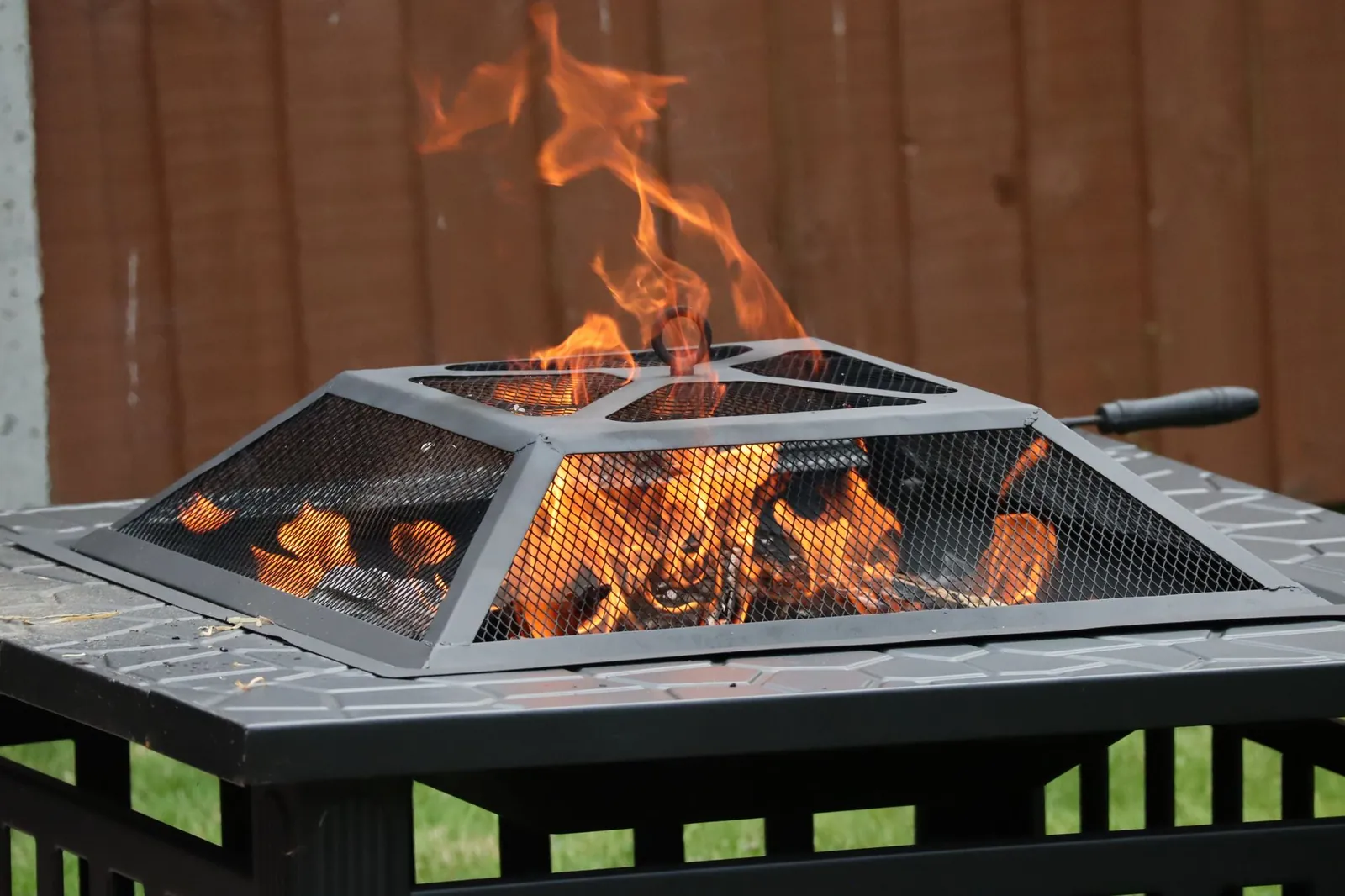
A fire pit demands more active management. You need at least 10–15 feet of clearance from structures, trees, and fences, and it must sit on bare ground or gravel—never a wood deck. Keep water or a fire extinguisher within reach, monitor the fire throughout, and fully extinguish it before going inside. Ash disposal adds 10–15 minutes to cleanup. Wind-blown embers are a real hazard. Some HOAs and local fire codes restrict or ban open fires entirely—worth checking before you buy anything.
Ambiance and Experience
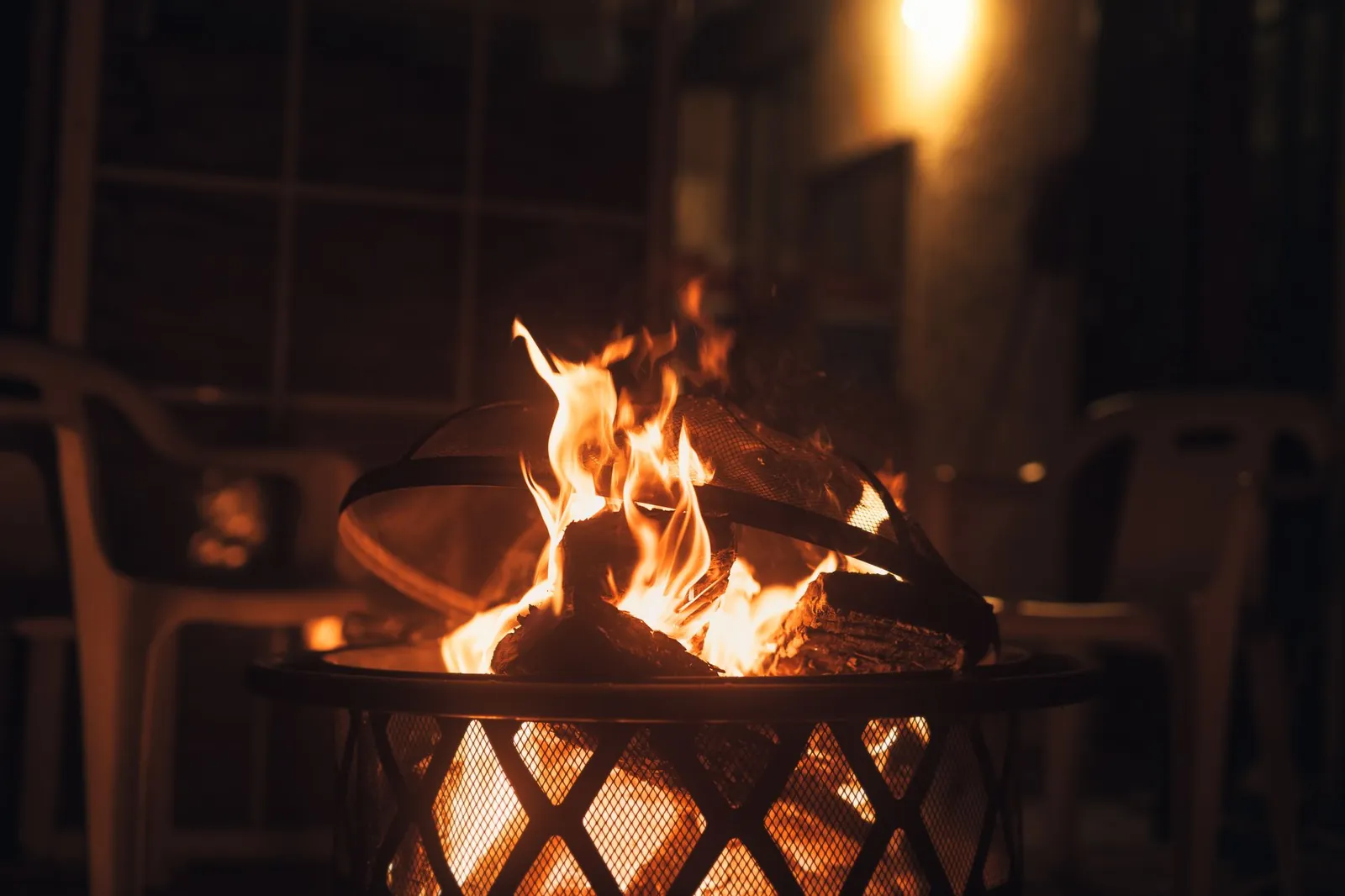
A fire pit offers something a heater simply cannot replicate: flickering flames, the sound of crackling wood, and the pull of an open fire. Roasting marshmallows, watching embers drift, and sitting close enough to feel the radiant heat creates a gathering atmosphere that feels deliberate. It takes effort to start, and that’s part of the appeal.
A patio heater is quiet and utilitarian. It keeps you warm while you eat, read, or talk without drawing any attention to itself—no smell, no ash, no ritual. For a weeknight dinner on the deck, that’s exactly what you want.
Space and Installation
Patio heaters
Most stand-alone propane models are fully portable—wheel them out, connect the tank, done. Wall- and ceiling-mounted models free up floor space but need brackets. Electric heaters need an outlet within cord reach. No digging, no permanent changes, no issues for renters.
Fire pits
A portable ring-style pit can move around the yard, but a built-in pit is a permanent landscape feature—plan on a full day or two for excavation and gravel work. You need level ground with good drainage. Not practical for renters. That said, a well-built fire pit becomes a focal point that adds genuine character to a backyard in a way a heater never will.
Comparison Table
| Factor | Patio Heater | Fire Pit |
|---|---|---|
| Upfront cost | $100–$1,200 | $50–$2,000+ |
| Heat output | 40,000–100,000 BTU (focused) | 50,000–80,000 BTU (diffuse) |
| Coverage radius | 6–15 feet | 8–20 feet (variable) |
| Fuel cost/season | $120–$300 (propane) | $50–$200 (wood) |
| Setup time | 5 minutes | 10–15 minutes (fire building) |
| Portability | High | Low (built-in) to medium (ring) |
| Maintenance | Minimal | Moderate (ash, wood storage) |
| Ambiance | None | High (flames, sound, smell) |
| Safety concerns | Moderate (burns, gas) | Higher (embers, wind, monitoring) |
| Best for | Small spaces, renters, on-demand warmth | Large yards, gatherings, atmosphere |
Our verdict
Get a patio heater if you want instant warmth in a small or medium space, need portability, or rent your home. It’s the practical choice for weeknights and tight patios where you want comfort without fuss.
Get a fire pit if you have the yard space, enjoy tending a fire, and want something that becomes the centerpiece of an evening rather than a background appliance. Check your local fire code and HOA rules before you buy—this is the step most people skip and regret.
If budget allows, I’d argue both earn their place: a patio heater for cool Tuesday evenings when you want warmth fast, and a fire pit for Saturday nights when the whole point is lingering.
Frequently asked questions
Can I use a patio heater on a covered porch?
Yes, but check your heater’s manual for clearance requirements. Most propane models need 10 feet of clearance from the ceiling and surrounding walls to prevent carbon monoxide buildup. Electric heaters are the safer choice under a cover. Never use a fire pit under any kind of roof or overhang—it’s a fire hazard regardless of clearance.
How long does a propane tank last?
A 20 lb tank typically lasts 4–8 weeks of regular use—say, a few hours running two or three times a week. Smaller 10 lb tanks last one to two weeks. A 30 or 40 lb tank stretches to two or three months. Actual duration shifts with heater wattage, outdoor temperature, and how high you run the heat.
Is a fire pit legal in my area?
Many towns and HOAs restrict or ban open fires, and the rules vary significantly by municipality. Call your local fire department or city planning office before building or buying. Some areas permit only gas fire pits; others require a permit for any open flame. It’s a five-minute call that can save you a fine or a forced removal.
Which is cheaper to run long-term?
Running a propane heater two to three times weekly costs roughly $150–$300 per season in fuel. A wood-burning fire pit costs $50–$200 per season if you source wood cheaply or have your own supply. Patio heaters are more fuel-efficient in the sense that most of their heat reaches the people sitting nearby; fire pits lose a significant portion of their output upward into open air.
Can I roast food over a patio heater?
No—patio heaters have no grate or cooking surface and aren’t designed for food. A fire pit with a proper grate works fine for marshmallows and hot dogs. For anything more involved, a dedicated fire pit grill insert is safer and easier to control.

Ellen has renovated three houses, killed more seedlings than she admits, and writes about both.